
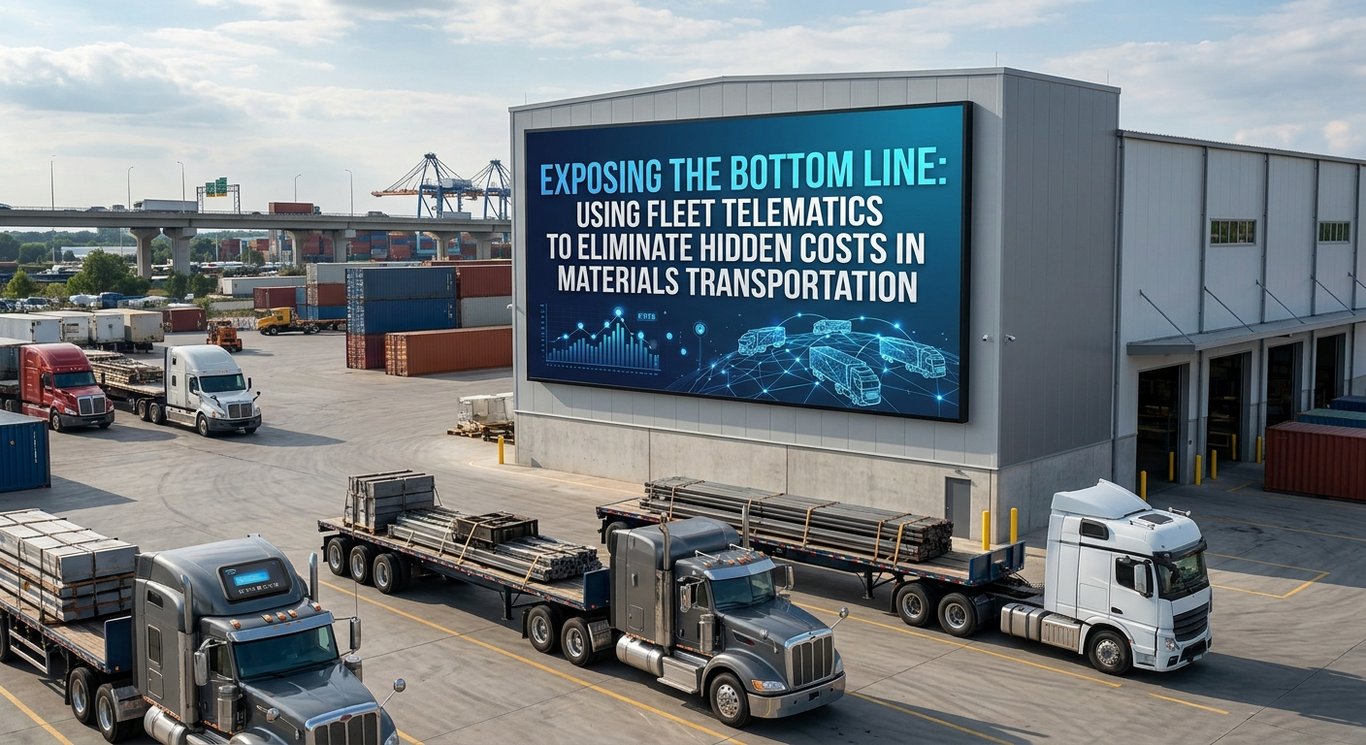
Introduction to Hidden Costs in Materials Transportation
Hidden costs in materials transportation fleets are the silent profit killers that most operators never see coming. These are expenses that don’t show up neatly on an invoice – things like fuel wasted during excessive idling, unplanned maintenance triggered by worn-out parts, and costly downtime when a truck breaks down mid-haul. For fleets moving gravel, construction supplies, waste, or other bulk materials, these costs can quietly stack up to thousands of dollars per vehicle each year. Left unchecked, they chip away at margins until what looked like a profitable operation starts bleeding money. 💸
Fleet telematics is the technology that finally pulls back the curtain on these hidden expenses. At its core, telematics combines GPS tracking, onboard sensors, and powerful data analytics to give fleet managers a real-time picture of what’s actually happening across their entire operation. Instead of relying on driver reports or end-of-month spreadsheets, managers get continuous streams of data covering everything from vehicle speed and engine health to route efficiency and fuel consumption. It’s like having a co-pilot in every truck, one that never sleeps and never misses a detail.
For haulers transporting materials like gravel, demolition waste, or construction supplies, telematics doesn’t just track trucks – it reveals the true cost of running a fleet. By connecting the dots between driver behavior, vehicle performance, and route choices, telematics exposes where money is being lost and gives operators the tools to stop the bleeding. Throughout this article, we’ll walk through how telematics tackles each category of hidden cost, from fuel inefficiency and surprise breakdowns to liability risks and administrative bloat, so you can see exactly how it transforms the bottom line. 🚛
What Are the Most Common Hidden Costs in Fleet Operations?
Fuel waste is one of the biggest and most overlooked drains on a materials transportation fleet’s budget. When trucks sit idling at job sites, weigh stations, or in traffic, they burn diesel without moving a single ton of material. Add in inefficient routing – drivers taking longer paths, missing shortcuts, or making unnecessary detours – and the fuel bill climbs fast. For heavy-duty vehicles that already get low miles per gallon, even small inefficiencies at the pump translate into significant losses over a month or a year.
Unexpected breakdowns and maintenance expenses are another major hidden cost that catches fleet operators off guard. When a truck fails in the middle of a haul, the costs go far beyond the repair bill. There’s the towing, the emergency labor rates, the missed delivery, and the customer relationship damage to consider. Reactive maintenance – fixing things after they break – is almost always more expensive than catching problems early. For fleets running heavy loads on rough terrain, the wear and tear on engines, tires, and brakes is accelerated, making proactive maintenance even more critical.
Liability risks from unsafe driving and accidents represent a hidden cost that can be truly catastrophic. A single serious accident involving a loaded dump truck or a heavy haul vehicle can result in lawsuits, settlements, increased insurance premiums, and regulatory penalties that dwarf any other operational expense. Speeding, aggressive braking, distracted driving, and fatigue-related incidents are all behaviors that raise the probability of accidents – and in materials transportation, where vehicles are large and loads are heavy, the consequences are amplified. ⚠️ Unfortunately, without visibility into driver behavior, many fleet managers have no idea these risks are building up until something goes wrong.
Underutilized assets and administrative overheads round out the list of common hidden costs in fleet operations. When trucks sit unused for hours or entire shifts, they’re still depreciating, still requiring insurance, and still consuming maintenance resources. Meanwhile, back-office teams spend hours manually reconciling fuel receipts, calculating mileage for billing, and managing compliance paperwork. These administrative inefficiencies may not seem dramatic, but they add up to real labor costs and billing errors that eat into profitability. The good news is that telematics addresses all of these issues with data-driven precision.
How Does Fleet Telematics Work to Expose Hidden Costs?
Fleet telematics systems are built on a combination of hardware and software working together seamlessly. The hardware side includes GPS trackers, engine diagnostic ports (typically OBD-II or J1939 for commercial vehicles), and a range of sensors that monitor everything from fuel levels and engine temperature to door status and load weight. These devices collect data continuously and transmit it wirelessly to a central platform, giving fleet managers access to real-time information about every vehicle in their operation. For materials transportation fleets, this means knowing exactly where each truck is, how it’s performing, and whether it’s being used efficiently – all from a single dashboard.
“By proactively identifying inactive vehicles and critical operational system components operations, it’s not unreasonable to reduce fleet size by 10% and fuel costs by 5-10%.” -Work Truck Online
Beyond raw data collection, modern telematics platforms integrate with artificial intelligence and machine learning to turn numbers into actionable insights. Instead of just telling you that a truck’s engine temperature spiked, AI-powered systems can predict when that spike is likely to lead to a breakdown and recommend a maintenance window before it happens. In materials transportation, where routes often involve unpaved roads, heavy loads, and extreme weather conditions, these predictive capabilities are especially valuable. Data integration with dispatch systems, ERP platforms, and maintenance software means that insights don’t just sit in a dashboard – they trigger real actions that save time and money. 🤖
The telematics dashboard is where all of this data comes to life for fleet managers. A well-designed dashboard provides a visual overview of fleet performance, highlighting problem areas, tracking key performance indicators, and allowing managers to drill down into specific vehicles or drivers. In materials transportation, this visibility is transformative. Managers can see which trucks are idling too long at quarry sites, which drivers are taking inefficient routes, and which vehicles are overdue for service – all in one place. That level of transparency makes it nearly impossible for hidden costs to stay hidden for long.
Reducing Fuel Costs with Telematics Optimization
Route optimization is one of the most powerful tools telematics offers for cutting fuel costs in materials hauling. When trucks are dispatched on optimized routes, they travel fewer miles, spend less time in traffic, and avoid road conditions that increase fuel consumption – like steep grades or unpaved surfaces where possible. For fleets making multiple hauls per day between quarries, job sites, and disposal facilities, even a small reduction in miles per trip compounds into substantial savings. Telematics platforms can also help eliminate “empty miles” – the trips trucks make without a load – by coordinating pickups and drop-offs more efficiently. 🗺️
[cta-call:Call2]
Beyond routing, telematics gives fleet managers direct visibility into the driving behaviors that waste the most fuel. Excessive idling is one of the worst offenders – a heavy-duty diesel truck can burn up to a gallon of fuel per hour while sitting still. Speeding is another major culprit, since fuel consumption increases significantly at higher speeds. Harsh acceleration and aggressive braking also waste fuel and accelerate wear on mechanical components. Telematics systems track all of these behaviors in real time, allowing managers to identify problem drivers, set alerts, and implement coaching programs that change habits before they drain the fuel budget.
The fuel savings potential for heavy-duty transport fleets that adopt telematics is genuinely impressive. Fleets that implement route optimization, idle reduction programs, and driver behavior monitoring consistently report meaningful reductions in their fuel bills. For a fleet of 20 heavy trucks each consuming thousands of gallons of diesel per year, even a 10-15% reduction in fuel use translates into tens of thousands of dollars saved annually. When you factor in the potential for up to 25% fuel cost reductions that industry data suggests, the financial case for telematics becomes very hard to argue against. 💰
“By leveraging telematics, fleets can potentially achieve up to a 25% decrease in fuel costs, which not only enhances economic efficiency but also contributes to environmental sustainability by reducing carbon emissions.” -GoFleet
Preventive Maintenance: Minimizing Downtime and Repair Expenses
Predictive analytics is changing the maintenance game for materials transportation fleets in a big way. Telematics systems continuously monitor critical vehicle components – engine performance, tire pressure, brake wear, and even load-specific stress on suspension systems – and use that data to flag potential issues before they become failures. For heavy haulers carrying gravel, aggregate, or construction debris, the mechanical demands on vehicles are intense. Predictive maintenance tools account for these load-specific conditions, giving fleet managers a more accurate picture of when components are likely to need attention compared to standard time-based maintenance schedules.
Real-time alerts are what make predictive maintenance truly actionable in a fast-paced materials transportation environment. When a sensor detects an abnormal engine reading or a tire pressure drop, the telematics system can immediately notify the driver and the fleet manager, allowing them to make a smart decision – pull over safely, reroute to a nearby service facility, or complete the delivery if the risk is low. This kind of timely intervention prevents small problems from escalating into catastrophic failures during critical hauls. Nobody wants a loaded dump truck breaking down on a highway or at a remote job site miles from the nearest mechanic. 🔧
One of the longer-term financial benefits of telematics-driven maintenance is the extension of vehicle lifespan. Heavy-duty trucks and trailers represent enormous capital investments, and replacing them ahead of schedule is one of the most expensive things a fleet operator can do. By catching wear and tear early, addressing issues before they cascade into major damage, and keeping vehicles in optimal operating condition, telematics helps fleets squeeze more productive years out of every asset. This also improves replacement forecasting – instead of being surprised by a sudden fleet crisis, managers can plan purchases strategically and budget accordingly.
Telematics platforms also integrate directly with Driver Vehicle Inspection Reports (DVIR) and maintenance management dashboards, creating a seamless workflow from inspection to repair. Drivers can log issues through a mobile app, which automatically populates the maintenance system and triggers work orders. This eliminates the paper trail mess and ensures that nothing gets overlooked between a driver’s report and the shop’s action. For materials transportation fleets with large numbers of vehicles and tight delivery schedules, this kind of systematic approach to maintenance tracking is essential for keeping operations running smoothly and costs under control. 📋
Enhancing Driver Safety and Lowering Liability Risks
Driver scorecards and coaching programs powered by telematics are among the most effective tools for improving safety in materials transportation fleets. A driver scorecard aggregates data on behaviors like speeding, hard braking, sharp cornering, and seat belt usage into a simple score that makes performance easy to evaluate. When drivers know they’re being scored, behavior tends to improve – and when managers use scorecard data to deliver targeted coaching, the improvements are even more lasting. Video telematics, which combines GPS data with in-cab and forward-facing cameras, adds another layer by capturing footage of incidents and near-misses, giving coaches concrete examples to work with rather than abstract statistics. 🎥
“With integrated telematics and GPS data, maintenance schedules can be based on real-time engine hours, mileage, and diagnostic alerts. This approach reduces unnecessary servicing while catching developing issues early, lowering repair costs, and extending vehicle life.” -Trackstar
One of the most valuable – and often underappreciated – benefits of video telematics is protection against false accident claims. In the materials transportation industry, where heavy trucks are involved in accidents more frequently than passenger vehicles, fraudulent claims and exaggerated lawsuits are a real risk. When an incident occurs, video footage from the truck’s cameras can quickly establish what actually happened, protecting the fleet from liability in cases where the driver was not at fault. This kind of documented evidence can save a company hundreds of thousands of dollars in legal fees and settlements that would otherwise be paid out based on incomplete information.
The safety improvements driven by telematics also translate directly into lower insurance premiums, which is a significant hidden cost reduction in its own right. Insurance companies increasingly offer discounts to fleets that can demonstrate safe driving practices through telematics data. Additionally, telematics systems support compliance with Hours of Service (HOS) regulations by tracking driving time and rest periods electronically. Avoiding HOS violations means avoiding fines, protecting driver safety ratings, and maintaining the fleet’s operating authority – all of which have real financial value that’s easy to overlook until a violation occurs. 🛡️
Streamlining Administrative Processes and Billing Accuracy
For materials transportation companies, billing accuracy is directly tied to profitability – and telematics makes getting it right much easier. By integrating with Enterprise Resource Planning (ERP) systems, telematics platforms can automatically populate billing records with precise data on trip distances, load counts, delivery times, and fuel usage. This eliminates the guesswork and manual data entry that lead to billing errors, whether that means undercharging customers or overcharging them and damaging relationships. For fleets hauling gravel or aggregate on a per-load or per-mile basis, this kind of precision billing can recover revenue that would otherwise slip through the cracks. 📊
Fuel tax reporting is another administrative area where telematics delivers surprisingly large savings. Fleets that operate vehicles off-road – at quarries, construction sites, or landfills – are often eligible for fuel tax refunds on the diesel consumed during those off-road portions of their operations. Without telematics, calculating these refunds accurately is difficult and time-consuming, so many fleets either underreport and leave money on the table or skip the process entirely. Telematics systems can automatically track and categorize on-road versus off-road mileage, making fuel tax refund claims straightforward, accurate, and far more lucrative than manual methods allow.
Better route data from telematics also reduces the volume of customer callbacks and administrative back-and-forth that consumes staff time. When a customer calls to ask where their delivery is, dispatchers can provide an instant, accurate answer instead of calling the driver and waiting for a response. Automated notifications can even be sent to customers when trucks are en route or have completed a delivery, reducing inbound call volume significantly. Over time, these efficiency gains reduce the overhead costs of running a back office, freeing up staff to focus on higher-value tasks rather than fielding routine status inquiries. Less time on hold, more time moving materials. ✅
“Telematics technology significantly reduces liability risks for waste management fleets in two ways: 1. Boosting driver safety 2. Protection against false claims.” -Geotab
Optimizing Asset Utilization in Materials Fleets
Tracking idle time and underused vehicles is one of the most straightforward ways telematics helps materials fleets get more value from their existing assets. When a truck sits unused for extended periods – whether due to poor scheduling, lack of demand visibility, or simple oversight – it’s still costing the company money in depreciation, insurance, and maintenance. Telematics platforms provide utilization reports that show exactly how many hours each vehicle is in active use versus sitting idle, making it easy to identify assets that aren’t pulling their weight. This data is the starting point for making smarter decisions about fleet size and composition. 📉
Real-time dispatching powered by telematics location data takes asset utilization to the next level. Instead of assigning hauls based on which truck the dispatcher thinks is closest, telematics systems show exactly where every vehicle is at any given moment. This allows dispatchers to assign the nearest available truck to each job, reducing deadhead miles and response times. In materials transportation, where multiple hauls happen throughout the day and job site conditions change rapidly, this kind of dynamic dispatching can significantly increase the number of productive loads each truck completes per shift – without adding a single vehicle to the fleet.
Telematics data also plays a crucial role in decisions about retiring inefficient equipment. When a truck consistently shows high fuel consumption, frequent maintenance alerts, and low utilization, the data makes a compelling case for replacement or reassignment. Without telematics, these decisions are often made based on gut feeling or basic age-and-mileage metrics, which can lead to keeping costly underperformers in the fleet too long or retiring vehicles that still have productive years ahead. With telematics, fleet managers have the objective performance data they need to make smart, financially sound equipment decisions. 🔍
Real-World Case Studies: Telematics Success in Transportation
Waste management fleets have been among the early adopters of telematics, and the results speak for themselves. Industry leaders in the waste hauling space have used telematics to optimize collection routes, reduce fuel consumption, and improve driver safety across large, complex fleets. By analyzing route efficiency data, some waste management operators have been able to reduce the total miles driven per collection cycle while maintaining the same service coverage – a direct reduction in fuel and labor costs. Driver behavior monitoring has also helped these companies reduce accident rates and lower insurance premiums, contributing to a healthier bottom line across the board.
Gravel hauling operations have seen particularly compelling savings through telematics, especially in the area of fuel tax reporting. Companies like GCI, which operates heavy haul trucks across a mix of on-road and off-road terrain, have leveraged telematics to accurately track and report the off-road fuel consumption that qualifies for tax refunds. The results have been remarkable – GCI reported annual savings of over $90,000 in fuel tax reporting alone after implementing a telematics solution. For a single company, that’s a substantial return that goes directly to the bottom line, and it’s a benefit that many materials haulers are currently leaving unclaimed simply because they lack the data infrastructure to support accurate reporting. 💵
Trucking companies that have implemented comprehensive telematics solutions report profitability improvements across multiple dimensions simultaneously. It’s not just fuel savings or just maintenance cost reductions – it’s the combination of gains across fuel, maintenance, safety, billing, and asset utilization that creates a truly transformative impact. Fleets that have adopted integrated telematics platforms report improvements in on-time delivery performance, reductions in customer complaints, and better driver retention, since drivers who receive fair, data-based performance feedback tend to feel more valued and engaged. The operational improvements ripple outward in ways that go well beyond the initial cost savings. 🚀
When you add up the ROI across all these areas, the numbers for materials transportation operators are compelling. Fuel savings of 15-25%, maintenance cost reductions from fewer breakdowns and extended vehicle life, insurance premium decreases from improved safety records, billing accuracy improvements that recover lost revenue, and administrative efficiency gains that reduce overhead – these benefits compound quickly. Many materials transportation fleets report recouping their telematics investment within six to twelve months of implementation, with ongoing savings that continue to grow as the system matures and managers become more skilled at acting on the data it provides.
Conclusion
Fleet telematics is not just a technology upgrade – it’s a fundamental shift in how materials transportation businesses understand and control their costs. 🎯 By exposing hidden expenses like fuel waste, unplanned downtime, liability risks, and administrative inefficiencies, telematics gives fleet operators the visibility they need to make smarter decisions every single day. The key takeaways are clear: telematics can help you achieve up to 25% in fuel savings through route optimization and driver behavior monitoring, extend vehicle life through predictive maintenance that catches problems before they become disasters, boost driver safety to cut insurance costs and protect against liability, and optimize asset utilization so every truck in your fleet is earning its keep. These aren’t theoretical benefits – they’re documented outcomes that materials transportation fleets are achieving right now.
The question isn’t whether fleet telematics can improve your bottom line – it’s how much longer you can afford to operate without it. Start by auditing your current fleet costs: look at your fuel bills, your maintenance records, your insurance premiums, and your administrative overhead. Chances are, the hidden costs are bigger than you think. Then choose an integrated telematics solution that’s built for the demands of materials transportation – one that handles load monitoring, off-road tracking, predictive maintenance, and ERP integration. Providers like Geotab and Verizon Connect offer purpose-built platforms with strong track records in heavy-haul industries. Schedule a demo, ask about ROI timelines specific to your fleet size and haul type, and take the first step toward a leaner, more profitable operation. Your bottom line is waiting to be exposed – in the best possible way. 💪
Frequently Asked Questions (FAQ)
What are hidden costs in materials transportation fleets?
Hidden costs in materials transportation fleets are the expenses that don’t show up as obvious line items but quietly drain profitability over time. These include fuel inefficiency caused by excessive idling and poor routing, unexpected breakdowns that trigger emergency repair bills and lost delivery revenue, liability costs from unsafe driving incidents, and administrative overhead from manual processes and billing errors. Because these costs are spread across many operations and often go untracked, they’re easy to underestimate – but they can represent a significant portion of a fleet’s total operating expenses when properly measured.
How much can telematics save on fuel costs?
Telematics can potentially reduce fuel costs by up to 25% for materials transportation fleets, according to industry data. These savings come from two primary sources: route optimization, which reduces total miles driven and eliminates unnecessary trips, and driver behavior monitoring, which identifies and corrects fuel-wasting habits like excessive idling, speeding, and aggressive acceleration. For heavy-duty vehicles that consume large volumes of diesel, even a modest percentage reduction translates into thousands of dollars in annual savings per vehicle – making fuel optimization one of the fastest ways to see a return on a telematics investment.
Does telematics help with regulatory compliance?
Yes, telematics is a powerful tool for maintaining regulatory compliance in materials transportation. One of the most important compliance applications is Hours of Service (HOS) tracking, which ensures that drivers don’t exceed legal driving time limits – a critical safety regulation that also carries significant financial penalties when violated. Electronic logging devices (ELDs) integrated with telematics platforms automatically record driving hours, rest periods, and duty status, reducing the risk of violations and helping fleets maintain strong safety ratings with the FMCSA. Compliance isn’t just about avoiding fines – it’s about protecting your operating authority and your reputation. ✔️
Is telematics suitable for heavy materials hauling?
Absolutely – telematics is particularly well-suited for heavy materials hauling operations. Modern telematics platforms designed for commercial fleets include features specifically relevant to heavy-duty transport, such as load weight monitoring, predictive maintenance alerts calibrated for high-stress operating conditions, and route optimization that accounts for weight restrictions and road conditions. Whether you’re hauling gravel, aggregate, construction debris, or bulk waste, telematics provides the operational visibility and data-driven insights needed to manage the unique demands of heavy materials transportation efficiently and profitably. 🏗️
What is the ROI timeline for fleet telematics?
Many materials transportation fleets begin seeing a return on their telematics investment within just a few months of implementation. The fastest returns typically come from fuel savings and maintenance cost reductions, which kick in almost immediately as route optimization and driver behavior programs take effect. Additional savings from insurance premium reductions, improved billing accuracy, and administrative efficiency gains accumulate over the following months. When all the benefit categories are added together – fuel, maintenance, safety, compliance, and operations – most fleets find that telematics pays for itself well within the first year, with ongoing savings that continue to grow over time. 📈