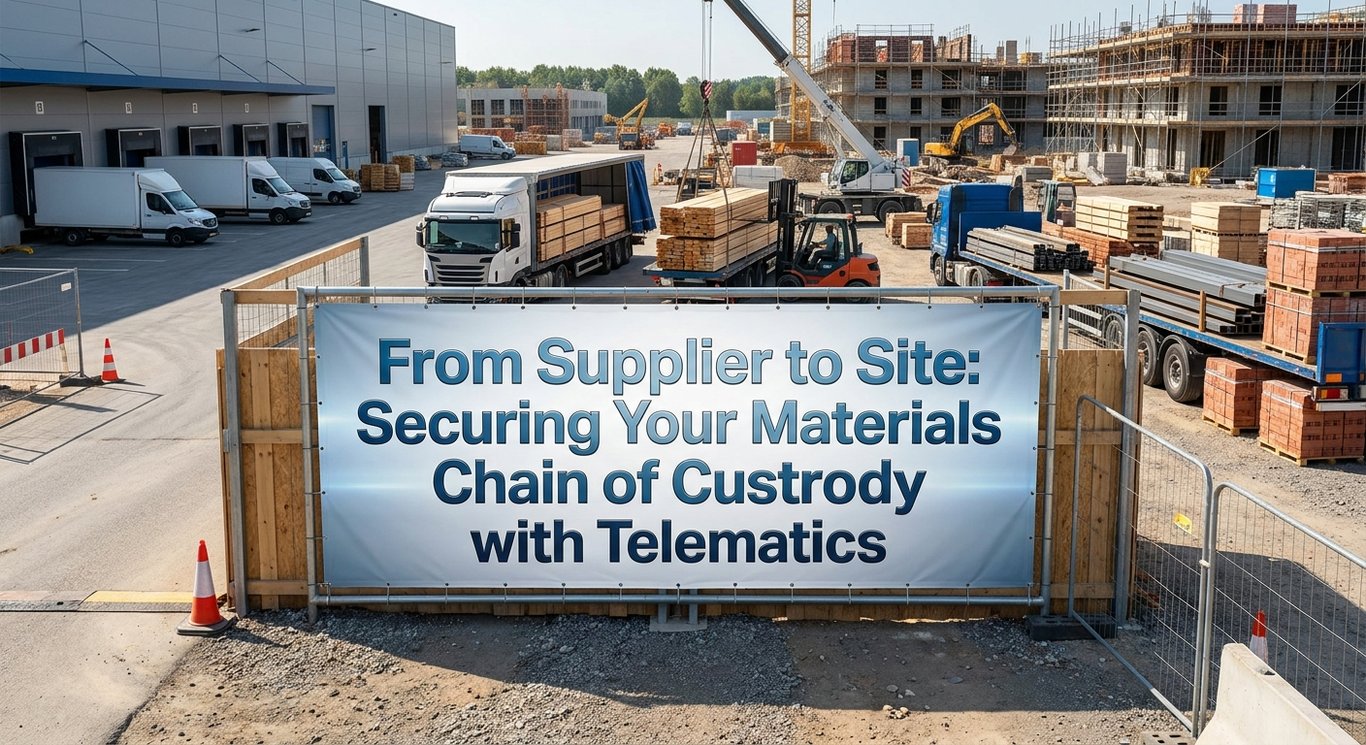
From Supplier to Site: Securing Your Materials Chain of Custody with Telematics
In the world of construction, logistics, and industrial operations, knowing exactly where your materials are – and who has handled them – is more than just good practice. It’s a business necessity. Chain of custody refers to the documented, traceable record of how materials move from one party to the next, from the original supplier all the way to the final job site. Telematics – the technology that combines GPS tracking, onboard sensors, and real-time data transmission – has become a powerful tool for maintaining that unbroken trail of accountability across every leg of the journey. 🚛
Today, industries like construction, infrastructure development, cold-chain logistics, and heavy manufacturing are increasingly treating supplier-to-site visibility as a critical business issue – not just a nice-to-have. Rising material costs, tighter regulatory environments, and the growing complexity of multi-party supply chains mean that a single gap in custody documentation can trigger project delays, financial losses, or serious compliance headaches. Organizations are waking up to the fact that visibility isn’t just about efficiency – it’s about risk management, cost control, and protecting their reputation.
What Is Materials Chain of Custody and Why It Matters From Supplier to Site?
At its most fundamental level, chain of custody is the documented, traceable movement of materials from their point of origin to their final destination. Every time a material changes hands – whether it’s transferred from a supplier to a carrier, unloaded at a staging area, or received at a site gate – that event should be recorded, time-stamped, and linked to the individuals responsible. The goal is to create a complete audit trail that proves not just where materials went, but who had control over them at every step and under what conditions they were handled. This level of access control is what separates a professionally managed supply chain from one that’s flying blind. 📋
A typical supplier-to-site journey involves several distinct phases, each with its own custody handoff. Materials begin at the supplier’s facility, where they’re packaged and prepared for transport. From there, a carrier takes custody during transit. Materials may then pass through a staging or warehousing area before reaching the site gate, where they’re inspected and signed in. Finally, they move to on-site storage or direct use. At each of these transitions, custody formally changes hands – and without clear documentation at every handoff, accountability quickly becomes murky. Even one undocumented gap can unravel the entire chain.
The reasons chain of custody matters span several critical business dimensions. Security is the most obvious – you need to know that materials haven’t been tampered with, stolen, or substituted along the way. Quality assurance is equally important, particularly for sensitive materials that must be stored or transported under specific conditions. Regulatory compliance is another major driver, especially for hazardous materials, chemicals, or food-grade products. And when disputes arise – over quantities, specifications, or damage – a solid chain of custody record is often the only thing that can resolve the issue quickly and fairly. In short, chain of custody answers the essential question: “Who handled what, when, and under what conditions?” 🔍
Key Risks in an Unsecured Materials Chain of Custody
Without robust custody controls in place, organizations expose themselves to a wide range of risks that can hit the bottom line hard. Theft and pilferage of high-value materials – copper wiring, specialty steel, electronic components – are persistent problems on construction and infrastructure projects. Diversion, where materials are rerouted to unauthorized buyers, and fraud involving misrepresented quantities or specifications are also real concerns. When there’s no clear audit trail, it’s nearly impossible to pinpoint where the loss occurred or who was responsible, making recovery and prevention extremely difficult. 😬
Beyond outright theft, integrity risks pose a serious threat to material quality and project outcomes. Damage in transit – from rough handling, improper loading, or road vibrations – can compromise structural materials without any visible signs. Temperature-sensitive goods like concrete additives, resins, or chemical compounds can degrade if exposed to incorrect storage conditions. Contamination and tampering are also concerns, particularly in industries dealing with food, pharmaceuticals, or hazardous chemicals. Without environmental monitoring and documented handling records, these issues may not be discovered until materials are already incorporated into a project – at which point the damage is done.
The downstream business impacts of a broken chain of custody can be severe and far-reaching. Project delays caused by rejected or compromised materials can trigger costly schedule overruns and contractual penalties. Rework – tearing out and replacing materials that didn’t meet specifications – wastes both time and money. Safety incidents can occur when substandard materials are unknowingly used in critical applications. Environmental violations can result in heavy fines and reputational damage. And in legal or insurance contexts, the inability to prove responsibility or demonstrate compliance can leave organizations holding the bag for losses they didn’t cause. The stakes are genuinely high. ⚠️
How Telematics Strengthens Chain of Custody From Supplier to Site
Telematics is the technology that collects, transmits, and analyzes data from vehicles, assets, and sensors in real time. In the context of supply chain management, it applies to everything from trucks and containers to individual pallets and even specific high-value items fitted with tracking devices. By combining GPS positioning, onboard diagnostics, IoT sensors, and wireless communication, telematics creates a continuous stream of data about where materials are, how they’re being handled, and who is responsible for them at any given moment. It’s essentially a digital nervous system for your materials chain. 📡
The core capabilities that make telematics so valuable for chain of custody are GPS location tracking, geofencing, time-stamped event logging, user identification, and digital proof of delivery. Geofences – virtual boundaries around approved routes, facilities, or delivery zones – trigger automatic alerts when a vehicle or asset strays outside authorized areas. Time-stamped events create an immutable record of every custody transition. Driver or operator identification links specific individuals to specific actions. And digital proof of delivery (ePOD) replaces paper-based sign-off with verifiable electronic records. Together, these capabilities maintain an unbroken custody trail from the moment materials leave the supplier to the moment they’re accepted on site.
Environmental telematics takes custody monitoring a step further by tracking the conditions in which materials are handled, not just their location. Temperature sensors, humidity monitors, shock detection, and door-open event logging can all be integrated into transport vehicles and storage containers. If a refrigerated truck’s temperature spikes during transit, or a container is opened at an unauthorized location, the system logs it immediately and can trigger real-time alerts. This means that by the time materials arrive on site, there’s a complete record of every environmental condition they experienced – giving site teams confidence that what they’re accepting meets the required specifications. 🌡️
“A seamless chain of custody ensures goods are accounted for at every handoff, ensuring absolutely no unauthorized access while maintaining chain integrity.” -Trackonomy
Perhaps most powerfully, telematics data doesn’t have to live in isolation. Integration with electronic proof of delivery systems, enterprise resource planning (ERP) platforms, and warehouse management systems (WMS) allows sensor data and custody records to be combined into comprehensive digital passports for materials. These integrated records link location data, environmental readings, custody handoffs, and documentation into a single, verifiable file. In the event of a dispute, audit, or legal proceeding, this kind of court-verifiable digital evidence can make all the difference – turning what might have been a “he said, she said” situation into a clear, data-backed account of events.
Core Components of a Secure Supplier-to-Site Custody Framework
A strong chain of custody framework starts with solid policy and process foundations. This means establishing documented custody rules that define exactly how materials should be handled, transferred, and recorded at every stage of the journey. Clear role assignments are essential – suppliers, carriers, site logistics teams, and receiving personnel all need to understand their specific responsibilities within the custody chain. Without this foundational layer of governance, even the best technology in the world won’t deliver consistent results, because people won’t know what they’re supposed to do or when. 📝
[cta-call:Call2]
On the operational side, standardized labeling and packaging practices are critical for maintaining material identity throughout the journey. Every shipment should be clearly labeled with unique identifiers that persist from origin to destination. Secure loading and unloading zones – with controlled access and documented procedures – reduce opportunities for tampering or substitution. On-site inventory checks at the point of delivery ensure that what was ordered matches what arrived, and any discrepancies are flagged immediately rather than discovered weeks later during a project audit.
The technology pillars of a secure custody framework bring everything together. Unique material identifiers – RFID tags, barcodes, or QR codes – allow individual items or batches to be tracked discretely throughout the supply chain. Telematics devices on transport vehicles provide continuous location and environmental monitoring. IoT sensors on containers, pallets, or storage units extend visibility into conditions that might otherwise go unrecorded. And a centralized monitoring platform aggregates all of this data into a single dashboard, giving operations teams real-time visibility and the ability to act quickly when something goes wrong. 🔧
Governance is the glue that holds the entire framework together. Regular auditing of custody records helps identify gaps, inconsistencies, or patterns that might indicate emerging risks. Exception management processes ensure that anomalies – an unauthorized stop, a temperature excursion, a missing sign-off – are investigated and resolved promptly rather than ignored. Compliance checks verify that custody practices align with regulatory requirements and contractual obligations. And a commitment to continuous improvement means that lessons learned from incidents or near-misses are systematically incorporated into updated procedures, closing gaps before they become costly problems.
Telematics Use Cases Across Different Material Types (Bulk, High-Value, Cold Chain, Hazmat)
For bulk and commodity materials – aggregates, sand, gravel, lumber, or steel – telematics provides a straightforward but powerful layer of accountability. GPS tracking and geofencing ensure that vehicles follow approved routes and don’t make unauthorized stops or detours that could indicate diversion or theft. Digital delivery confirmations, tied to specific time windows and GPS coordinates, create verifiable records of when and where materials were delivered. For large infrastructure projects where bulk material quantities directly affect project costs, this level of visibility can prevent significant financial losses and billing disputes. 🏗️
“Maintaining a strong CoC involves accurately identifying and tracking each shipment, documenting every handoff, recording timestamped audit trails, and enforcing secure storage and transport protocols to preserve product integrity.” -Trackonomy
High-value and critical equipment – precision instruments, specialty components, or expensive machinery – demands an even more rigorous approach to custody. Combining continuous location tracking with driver identification and secure custody logs creates a detailed history of every individual who had control over an asset, at every point in its journey. If a piece of equipment arrives damaged or goes missing, the custody record provides a clear timeline for investigation. Insurance claims become far easier to process, and the deterrent effect of knowing that every movement is being logged can significantly reduce opportunistic theft.
Cold-chain materials present unique challenges that make environmental telematics absolutely essential. Temperature-sensitive goods like concrete admixtures, specialty resins, biological agents, or food-grade products can be rendered useless – or even dangerous – by even brief exposure to incorrect temperatures. Continuous temperature monitoring throughout transit, combined with automated alerts when thresholds are breached, allows logistics teams to intervene before damage becomes irreversible. The resulting data logs don’t just protect material quality – they also serve as documentary proof that custody was maintained under proper conditions, which is often a contractual or regulatory requirement. 🧊
Hazardous and regulated materials – chemicals, radioactive substances, explosives, or other controlled goods – carry the most stringent chain of custody requirements of all. Regulatory frameworks in many jurisdictions require detailed documentation of every custody transfer, secure storage conditions, and verified inspection records. Telematics supports these requirements by providing real-time location data, secure area monitoring, automated alerts for unauthorized access, and digital custody transfer records that can be submitted to regulators as proof of compliance. For organizations operating in this space, telematics isn’t optional – it’s the backbone of a legally defensible custody program. ⚗️
Designing Chain of Custody Processes That Work With Telematics
The first step in designing an effective custody process is mapping your current supplier-to-site workflow in detail. This means tracing every stage of the material journey – from initial supplier pickup to final site acceptance – and identifying every point where custody changes hands. At each of these handoff points, ask: Is there a documented procedure? Is someone clearly accountable? Is there a record that can be audited later? This mapping exercise almost always reveals gaps and vulnerabilities that weren’t previously visible, and it provides the foundation for designing improved processes. 🗺️
Once the workflow is mapped, the next step is defining standard operating procedures (SOPs) for each custody event. These SOPs should cover labeling requirements, loading and unloading protocols, sign-off procedures, inspection checklists, and digital confirmation steps – and they should be explicitly aligned with the data points that telematics systems will capture. For example, a delivery SOP might specify that the driver must log a geofenced arrival event, the site receiver must scan the material’s RFID tag, and both parties must confirm the ePOD before custody is formally transferred. This kind of tight alignment between process and technology ensures that data captures reality accurately.
Documentation and record-keeping are the outputs that make the entire system defensible and useful. Every custody record should capture the material’s origin, the route it traveled, the environmental conditions it experienced, every custody transfer with timestamps and responsible parties, and the final site acceptance confirmation. Ideally, all of this information flows into a unified platform where it can be searched, audited, and exported as needed. Fragmented records – some on paper, some in spreadsheets, some in different software systems – are a liability, not an asset. A single source of truth is the goal. 📂
“The simplest way to define the chain of custody in the context of supply chains could be to name it as a certification mechanism that enables goods to come with a digital passport that serves as a verifiable transcript of the product’s life-cycle and journey.” -Arviem
Even the best-designed process will fail if the people involved don’t follow it consistently. Training and change management are therefore critical components of any custody framework rollout. Drivers need to understand how to use telematics devices correctly and why the data they generate matters. Site teams need to know the proper inspection and sign-off procedures. Suppliers need to understand their labeling and documentation obligations. And everyone needs to understand that these aren’t bureaucratic box-ticking exercises – they’re the mechanisms that protect the organization, and by extension, their own jobs and projects, from costly mistakes and disputes.
Data, Security, and Compliance: Making Telematics Evidence-Ready
For a chain of custody record to hold up under scrutiny – whether in a regulatory audit, an insurance claim, or a legal proceeding – it needs to meet a high standard of integrity. This means records must be accurate, complete, and tamper-evident. Time-stamps must be precise and linked to a reliable time source. Events must be connected to specific assets, vehicles, and individuals rather than anonymous entries in a log. And the system that stores these records must be able to demonstrate that data hasn’t been altered after the fact. These aren’t just technical requirements – they’re what makes the difference between a record that’s useful and one that’s useless in a dispute. 🔐
Cybersecurity and data privacy are equally important considerations. Telematics systems collect sensitive operational data – vehicle locations, driver behaviors, material movements – that could be exploited if it fell into the wrong hands. Protecting this data requires strong access controls, encrypted data transmission, regular security audits, and clear policies about who can view or modify custody records. In multi-party supply chains, where suppliers, carriers, and clients may all have some level of system access, defining and enforcing appropriate access permissions is especially critical. A breach of telematics data isn’t just an IT problem – it’s a custody integrity problem.
When properly structured, telematics logs can function as a digital passport for materials – a verifiable transcript of everything that happened to a shipment from origin to destination. This kind of documentation is precise enough to be validated in court, referenced in insurance claims, and used to support regulatory compliance demonstrations. Organizations that invest in making their telematics evidence-ready – by ensuring data integrity, proper access controls, and clear linkage between events and responsible parties – are building an asset that pays dividends far beyond day-to-day operational visibility. 🏛️
Several regulatory and contractual frameworks are driving the need for telematics-supported custody. Hazardous materials regulations in many countries require documented chain of custody for transport and storage. Environmental regulations may mandate proof of proper handling for certain chemicals or waste materials. Contractual service level agreements (SLAs) often include delivery time windows, condition requirements, and documentation obligations that telematics data can directly support. And in government or infrastructure contracts, the ability to demonstrate compliance with custody requirements may be a prerequisite for payment or project continuation. Telematics turns compliance from a burden into a competitive advantage.
Implementing Telematics for Supplier-to-Site Custody: Step-by-Step
Before deploying any technology, start with a thorough assessment of your current situation. Identify the gaps in your existing custody processes – where are materials going untracked? Where do handoffs happen without documentation? What are the highest-risk material categories in terms of value, sensitivity, or regulatory exposure? Understanding your risk profile and defining clear objectives for what telematics should achieve will ensure that your implementation is targeted and effective, rather than a technology deployment in search of a problem. 🎯
“The transfer of custody must be documented in writing or electronically…” -Chemical Security Group
Vendor and technology selection is the next critical step, and it deserves careful attention. Not all telematics platforms are created equal, and the right choice depends on your specific material types, supply chain structure, and integration requirements. Look for platforms that support multi-party supply chains – where suppliers, carriers, and site teams can all interact with the system in appropriate ways. Evaluate the range of sensors and devices available, the quality of the analytics and alerting capabilities, and the ease of integration with your existing ERP, WMS, or document management systems. A platform that can’t talk to your other systems will create data silos rather than the unified custody record you need.
Rather than attempting a full-scale deployment immediately, start with a pilot program on a specific route, project, or material category. Define clear success metrics upfront – what reduction in shrinkage are you targeting? What level of custody documentation completeness? What response time for alerts? Running a controlled pilot allows you to test device configurations, refine SOPs, identify unexpected challenges, and build internal confidence before committing to broader rollout. The data and lessons from a well-designed pilot are also invaluable for making the business case for full-scale implementation. 🧪
When you’re ready for full-scale rollout, the focus shifts to onboarding all parties in the supply chain. Suppliers need to understand their new labeling and documentation requirements. Logistics partners need to have telematics devices installed and operational on relevant vehicles. Site teams need to be trained on receiving procedures and digital sign-off processes. SLAs and contractual terms with all parties should be updated to reflect the new custody requirements and the consequences of non-compliance. Getting alignment across the entire chain – not just your own internal operations – is what makes the custody framework truly effective.
Implementation doesn’t end at rollout – it’s an ongoing process of monitoring, learning, and improving. Regularly review telematics data to identify patterns: Are there routes with recurring anomalies? Are certain carriers consistently generating exceptions? Are there material categories where custody gaps persist? Use these insights to update SOPs, address supplier or carrier performance issues, and refine device configurations. As the program matures and delivers proven results, you’ll also be well-positioned to scale it to new materials, regions, or business units – building a progressively more resilient and transparent supply chain. 📈
Measuring ROI and Business Impact of Securing Materials Custody With Telematics
The tangible benefits of a well-implemented telematics-driven custody program are significant and measurable. Organizations typically see reductions in material shrinkage and theft as the deterrent effect of continuous monitoring kicks in. Fewer incidents of material damage or degradation – caught early by environmental monitoring – translate directly into less rework and material waste. Disputes with suppliers, carriers, or clients are resolved faster and more definitively when there’s a clear data record to reference. And improved delivery predictability makes project scheduling more reliable, reducing the costly ripple effects of material delays. 💰
Beyond the immediate financial wins, the strategic gains from securing your materials chain of custody are equally compelling. Stronger regulatory compliance reduces the risk of fines, project shutdowns, or reputational damage from violations. Clients and stakeholders increasingly expect transparency in supply chains – being able to demonstrate robust custody controls can differentiate your organization in competitive bidding situations. And supply chains with strong visibility and accountability are simply more resilient – better able to absorb disruptions, adapt to changing conditions, and recover quickly from incidents when they do occur.
“Chain of custody is a process whereby all materials that are transported between the parties is clearly documented.” -ILM Corporation
Building the internal business case for telematics-driven custody investment requires translating these benefits into financial terms that resonate with decision-makers. Start by quantifying the current cost of losses – material shrinkage, rework, dispute resolution, and compliance failures. Add the potential insurance premium reductions that better risk management might unlock. Factor in the operational efficiency gains from streamlined documentation and faster dispute resolution. And don’t overlook the competitive differentiation value – in markets where clients are increasingly scrutinizing supply chain practices, a robust custody framework can be a genuine differentiator that wins contracts and builds long-term relationships. 🏆
FAQ: Common Questions About Securing Your Materials Chain of Custody With Telematics
As organizations explore telematics for custody security, a consistent set of questions tends to come up – around what it actually involves, where to start, and what it takes to make it work in practice. The following answers address the most common of these questions to help you move from curiosity to confident action. ❓
How is chain of custody different from basic shipment tracking?
Basic shipment tracking tells you where a package or vehicle is at a given moment – it’s primarily a location service. Chain of custody goes much further by documenting who had control of materials at every point in the journey, under what conditions they were handled, and with what level of authorization. It includes documented handoffs, access control records, inspection confirmations, and environmental data – creating a complete accountability trail rather than just a movement log.
Telematics extends basic shipment tracking into full chain of custody records by linking location data with identity information, environmental sensor readings, and time-stamped custody events. Instead of just knowing that a truck was at a certain location at a certain time, you know who was driving, whether the cargo door was opened, what temperature the load experienced, and whether delivery was formally confirmed by an authorized recipient. That’s the difference between tracking and custody. 🔗
Do I need telematics for all materials or only high-risk ones?
A risk-based approach is almost always the right starting point. Prioritize telematics-enabled custody for materials that are high-value, sensitive to handling conditions, subject to regulatory requirements, or critical to project timelines. These are the categories where the cost of a custody failure is highest and where the investment in monitoring technology delivers the clearest return. Applying the same level of scrutiny to every bag of sand as to a shipment of specialty chemicals would be neither practical nor cost-effective.
That said, broader deployment often makes sense once the benefits and processes are proven on priority categories. As telematics costs continue to decline and integration with existing systems becomes easier, the economic case for extending coverage to lower-risk materials strengthens. Many organizations find that starting focused and expanding systematically – rather than trying to do everything at once – is the most effective path to comprehensive custody visibility. 🎯
What kinds of devices and sensors are typically required?
The device ecosystem for telematics-driven custody is diverse and scalable. Vehicle telematics units are the foundation – these plug into a vehicle’s OBD port or are hardwired in, providing GPS location, speed, and route data. GPS trackers can be attached to containers, trailers, or large equipment for asset-level visibility. RFID tags or barcodes on individual items or pallets enable discrete material tracking. And IoT sensors – for temperature, humidity, shock, vibration, or door access – extend monitoring to the environmental conditions that affect material integrity. 📦
The key to getting the right mix of devices is matching hardware to your specific custody risks and material types. A cold-chain operation needs robust temperature sensors above all else. A high-value equipment operation might prioritize GPS trackers with tamper alerts. A bulk materials operation might focus on vehicle telematics and geofencing. Integration with your existing systems – ERP, WMS, or document management – is equally important, so evaluate hardware compatibility with your chosen platform before committing to a specific device ecosystem.
How long should chain of custody records be stored?
Record retention requirements vary significantly depending on your industry, the materials involved, and the regulatory frameworks that apply to your operations. Hazardous materials regulations may specify minimum retention periods for custody documentation. Contractual obligations with clients or government agencies may impose their own requirements. And your own risk appetite – particularly around potential litigation or insurance claims – should inform how long you keep records beyond any minimum requirements. When in doubt, align with your legal or compliance team’s guidance. ⏳
The good news is that modern telematics platforms and document management systems can automate much of the record retention process. Policies can be configured to ensure that custody data is retained for the required period, securely archived, and easily retrievable when needed – without requiring manual intervention or creating storage management headaches. This automation is one of the underappreciated operational benefits of a well-integrated telematics custody system.
What are the first steps to get internal buy-in for telematics-driven custody?
The most effective way to build internal support is to start with a clear, evidence-based problem statement. Document the current cost of custody failures – material losses, rework expenses, dispute resolution time, compliance incidents – and connect these directly to the gaps in your existing custody processes. If you can reference pilot data from a small-scale telematics trial, or industry benchmarks showing what similar organizations have achieved, even better. Decision-makers respond to concrete numbers far more than abstract arguments about visibility and transparency. 💡
Equally important is bringing the right stakeholders into the conversation early. Operations, IT, compliance, procurement, and finance all have a stake in how materials are tracked and documented – and each function will have its own perspective on why better custody matters. Framing telematics and custody controls as a cross-functional risk and value initiative, rather than a technology project owned by one department, builds broader ownership and makes implementation far smoother. The organizations that succeed fastest are the ones that treat this as a business transformation, not just a tech deployment.
Conclusion: Turning Supplier-to-Site Visibility Into a Secure, Measurable Advantage
Securing your materials chain of custody from supplier to site is ultimately about three things: documented handoffs, clear access control, and verified handling conditions – maintained consistently across every leg of the journey. Telematics provides the real-time data, automated event logging, and integrated documentation capabilities needed to achieve this at scale, turning what was once a paper-based, gap-filled process into a robust, auditable digital system. Organizations that get this right don’t just reduce losses and resolve disputes faster – they build supply chains that are fundamentally more reliable, more compliant, and more trustworthy to everyone who depends on them. By combining clear SOPs, properly trained teams, and integrated telematics solutions, the goal of complete supplier-to-site custody visibility moves from aspiration to operational reality. 🏆
If you’re ready to take the next step, start by honestly evaluating where your current supplier-to-site custody process has gaps. Map your highest-risk material flows, identify the handoff points where accountability is weakest, and look for a pilot route or project where you can test telematics-enabled custody in a controlled way. Engage telematics and chain-of-custody experts who understand both the technology and the operational realities of your industry. The organizations that act now – rather than waiting for a costly incident to force the issue – are the ones that will build the resilience, transparency, and competitive advantage that increasingly complex supply chains demand. From supplier to site, every step of the journey deserves to be secured. 🚀