
Integrated Job Site Management: Connecting Fleet, Materials, and Safety with Telematics
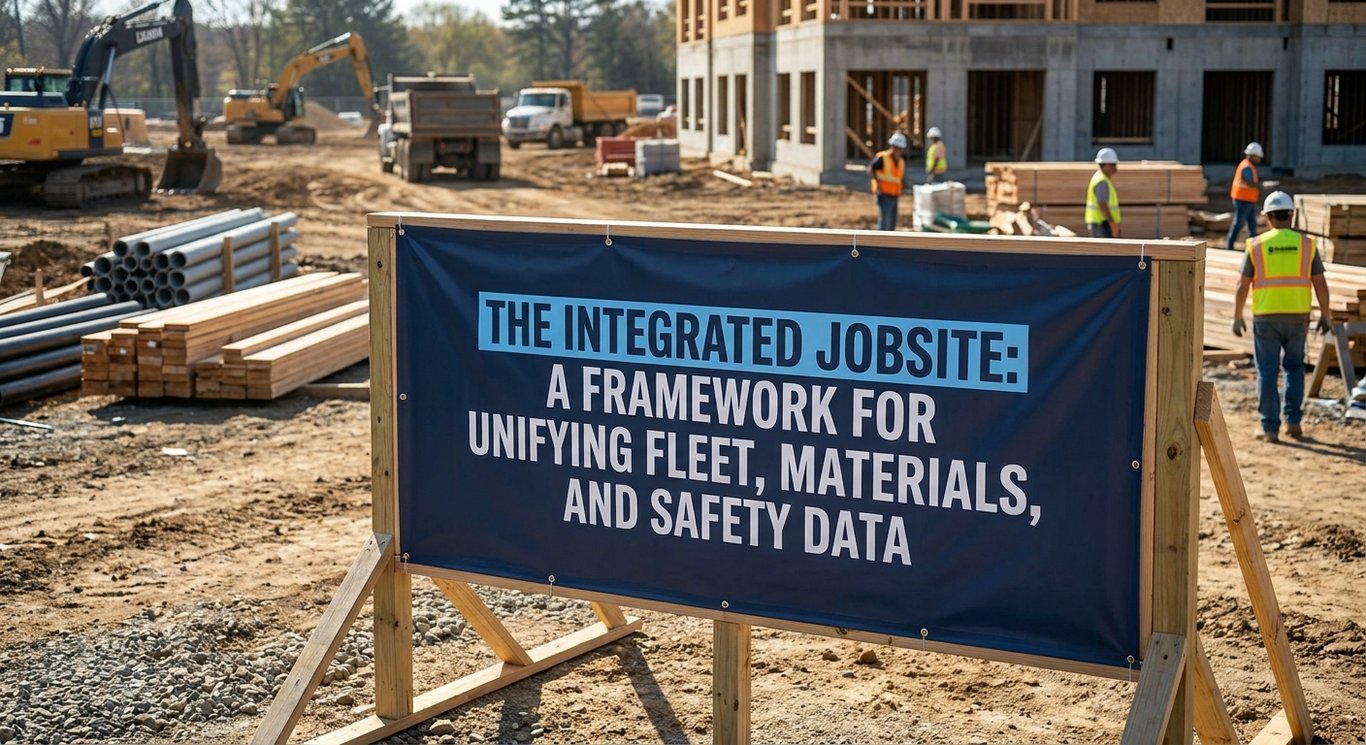
The construction industry is undergoing a massive shift in how job sites are managed. For decades, fleet tracking, materials logistics, and safety monitoring operated in separate silos – each department using its own tools, spreadsheets, and gut instincts to keep projects moving. Today, forward-thinking construction firms are breaking down those walls and moving toward a unified, telematics-driven approach that connects every moving part of a job site into one intelligent system. This integrated model gives project managers real-time visibility into equipment, people, and assets – all from a single platform. By combining GPS positioning, onboard sensors, and two-way communications, telematics transforms a chaotic job site into a coordinated, data-powered operation. 🏗️
So what exactly does construction telematics capture? In practical terms, it’s a continuous stream of data flowing from machines and vehicles to a central dashboard. That includes GPS location, fuel consumption, engine performance metrics, idle time, operator behavior patterns, and equipment health diagnostics. Every time a bulldozer idles too long or a haul truck takes a sharp turn, that information is logged, analyzed, and made available to managers in near real time. This data doesn’t just sit in a database – it flows into cloud-based platforms where it’s organized into actionable insights that help teams make smarter decisions across every corner of the job site.
This guide is designed to be your complete roadmap for understanding and implementing integrated job site management through telematics. We’ll walk through the core components – fleet management, materials logistics, and safety monitoring – and then cover practical implementation steps, ROI calculations, and best practices for building a data-driven culture on your sites. Whether you’re a contractor just starting to explore telematics or a project manager looking to level up an existing system, this article answers the most common questions about connected job sites and gives you the tools to move forward with confidence. Let’s dig in. 🚀
Understanding Construction Telematics and the Connected Job Site
Telematics is a fusion of two fields: telecommunications and informatics. In plain terms, it means using communication technology to collect, transmit, and analyze data from remote assets. In construction, telematics started out as basic GPS tracking – knowing where your equipment was at the end of the day. But the technology has evolved dramatically. Modern construction telematics now delivers full operational intelligence, covering everything from real-time utilization rates and predictive maintenance alerts to operator behavior scoring and safety zone monitoring. What began as a dot on a map has become one of the most powerful management tools in the industry.
At the hardware level, a telematics system relies on several key components working together. Onboard sensors embedded in or attached to equipment collect raw data – engine hours, fuel levels, temperature, vibration, and more. GPS devices pinpoint exact locations, while cellular or satellite connectivity transmits that data to the cloud. Once it reaches a cloud-based platform, sophisticated software aggregates and analyzes the information, turning raw numbers into meaningful dashboards, alerts, and reports. The result is a system that not only tells you where your assets are but also how they’re performing and what they need next.
A “connected job site” might sound like a tech buzzword, but in practice it means something very tangible. Imagine opening your laptop in the morning and seeing a live map of every machine on your site, color-coded by activity status. A dashboard shows you which excavator has been idling for 45 minutes, which loader is due for an oil change, and which operator triggered a speeding alert on the access road. Alerts pop up when equipment enters a restricted zone or when a maintenance threshold is crossed. And all of this integrates with your project management software and maintenance scheduling tools, so nothing falls through the cracks. That’s the connected job site – and it’s becoming the new standard. 📊
A fair question many contractors still ask is whether telematics is truly necessary or just a nice-to-have. The industry has answered that question pretty clearly: telematics is no longer optional. As margins tighten, labor costs rise, and project complexity increases, the ability to make fast, data-informed decisions is a genuine competitive advantage. Firms that rely on manual tracking and reactive maintenance are consistently outpaced by those using telematics to optimize every hour of equipment time. Across the industry, the consensus is that telematics has become foundational – not just for efficiency and safety, but for staying competitive in a demanding market.
Fleet Visibility and Utilization: Managing Equipment with Telematics
One of the most immediate benefits of telematics is complete fleet visibility. Instead of calling site supervisors to find out where the compactor went or whether the crane is still on Site B, managers can pull up a live map and see every asset in real time. This level of oversight is especially valuable for contractors running multiple job sites simultaneously, where equipment often gets moved between locations without proper documentation. Telematics eliminates the guesswork, giving managers a single platform to monitor the entire fleet regardless of how many sites are active at once. 📍
Beyond just knowing where equipment is, telematics provides detailed utilization data – engine hours logged, time spent actively working versus idling, and patterns in daily usage. This information is incredibly powerful for fleet planning. If data shows that a particular excavator is only being used 40% of the time it’s on site, that’s a signal to reassign it, reduce rental commitments, or reschedule project phases. Conversely, if a machine is being pushed to its limits every day, that’s a cue to bring in a backup before a breakdown causes a costly delay. Matching fleet size and deployment to actual project demand is one of the most direct ways telematics improves the bottom line.
“Construction telematics is the use of digital technologies to collect, transmit and analyze real-time data from heavy equipment, combining GPS tracking and wireless communication to provide managers with valuable insights into their fleet and operations.” -Wagner Equipment
Maintenance is another area where telematics delivers serious value. Traditional maintenance schedules are based on fixed intervals – change the oil every 250 hours, inspect the hydraulics every month. But telematics enables condition-based maintenance, where service is triggered by actual usage data and real-time diagnostics rather than arbitrary calendars. If an engine is running hot or a component is showing unusual vibration patterns, the system flags it before it becomes a failure. This “just-in-time” approach reduces unnecessary servicing, prevents unexpected breakdowns, and extends the overall life of expensive assets. Less downtime means more productive hours – and that adds up fast on a busy site. 🔧
When contractors ask about the ROI of fleet telematics, the numbers tend to be pretty compelling. Idle time reduction is one of the biggest wins – studies consistently show that construction equipment idles 30 to 40% of the time it’s running, burning fuel and accumulating engine hours without doing any productive work. Even a modest reduction in idle time can save thousands of dollars per machine per year. Add in the savings from optimized maintenance, reduced theft losses, and better dispatching decisions, and the return on a telematics investment often becomes clear within the first year of deployment. Lower operating costs and higher productivity – that’s a combination any contractor can get behind.
Materials Management and Logistics on a Connected Job Site
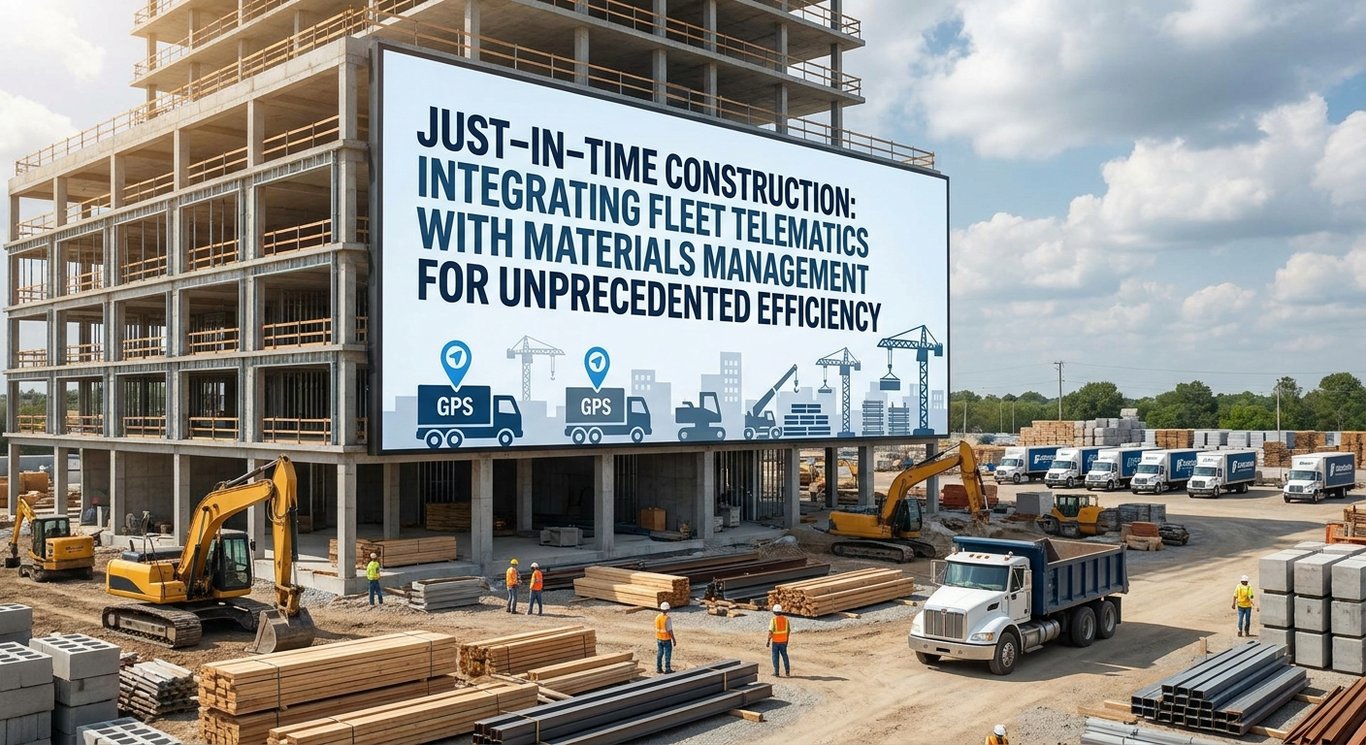
Fleet telematics doesn’t just help you manage machines – it also plays a critical role in keeping materials flowing smoothly. When you can see exactly where your haul trucks are and how long each delivery cycle takes, you can schedule material arrivals to align with equipment availability. Nothing kills productivity faster than a concrete delivery showing up while the pump truck is still 20 minutes away, or a steel shipment arriving when there’s no crane available to offload it. Telematics gives logistics coordinators the real-time data they need to sequence deliveries intelligently, preventing bottlenecks and keeping crews busy rather than waiting around. 📦
[cta-call:Call2]
GPS tracking and geofencing take materials coordination a step further, especially on large sites or multi-site operations. By drawing virtual boundaries around laydown areas, staging zones, and delivery gates, project managers can monitor exactly when and where materials are being received. If a truck is circling the site looking for an open receiving area, the system can reroute it automatically or alert a coordinator to clear the way. Geofencing also helps prevent congestion at busy delivery points by spacing out truck arrivals based on real-time site conditions. The result is a smoother, more predictable flow of materials that aligns tightly with equipment and labor schedules.
Many contractors worry about how telematics fits with their existing inventory or ERP systems, and it’s a legitimate concern. The good news is that modern telematics platforms are increasingly built with integration in mind. In a well-connected workflow, telematics data can automatically trigger material reorder requests when haul quantities drop below a threshold, confirm delivery completion by logging when a truck exits the geofenced delivery zone, and verify haul quantities for billing and reconciliation purposes. These integrations reduce manual data entry, minimize billing disputes, and give supply chain managers a much clearer picture of material flow across the entire project. It’s not just about tracking trucks – it’s about making the whole logistics operation smarter. 🔄
Enhancing Job Site Safety with Telematics Data
Construction is one of the most hazardous industries in the world, and telematics is becoming one of the most effective tools for changing that reality. By continuously monitoring operator behavior – tracking speeding events, harsh braking, sudden acceleration, and unauthorized equipment use – telematics gives safety managers the data they need to intervene before an incident occurs. Equipment condition monitoring adds another layer, flagging mechanical issues that could create dangerous operating conditions. When you combine behavioral data with equipment health data and environmental awareness, you get a proactive safety system that’s always watching, even when supervisors aren’t physically present. 🦺
“Telematics systems play a crucial role in monitoring fleet location and activity, reducing downtime through proactive maintenance alerts, and enhancing operational efficiency by analyzing equipment usage and performance.” -Tenna
Geofencing is one of the most powerful safety applications in the telematics toolkit. By drawing virtual boundaries around restricted zones – areas near active excavations, pedestrian walkways, utility corridors, or exclusion zones around heavy lifts – safety managers can set up automatic alerts that trigger the moment a machine or worker enters an unsafe area. These alerts can go to the operator via an in-cab notification, to a supervisor’s phone, or to a centralized safety dashboard. The ability to define and enforce spatial boundaries digitally adds a layer of protection that physical barriers and signage alone simply can’t provide, especially on dynamic sites where conditions change daily.
Access control technology takes equipment safety even further. Using RFID cards, PIN keypads, or biometric ID systems, telematics-enabled machines can be configured to only start for operators who are trained and certified to use them. If an uncertified worker tries to fire up an excavator, the machine simply won’t start – and the attempt is logged for review. This kind of access control is particularly valuable on large sites with high worker turnover, where it’s difficult to manually verify certifications for every operator every day. It reduces incident risk significantly and creates a clear, auditable record of who operated what and when. 🔐
Safety managers also frequently ask how telematics supports emergency response and incident investigation. On the response side, knowing the exact location of every machine and worker at any given moment is invaluable when an emergency occurs – responders can be directed precisely to where they’re needed rather than searching a sprawling site. On the investigation side, telematics data provides a detailed, time-stamped record of what happened in the moments leading up to an incident – machine speed, operator inputs, location, and equipment status. This data helps teams understand root causes, improve training programs, and demonstrate due diligence to regulators and insurers. It turns every incident into a learning opportunity rather than just a liability. 📋
Compliance, Security, and Risk Management
Staying compliant with regulatory requirements is a constant challenge in construction, and telematics makes it significantly easier. Hours of service regulations, emissions standards, safety inspection requirements – all of these demand accurate, verifiable records that can be produced on demand. Telematics systems generate automatic, time-stamped logs of equipment usage, locations, and maintenance activities, creating a compliance paper trail that doesn’t rely on manual record-keeping. When an inspector shows up or an audit is triggered, the data is already organized and ready to go. That kind of documentation confidence is worth a lot, especially as regulatory scrutiny in construction continues to increase.
Equipment theft is a serious and often underestimated problem in construction – the industry loses billions of dollars worth of assets every year. Telematics provides a powerful deterrent and recovery tool. Geofence-based alerts notify managers immediately when equipment moves outside its designated area, and after-hours use alerts flag any activity during times when the site should be inactive. If theft does occur, GPS tracking dramatically improves the odds of recovery by allowing law enforcement to pinpoint the stolen asset’s location in real time. Remote immobilization features, available on some platforms, can even disable stolen equipment remotely, stopping it in its tracks. 🚨
The insurance industry is paying close attention to telematics, and that’s good news for contractors who invest in connected systems. Insurers are increasingly using telematics data to assess the risk profiles of construction fleets – looking at operator behavior scores, maintenance records, and incident histories to determine premium rates. Contractors with well-documented, data-backed safety and maintenance programs are often rewarded with lower premiums or more favorable policy terms. Beyond just premiums, telematics data is becoming a standard tool for claims investigation, helping to establish facts quickly and fairly when disputes arise. It’s a case where technology investment directly reduces financial risk.
“With telematics, supervisors can monitor multiple sites and machines from one dashboard, seeing exactly where construction assets are at all times and monitoring asset utilization to maximize output.” -Wagner Equipment
Choosing and Integrating Telematics Solutions for Construction
Not all telematics solutions are created equal, and choosing the right one for a construction operation requires careful evaluation. The core features to look for include real-time GPS and cellular tracking, comprehensive onboard sensor data, and a robust analytics platform that can surface actionable insights rather than just raw numbers. Construction-specific workflows matter too – things like equipment utilization reporting, maintenance scheduling tied to engine hours, and safety zone management. And critically, the platform should integrate cleanly with the other systems already in use, whether that’s a project management tool, an ERP system, or a maintenance management platform. 🛠️
It’s worth emphasizing why construction-specific solutions outperform generic fleet management tools. A platform designed for long-haul trucking, for example, may track mileage and driver hours beautifully but have no concept of excavator bucket cycles or crane load monitoring. Construction sites involve mixed fleets of heavy equipment, light vehicles, and specialty assets – each with different data needs and operational contexts. A purpose-built construction telematics solution understands these nuances and provides workflows that actually match how site managers think and operate. The difference between a generic tool and a construction-focused platform can be the difference between a system that gets used and one that gets abandoned after three months.
Implementation doesn’t have to be overwhelming if it’s approached methodically. The typical rollout involves hardware installation on priority assets, setting up cellular or satellite connectivity, configuring the software platform with site-specific parameters, and training users at every level – from operators to project managers to executives. Starting with a pilot on a single project or a subset of the fleet is almost always the smartest approach. It allows teams to work out technical issues, build familiarity with the platform, and demonstrate early wins before scaling up. Incremental rollout also makes change management more manageable, giving people time to adapt rather than being hit with a full-scale transformation all at once. 📈
Buyers frequently ask about interoperability, data ownership, and scalability – and these are exactly the right questions to ask before signing a contract. On interoperability, look for platforms with open APIs or pre-built integrations with major construction software ecosystems. On data ownership, make sure your contract clearly states that the data generated by your equipment belongs to you, not the vendor. On scalability, ask how the platform handles growth – adding new sites, new asset types, or new users should be straightforward, not a custom engineering project. A truly integrated job site management solution should grow with your business and connect seamlessly with every system you rely on to run your operations.
Calculating ROI: Productivity, Cost Savings, and Safety Outcomes
When building a business case for telematics, the ROI drivers are well-established and measurable. Fuel savings from idle time reduction are often the first and most visible benefit – when operators know their idle time is being tracked, behavior changes quickly, and fuel bills drop accordingly. Maintenance cost optimization is another major driver, as condition-based servicing reduces both unnecessary preventive work and costly emergency repairs. Add in the value of reduced downtime, better asset utilization, and smarter dispatching, and the financial case for telematics investment becomes very compelling very quickly. These aren’t theoretical benefits – they show up in real numbers on real projects. 💰
Safety improvements also carry significant financial weight, even if they’re harder to quantify directly. Fewer incidents mean fewer workers’ compensation claims, lower insurance premiums, and less project disruption. A serious accident can delay a project by weeks, trigger regulatory investigations, and damage a company’s reputation with clients and subcontractors. When telematics data enables better operator coaching, faster emergency response, and more effective safety training, the downstream financial benefits can far exceed the direct cost savings from fuel and maintenance. Safety is not just a moral imperative – it’s a financial one, and telematics makes it easier to achieve both goals simultaneously.
“Telematics in construction is no longer an optional feature; it is a foundational technology that drives efficiency, reduces downtime, enhances safety and provides the visibility contractors need to remain competitive.” -Construction News Register
Building a credible business case means starting with good baseline data. Before deploying telematics, document your current fuel costs per machine hour, average maintenance spend, incident rates, and equipment utilization percentages. Define the KPIs you’ll track – utilization rates, idle time percentages, fuel consumption per hour, incident frequency rates – and set realistic improvement targets based on industry benchmarks. Once telematics is running, use the platform’s reporting tools to track progress against those baselines and present the results to executives and stakeholders in clear, financial terms. The data will do the talking – and it tends to be pretty persuasive. 📊
Change Management: Training Crews and Building a Data-Driven Culture
Technology is only as good as the people using it, and telematics programs fail more often due to poor change management than technical issues. When operators learn that their machines are being monitored, the natural reaction is often suspicion – “Is this about catching us doing something wrong?” Addressing that concern head-on, with clear and honest communication, is essential. Managers need to explain the goals of the program, what data will be collected, how it will be used, and – critically – that the purpose is to support crews in doing their jobs better and safer, not to build a case against them. Trust is the foundation of a successful telematics rollout, and it has to be built intentionally. 🤝
Training priorities should cover both the practical and the interpretive. On the practical side, operators need to know how to interact with in-cab devices, understand what alerts mean, and respond appropriately to safety and maintenance notifications. Supervisors need to know how to read dashboards, pull reports, and use data to coach their teams constructively. On the interpretive side, everyone involved should understand what the numbers mean in context – an idle time percentage doesn’t tell the whole story unless you understand the operational reasons behind it. Ongoing coaching sessions, where telematics insights are reviewed collaboratively rather than handed down as criticism, are far more effective than one-time training events.
Resistance to monitoring is real, and it shouldn’t be dismissed or steamrolled. The most effective strategy for overcoming it is to share wins early and often. When telematics data helps the team avoid a major breakdown, celebrate that publicly. When idle time reductions save enough fuel to fund a team lunch, make that connection explicit. When a geofence alert prevents a near-miss incident, let the crew know the system worked. Involving operators in reviewing telematics reports – rather than just presenting them with top-down findings – builds a sense of ownership and participation. Over time, a data-driven culture becomes self-reinforcing, because people can see with their own eyes that the system is making their work better. 🏆
Future Trends in Integrated Job Site Management and Telematics
The future of telematics in construction is deeply intertwined with project management and Building Information Modeling (BIM). As these platforms become more deeply integrated, contractors will be able to align real-time site conditions with project schedules and 3D models in ways that simply weren’t possible before. Imagine a scenario where telematics data automatically updates the project schedule when a machine falls behind its expected productivity rate, or where BIM models are overlaid with live equipment positions to verify that work is progressing in the right sequence. This kind of tight integration between digital planning tools and real-world operations will redefine what’s possible in project delivery. 🌐
Artificial intelligence and advanced analytics are rapidly moving telematics from descriptive to prescriptive. Today’s platforms are excellent at telling you what happened – how long a machine idled, where it went, what alerts fired. Tomorrow’s platforms will tell you what’s going to happen and what to do about it. Predictive maintenance algorithms will identify failure patterns before they manifest as breakdowns. AI-powered dispatching tools will automatically optimize equipment assignments based on real-time productivity data. And machine learning models will continuously refine their recommendations as they accumulate more data from your specific fleet and operating conditions. The shift from reactive to predictive management is already underway, and it’s accelerating fast. 🤖
Perhaps the most exciting frontier in connected job site management is the expansion of telematics beyond equipment to encompass workers, tools, and the environment itself. Wearable sensors can monitor worker location, fatigue levels, and exposure to hazardous conditions. Smart tool tracking systems can log the location and usage of every drill, wrench, and power tool on site. Environmental sensors can monitor air quality, noise levels, and ground stability in real time. When all of these data streams are integrated into a single platform alongside fleet and materials data, the result is a truly connected ecosystem – one that gives contractors unprecedented visibility and control over every dimension of their operations, no matter how complex or geographically dispersed. 🌍
FAQ: Common Questions About Integrated Job Site Management with Telematics
Q1: How does telematics differ from simple GPS tracking on a construction site? GPS tracking tells you where something is – that’s it. Telematics takes that location data and layers on a rich set of additional information: engine performance metrics, fuel consumption, idle time, operator behavior scores, maintenance alerts, and more. The result is a system that doesn’t just locate your assets but actually tells you how they’re performing, what they need, and whether they’re being operated safely. It’s the difference between knowing your truck is parked at the corner of 5th and Main versus knowing it’s been idling for 40 minutes, is due for a brake inspection, and the driver made three hard-braking events on the way there. That additional context is what turns raw location data into genuinely actionable intelligence.
Q2: Can telematics support both heavy equipment and on-road vehicles in the same system? Absolutely – and this is one of the key advantages of modern construction telematics platforms. A well-designed system can manage a mixed fleet that includes excavators, wheel loaders, crawler cranes, dump trucks, pickup trucks, and everything in between, all within a single unified interface. Different asset types require different telematics devices and data models, and construction-focused platforms are built to handle that complexity. You can set asset-specific alert thresholds, utilization benchmarks, and maintenance schedules for each equipment category, while still viewing everything on the same map and dashboard. That unified view is what makes integrated job site management possible across a diverse fleet. 🚜
Q3: How quickly can contractors expect to see benefits after implementing telematics? Some benefits show up remarkably fast. Within the first few weeks of deployment, most contractors see noticeable reductions in idle time – simply because operators know they’re being monitored and adjust their behavior accordingly. Fleet visibility improvements are immediate, since the live map is available from day one. Safety-related benefits, such as reduced unauthorized use and better geofence compliance, also tend to appear quickly. Full ROI – including maintenance savings, optimized fleet sizing, and the cumulative effect of data-driven decision-making – typically develops over several months as the system accumulates data and teams learn to act on its insights. Think of it as a compounding investment: the longer you run it, the more value it delivers.
Q4: Is telematics data secure, and who owns it? Data security is a legitimate concern, and reputable telematics providers take it seriously. Standard practices include encrypted data transmission, role-based access controls, secure cloud storage, and regular security audits. As for ownership, this is a critical contract term to review carefully. In most well-structured agreements, the data generated by your equipment belongs to you – the contractor – not the telematics vendor. The vendor provides the platform and tools to collect and analyze the data, but you retain ownership and the right to export it, share it with other systems, or take it with you if you switch providers. Always read the data ownership clause before signing, and don’t hesitate to negotiate if the terms aren’t clear. 🔒
Q5: What is the first step for a company that has never used telematics before? The best starting point is a focused pilot program – select a single project or a defined subset of your fleet, deploy telematics on those assets, and spend 60 to 90 days learning the system and measuring results. Before you start, define two or three clear KPIs that matter most to your business – idle time percentage, fuel cost per hour, or maintenance response time are good options. Work with a provider that specializes in construction rather than a generic fleet tool, since the workflows and data models will be much more relevant to your needs. Document your baseline metrics before launch so you have something to compare against. Once you’ve demonstrated value on the pilot, expanding to the full fleet becomes a much easier conversation – because the data speaks for itself. 💡
Conclusion and Key Takeaways
Integrated job site management powered by telematics represents a genuine transformation in how construction projects are planned, executed, and controlled. By connecting fleet operations, materials logistics, and safety monitoring into a single, data-driven ecosystem, telematics gives contractors the real-time visibility and analytical power they need to make smarter decisions at every level of the organization. Equipment is deployed more efficiently, materials flow more smoothly, safety risks are identified and addressed proactively, and compliance documentation is always current. This isn’t a future vision – it’s happening right now on job sites around the world, and the contractors embracing it are pulling ahead of those who aren’t. Telematics has moved from a competitive advantage to a foundational requirement for running a modern construction business. 🏗️
The key takeaways from this guide are straightforward: telematics delivers measurable ROI through reduced idle time, optimized maintenance, lower fuel costs, and fewer safety incidents; integrated platforms allow contractors to manage multiple sites and mixed fleets from a single centralized view; and successful adoption depends on choosing construction-specific solutions, investing in proper training, and building a culture where data is used to support crews rather than police them. The path forward is clear – start with a pilot, define your KPIs, partner with a provider who understands construction, and use the insights you gain to continuously improve. Use this guide as your roadmap for evaluating telematics providers, planning your first deployment, and transforming your job sites into connected, high-performance operations that are safer, more efficient, and more profitable than ever before. The connected job site isn’t coming – it’s already here, and it’s time to be part of it. 🚀