Understanding Predictive Fleet Maintenance
Predictive fleet maintenance is like having a crystal ball for your heavy equipment and vehicles. Unlike reactive maintenance, which fixes things only after they break, or preventive maintenance, which relies on calendar-based schedules, predictive maintenance uses real data to tell you exactly when a part is about to fail. For contractors managing excavators, bulldozers, and trucks, this means fixing issues before they stop a job site cold, ensuring that projects keep moving forward without unexpected interruptions.
The core idea relies on gathering information from the machine itself to spot trouble early. By analyzing trends like engine temperature, vibration patterns, or fluid quality, the system creates a maintenance schedule based on actual wear and tear rather than guesswork. This data-driven approach ensures that maintenance happens at the perfect moment to keep the wheels turning, avoiding unnecessary shop time while preventing breakdowns.
Adopting this strategy leads to massive wins for a contractor’s bottom line. It extends the lifespan of expensive assets because engines aren’t running into the ground, and it saves money by preventing catastrophic failures that require engine rebuilds. Ultimately, keeping equipment healthy means more money in your pocket and fewer headaches on the job site. 💰
What is Telematics and How Does It Enable Predictive Maintenance?
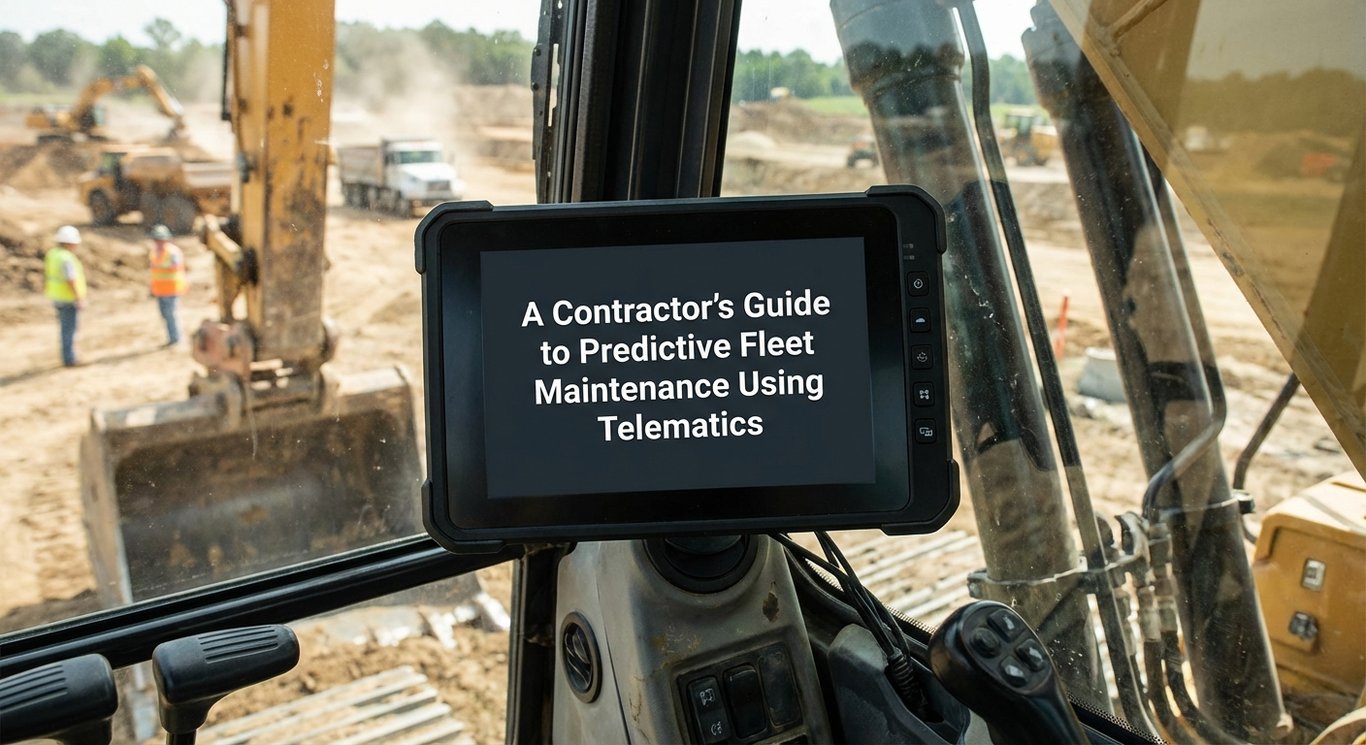
Telematics might sound high-tech, but it is essentially the nervous system of your modern fleet. It combines GPS tracking, onboard sensors, and smart software to collect real-time data from your vehicles and equipment. This technology gives you a constant stream of information about where your trucks are, how they are behaving, and what they are doing at any given moment.
To get this data, telematics devices plug directly into a vehicle’s computer port, known as the J-bus or OBD-II. Once connected, they pull critical details like engine RPM, fuel usage, fluid levels, and even battery voltage. This direct connection acts like a doctor’s stethoscope, listening to the internal health of your heavy machinery to catch symptoms of illness before they become serious.
After the device captures this information, it zaps it up to the cloud for safekeeping and analysis. Specialized software then crunches the numbers, looking for patterns that a human mechanic might miss during a quick visual inspection. This instant transmission turns raw numbers into actionable insights that you can access from your phone or office computer. ☁️
The real magic happens when Artificial Intelligence (AI) starts looking for specific fault codes. The system can predict a failure before the check engine light even blinks, sending an alert to the fleet manager immediately. Catching these glitches early means you can schedule repairs during off-hours instead of in the middle of a rush project.
Key Benefits of Telematics for Contractor Fleets
One of the biggest advantages of using telematics is the significant drop in unexpected downtime and repair costs. When you receive proactive alerts about a dying battery or a clogged filter, you can fix it before the machine refuses to start. This keeps your crew working and drastically lowers the high costs associated with emergency field repairs and towing.
Beyond repairs, these systems help you understand exactly how your equipment is being used on different sites. You can see if a backhoe is sitting idle at one location while another crew is desperate for it, allowing for better resource allocation. Moving equipment where it is needed most maximizes your investment and keeps projects on schedule. 🏗️
“Telematics systems are evolving to provide contractors with even more detailed machine information. Contractors can now access data on engine diagnostics, hydraulic systems, and other key components of their equipment.” -ABC SoCal
Telematics also plays a huge role in keeping your operations safe and compliant with regulations. It tracks driver behavior, such as harsh braking or speeding, and ensures that maintenance logs are always up to date for inspections. A safer fleet is not only more efficient but also protects your company from liability and fines.
Essential Telematics Features for Predictive Maintenance
Real-Time GPS Tracking and Monitoring
Real-time GPS tracking is the bread and butter of any good telematics system. It allows you to pinpoint the exact location of every asset on a map, which helps reduce fuel-wasting idle time and prevents theft. Knowing where your gear is at all times is the first step toward a more organized and efficient operation.
This tracking capability works best when integrated with your overall management software. It provides total visibility over your fleet, allowing dispatchers to route vehicles efficiently and project managers to track progress. Seamless integration ensures everyone is on the same page regarding equipment availability and location.
Equipment Health Monitoring and Alerts
Deep health monitoring relies on sensors that constantly check the vitals of your machinery. These sensors watch over engine temperatures, oil pressure, and hydraulic fluid levels to ensure everything is running within safe limits. Having a constant pulse on your equipment helps you spot irregularities instantly before they cause damage.
Predictive analytics take this sensor data and use it to forecast when parts will likely fail based on historical trends. By looking at performance patterns, the software can tell you that a transmission is showing signs of wear weeks before it breaks. This foresight allows you to order parts and plan labor well in advance. 📉
When a potential issue is detected, the system automatically sends a notification that can be linked directly to a work order. This automation streamlines the workflow, ensuring that a mechanic is assigned to the task without any paperwork getting lost in the shuffle. Connecting alerts to immediate action is key to maintaining a reliable fleet.
“Telematics can help address downtime by providing contractors with insights into their fleet’s health and maintenance needs. With real-time data on equipment performance, contractors can schedule maintenance tasks more efficiently, reducing the occurrence of breakdowns and unplanned downtime.” -ABC SoCal
Performance Dashboards and Utilization Metrics
Performance dashboards give you a visual snapshot of how efficient your fleet really is. These metrics highlight underutilized assets, showing you which machines are collecting dust and costing you money in insurance and depreciation. Identifying these inefficiencies is crucial for tightening up your budget.
Armed with this data, you can make smarter decisions about buying, renting, or selling equipment. If you see that you are renting skid steers constantly while owning idle excavators, you can adjust your fleet composition to match your actual workload. Data-driven decisions take the emotion out of fleet management and focus purely on profitability.
Steps to Implement Telematics in Your Contractor Fleet
The first step to implementation is to honestly assess what your fleet needs most. You need to identify the key data points that matter to your business, whether that is fuel economy, location tracking, or engine diagnostics. Understanding your goals helps you avoid paying for features you will never use.
[cta-call:Call2]
Once you know what you need, look for a telematics provider that specializes in the construction industry. You want a system that supports a mixed fleet, handling everything from Ford trucks to Caterpillar dozers on a single platform. Choosing a partner who understands the rough nature of construction work is vital for long-term success. 🤝
After selecting a provider, the next phase involves installing the hardware and configuring the software. This is the time to train your mechanics on how to interpret the new data and set up the system to trigger the right alerts. Proper setup ensures the technology works for you, rather than creating more work for your team.
Finally, you must train your entire team, from drivers to dispatchers, on how to use the system. Monitor your Key Performance Indicators (KPIs) regularly to see if you are meeting your efficiency goals and make adjustments as needed. Continuous learning and tweaking are necessary to get the maximum return on your investment.
“Predictive analytics utilizes machine learning algorithms to predict potential failures or maintenance events based on historical data.” -ABC SoCal
Choosing the Right Telematics Provider for Contractors
When shopping for a provider, you must evaluate how well their system talks to your existing software. It should integrate smoothly with your current maintenance programs and Enterprise Resource Planning (ERP) systems to avoid double data entry. A seamless connection between platforms saves time and reduces administrative errors.
Key criteria for your decision should include the provider’s focus on construction, their customer support quality, and scalability. You need a partner that can grow with you and offers robust support when a device goes offline in a remote area. Reliable support is just as important as the technology itself.
Be careful to avoid common pitfalls like choosing a system with limited hardware compatibility or poor integration capabilities. Some generic fleet systems struggle with the specialized data codes used by heavy yellow iron, leaving you with blind spots. Avoiding these traps ensures you get a comprehensive view of your entire operation. 🚧
Real-World Case Studies and Success Stories
Real-world examples show just how powerful this technology can be for construction firms. One company was able to reduce their equipment downtime by 30% simply by addressing fault codes before they turned into breakdowns. This dramatic shift transformed their ability to meet tight project deadlines and stay profitable.
Providers like Tenna have demonstrated success in managing mixed fleets where tracking variety is a challenge. By unifying data from rented lifts and owned trucks, contractors gain a single source of truth for all their assets. This unification simplifies the chaotic nature of managing diverse job sites.
The return on investment becomes clear when you look at the quantifiable cost savings. Contractors report lower fuel bills, extended equipment life, and higher resale values for well-maintained machines. These financial wins prove that predictive maintenance is an investment, not just an expense. 💸
“Successful telematics implementations have demonstrated benefits such as increased machine uptime, improved fuel consumption, optimized routes, and enhanced overall fleet efficiency.” -ABC SoCal
Overcoming Common Challenges in Telematics Adoption
A common hurdle for many teams is the sheer amount of data that telematics systems generate. It is easy to feel overwhelmed, so it is crucial to focus only on the alerts that require immediate action and train staff to ignore the noise. Filtering data effectively keeps your team focused on what truly matters.
Installing hardware on a mixed fleet with older and newer models can also be tricky. You may need different types of cables or battery-powered trackers for equipment that doesn’t have a power source, like trailers or attachments. Finding creative hardware solutions ensures that no asset is left off the grid.
Finally, ensuring data security and regulatory compliance is a major concern for modern contractors. You must ensure your provider uses encryption and follows industry standards to protect your fleet’s location and operational data. Prioritizing cybersecurity keeps your business safe from digital threats. 🔒
Future Trends in Predictive Maintenance for Fleets
The future of fleet maintenance is moving rapidly toward even smarter AI analytics. Soon, systems will be able to predict faults with near-perfect accuracy, analyzing complex interactions between different vehicle systems. This evolution will make unexpected breakdowns a thing of the past.
We are also seeing a tighter integration with the Internet of Things (IoT) and autonomous construction equipment. Machines will eventually be able to schedule their own service appointments and perhaps even drive themselves to the maintenance bay. Embracing these trends will keep contractors ahead of the curve in a competitive market. 🚀
FAQ
What is the difference between preventive and predictive maintenance using telematics?
Preventive maintenance is based on a schedule, like changing oil every 5,000 miles, while predictive maintenance uses real-time data to service a vehicle only when it actually needs it. For example, telematics might show that a truck’s oil is still good at 6,000 miles, saving you an unnecessary service trip. This shift from calendar-based to condition-based care is the main difference.
How much can telematics reduce fleet downtime for contractors?
Implementing a robust telematics strategy can reduce fleet downtime by as much as 30%. By catching issues like overheating engines or failing batteries early, you avoid the long delays associated with ordering parts for a dead machine. This uptime boost directly translates to more billable hours.
Is telematics suitable for mixed construction fleets including rented equipment?
Yes, telematics is highly effective for mixed construction fleets that include rented equipment. Many modern providers offer flexible devices that can be temporarily attached to rentals, or software that integrates data feeds from rental agencies. This ensures you have visibility over every piece of iron on your site, owned or not.
What are the costs involved in implementing fleet telematics?
The costs involve upfront hardware purchases, installation fees, and monthly software subscriptions per vehicle. However, most contractors see a return on investment within 6 to 12 months through fuel savings and reduced repair bills. It is an initial spend that pays for itself relatively quickly.
How do you ensure telematics data accuracy and security?
To ensure accuracy and security, choose a provider that offers professional installation and uses encrypted data transmission. Regular calibration of sensors and strict user access controls also help maintain the integrity of your fleet data. Treating your data with the same care as your physical keys is essential.
Conclusion
In summary, predictive fleet maintenance is a game-changer that offers reduced downtime and cost savings of up to 20-30%. By leveraging real-time data, contractors can improve asset utilization and make proactive decisions rather than reacting to emergencies. It transforms maintenance from a necessary evil into a strategic advantage.
The impact on contractor operations goes beyond just saving money; it builds a culture of reliability and efficiency. Adopting these technologies now future-proofs your fleet against rising costs and tighter project margins. It is about working smarter, not harder, to keep your heavy iron running smoothly.
Start your journey to predictive fleet maintenance today by assessing your needs, selecting a telematics provider tailored for construction, and implementing these strategies to boost efficiency and profitability in “A Contractor’s Guide to Predictive Fleet Maintenance Using Telematics.” Taking this step is the best way to ensure your business thrives in the modern construction landscape. 🏗️