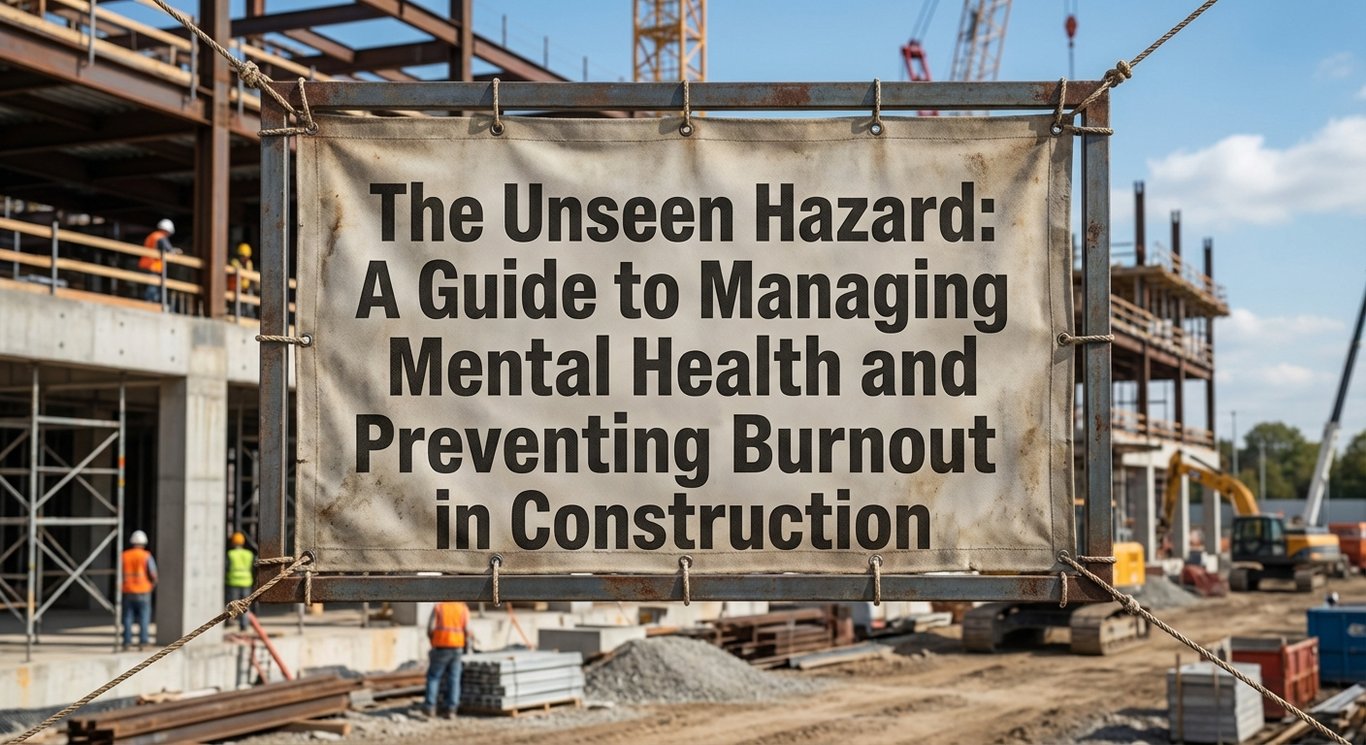
The Unseen Hazard: A Guide to Managing Mental Health and Preventing Burnout in Construction
Introduction: Why Mental Health Is an Unseen Jobsite Hazard
On a construction site, we are trained to spot physical hazards like loose scaffolding, live wires, or heavy machinery, but mental health is often a hidden risk that is just as dangerous. Psychological strain can distract a worker just as much as fatigue, leading to mistakes that put everyone in danger. Unfortunately, the industry is seeing a worrying rise in anxiety, depression, and suicide rates, proving that safety isn’t just about hard hats and steel-toed boots. 🏗️ Recognizing these invisible threats is the first step toward a truly safe jobsite.
This guide is designed to help workers, supervisors, and company leaders tackle this issue head-on by recognizing warning signs and taking action before it’s too late. We want to help you reduce the stigma around talking about feelings and implement practical strategies to prevent burnout. By protecting mental wellbeing across all levels of a project team, we can ensure that everyone goes home safe and sound at the end of the day.
The State of Mental Health in Construction Today
The statistics surrounding mental health in our industry are alarming and show that we are facing a serious crisis. Studies consistently show that construction workers experience much higher rates of anxiety, depression, and suicidal thoughts compared to people in many other lines of work. 📉 These numbers aren’t just data points; they represent real people on our crews who are struggling in silence. It is clear that the pressures of the industry are taking a heavy toll on the workforce.
When these mental health struggles go unaddressed, they translate into real-world consequences that affect the entire project and the business’s bottom line. We see this through increased absenteeism, near-miss accidents, injuries, and higher rates of substance misuse as people try to cope. 🛑 High turnover is another major side effect, making mental health a critical issue for both human safety and the success of the company.
Why Construction Workers Are at Higher Risk
The nature of the construction industry creates a perfect storm for stress, with unique pressures that other jobs simply don’t have. Workers often face long hours, incredibly tight deadlines, and physically demanding tasks that leave them exhausted by the end of the shift. 🕰️ Additionally, project-based employment and frequent travel can force workers away from their families and support networks for weeks or months at a time, leading to isolation. These industry-specific factors make it much harder to maintain a balanced and healthy life.
Beyond the schedule, there is a deep-seated “toughness” culture in construction that values stoicism and discourages showing any sign of weakness. In a male-dominated environment, admitting you are struggling can feel like a failure, and many workers fear they will be judged or seen as unreliable. 🤐 This stigma fuels a cycle of silence where workers hide their pain to fit in, often leading to shame and a fear of discrimination if they ever do speak up. Breaking through this cultural barrier is one of the hardest parts of solving the problem.
Even when a worker wants help, there are often significant structural barriers that make getting care difficult. Access to mental health services can be uneven, with long wait times for appointments or insurance plans that don’t cover what is needed. 🏥 There is also frequently a gap between what executives believe is available for support and what workers actually experience on the ground. Bridging this gap is essential to ensure that help is actually within reach for the people who need it most.
Recognizing the Signs of Stress, Burnout, and Mental Health Struggles
Mental health challenges in construction, such as stress, anxiety, depression, and substance misuse, can look very different in the field than they do in an office setting. A worker might not look “sad” but might seem constantly on edge, distracted, or more aggressive than usual. ⚠️ Understanding that these conditions are medical issues, not character flaws, is vital for spotting them early. Recognizing these unique manifestations is key to intervening before an accident happens.
“Sixty-four percent of U.S. construction workers report experiencing anxiety or depression in the last 12 months, up from 54% in 2024.” -PR Newswire (Clayco Survey)
Coworkers and supervisors are often the first line of defense, so it is important to know the behavioral and physical warning signs. You might notice a buddy who is suddenly irritable, taking unnecessary safety risks, or showing up late more often. 🚩 Other signs include extreme fatigue, withdrawing from the crew during lunch, or a noticeable drop in work quality. These changes in attendance or performance are often a cry for help that shouldn’t be ignored.
The most critical indicators to watch for are red flags that suggest a person is having suicidal thoughts or is in a crisis situation. If someone talks about feeling hopeless, being a burden to others, or having no reason to live, these are immediate emergencies. 🆘 taking any talk of self-harm seriously and acting fast can literally save a life. Early recognition and a compassionate response are the most powerful tools we have to prevent tragedy.
Understanding Burnout in Construction: Causes and Consequences
Burnout is more than just being tired; it is a state of chronic workplace stress that hasn’t been successfully managed. In construction, this is often caused by mandatory overtime, unrealistic schedules, and a constant pressure to “push through” pain and exhaustion. 😫 When the demands of the job consistently outweigh a worker’s ability to recover, burnout sets in. It is a slow drain on energy that eventually leaves a person feeling empty and cynical about their work.
[cta-call:Call2]
Several factors amplify the risk of burnout, specifically work-to-family conflict and a lack of control over one’s own schedule. When workers don’t know when they’ll be home or feel their job is insecure, the stress multiplies. 📉 This is particularly dangerous for younger workers and those in temporary or subcontractor roles who may feel they have no voice. The inability to plan a life outside of work creates a pressure cooker environment that accelerates burnout.
“The unfortunate reality is that the long hours, physically demanding work and a male-dominated and stoic culture that discourages many from discussing mental health make construction workers, and executives, more susceptible to mental health issues when compared with many other professions.” -Risk & Insurance / NAMI
If left unchecked, burnout can progress into more serious mental health conditions like severe depression or anxiety. It can also contribute to substance misuse as workers look for chemical ways to keep going or to numb the stress. 🍺 Most importantly for the jobsite, burnout increases the likelihood of accidents and errors because a burnt-out brain cannot focus on safety protocols. Addressing burnout is therefore a critical safety measure for the entire crew.
Breaking the Stigma: Changing Culture on Site and in the Office
Stigma is the invisible wall that keeps workers silent, driven by a fear of judgment and worries about job security. Many workers feel ashamed to admit they are struggling, fearing they will be labeled as “weak” or “crazy” by their peers. 😔 Data suggests that some workers even report facing discrimination after speaking up, which only reinforces the code of silence. Until we make it safe to talk, many will continue to suffer alone.
Changing this culture requires a top-down and bottom-up approach where leadership openly shares their own experiences to show it’s okay to be human. Visible mental health campaigns and toolbox talks focused on wellbeing can help normalize these conversations. 🗣️ Designating peer “helpers” and using language that treats mental health like physical health can shift the vibe on site. When asking for help becomes as normal as asking for a wrench, we will know the culture has changed.
Personal Strategies for Workers: Protecting Your Own Mental Health
Even with tight schedules, there are practical daily habits workers can adopt to build resilience and protect their mental health. Prioritizing a solid sleep routine, staying hydrated, and eating decent food can make a huge difference in how you handle stress. 🍎 Taking short movement or stretch breaks and using simple breathing techniques can help manage acute stress in the moment. Small physical changes often lead to better mental clarity and stability.
“Nearly half of construction workers (45%) said they would feel ashamed discussing mental health, addiction or suicidal thoughts with co-workers.” -WTOP / Clayco Study
Setting boundaries is another crucial skill, which means learning to say no when tasks are unsafe or unreasonable. It is vital to maintain connections with family and friends outside of the industry to keep a healthy perspective. 📵 Using off-hours to genuinely disconnect from work pressures allows your brain to reset for the next shift. Protecting your personal time is not selfish; it is necessary for long-term survival in this industry.
Finally, we encourage workers to track their mood and energy levels to notice patterns that might signal burnout is approaching. If you notice you are constantly angry or exhausted, don’t wait for a crisis to develop. 📝 Reaching out early to supervisors, peers, or professionals can stop a small problem from becoming a disaster. Being proactive about your mental health is just as important as maintaining your tools.
What Employers and Leaders Can Do: Building a Mentally Safer Site
Employers need to take policy-level steps by creating or updating mental health policies that are as robust as their physical safety rules. Integrating mental wellbeing into safety orientations and daily briefings sends a clear message that the company cares. 📋 Aligning with industry initiatives focused on suicide prevention and psychological safety helps standardize these protections. A strong policy foundation sets the stage for a healthier work environment.
On a practical level, companies should provide supports like Employee Assistance Programs (EAPs) and access to both in-person and virtual counseling. Training supervisors to have supportive, non-judgmental conversations is essential so they know how to respond when a worker reaches out. 🤝 Confidential reporting channels are also important so workers can seek help without fear of immediate gossip. These resources must be easy to find and easy to use.
“One recent study found that nearly half of construction workers surveyed reported having depression at one point in their life, while in another almost one in three reported having anxiety at least once a month.” -CPWR – The Center for Construction Research and Training
Perhaps the most impactful change employers can make is adjusting work design to reduce stress at the source. This means creating realistic schedules, ensuring adequate staffing, and planning projects to avoid chronic overtime. 🗓️ Involving workers in the planning process gives them a sense of control and helps identify pressure points early. Treating the root causes of stress is far more effective than just treating the symptoms.
Creating a Support Network: Peer Support, Unions, and Industry Resources
Peer support is incredibly powerful, and having designated “mental health champions” on site can bridge the gap between workers and management. Unions, trade associations, and safety committees also play a massive role in normalizing these conversations and fighting for better benefits. 👷♂️ These groups can connect colleagues to help in a way that feels safe and familiar. Building a network of support ensures that no one falls through the cracks.
There are many specific resource types that workers can look for, including crisis lines and national mental health organizations. Industry-specific campaigns like Construction Suicide Prevention Week provide targeted materials that resonate with crews. 🌐 Digital resources from professional bodies are also available, offering everything from self-assessments to therapist locators. Knowing where to look is half the battle when you are struggling.
How to Start the Conversation: Talking to a Coworker or Supervisor
If you are worried about a coworker, approaching them can feel awkward, but following a few steps can make it easier. Choose a private space where you won’t be overheard, and use non-judgmental language like, “I’ve noticed you haven’t been yourself lately.” 🗨️ The most important thing is to listen more than you talk and offer support rather than trying to “fix” their problems. Just knowing someone cares can be a huge relief for them.
“The construction industry had the second-highest rate of suicide among its workers, surpassed only by mining, quarrying, and oil and gas extraction workers.” -Associated General Contractors of America (AGC)
For workers speaking to supervisors or HR about their own struggles, it helps to prepare what you want to say beforehand. Focus on how the issue is impacting your safety or performance to keep the conversation professional and constructive. 📄 It is also important to know your rights and ask clearly for specific accommodations or help, like a schedule adjustment or time off. Being clear and direct helps your employer understand exactly what you need to get back on track.
Accessing Professional Help: Navigating Barriers and Finding Support
We know there are barriers to getting help, such as high costs, lack of time, and long waitlists for therapists. These issues particularly affect construction workers who may move between jobs frequently or lack consistent health benefits. 🚧 The confusion of navigating insurance can be discouraging when you are already feeling low. However, understanding these barriers is the first step to finding ways around them.
There are several ways to find support, starting with employer benefits or union resources which often have dedicated mental health lines. Community clinics and telehealth services are great options that can offer more flexible hours for workers with tight schedules. 💻 When you go to a first appointment, expect to answer questions about your history and current feelings; it’s just like a physical check-up but for your mind. Finding the right provider takes a little effort, but it is worth it.
Many workers worry about confidentiality, but it is important to know that medical professionals are bound by privacy laws. Your boss won’t know the details of your therapy sessions unless there is an immediate safety risk. 🔒 If the first provider or method isn’t a good fit, don’t give up; keep trying until you find someone you click with. Your mental health is a long-term investment, and you deserve to find the right support.
Long-Term Prevention: Designing Projects and Careers with Wellbeing in Mind
Long-term prevention starts with project owners, general contractors, and subcontractors incorporating mental health into the very blueprint of the project. This means setting realistic timelines and phased workloads that don’t require crews to work themselves into the ground. 🏗️ Contracts should discourage chronic overtime and unsafe staffing levels, prioritizing human sustainability over speed at all costs. When the project is designed well, the pressure on the individual worker drops significantly.
Workers and leaders also need to think about career-long sustainability, not just surviving the current job. This includes ongoing training, role changes as bodies age, and ergonomic improvements to reduce physical strain that feeds into mental stress. 🎓 Planning transitions for aging workers helps reduce cumulative wear and tear, ensuring they can retire with their health intact. A sustainable career path is key to preventing burnout over the decades.
Frequently Asked Questions (FAQ)
1. Why is mental health such a big issue in the construction industry?
Mental health is a major issue here because of a “perfect storm” of risk factors. You have the high physical danger of the job combined with long hours, job insecurity, and a culture that values being “tough” above all else. ⛈️ This combination leads to elevated rates of anxiety, depression, and suicide compared to many other sectors where the environment is more controlled. It’s a high-pressure industry, and without the right release valves, the pressure builds up.
2. What are the early warning signs that I might be heading toward burnout?
Common early indicators of burnout include a feeling of constant exhaustion that sleep doesn’t fix and a short temper with coworkers or family. You might feel detached from your work, like you’re just going through the motions, or lose motivation for things you used to enjoy. 📉 Frequent minor mistakes on the job and using alcohol or other substances to cope are also major red flags. If you feel like you’re running on fumes every day, that’s burnout knocking at the door.
3. Will talking about my mental health put my job at risk?
It is understandable to be worried, as some workers do report discrimination, but the industry is changing rapidly. More employers are recognizing that mental health is a safety concern and want to keep their skilled workers healthy and working. 🛡️ To protect yourself, check your company policies and approach the conversation from a safety and performance perspective. There are legal protections in place, and good companies will want to help you, not fire you.
4. What can supervisors do right now to support their crews?
Supervisors can take immediate action by checking in regularly with their team members, not just about work, but about how they are doing generally. Modeling openness by admitting when you are stressed helps lower the barrier for others to speak up. 🗣️ Make use of available resources like EAP flyers, adjust workloads when possible to prevent burnout, and embed mental health topics into your safety meetings. Small, consistent actions build trust over time.
5. Where can I go if I or a coworker is in immediate crisis?
If you or a coworker is in immediate crisis, contact emergency services or call the national suicide and crisis lifeline (like 988 in the US) right away. Follow your site’s emergency protocols and never leave the person alone until professional help arrives. 🚑 Many industry campaigns and associations also list specific crisis contacts for workers, so keep those numbers handy. Acting fast is the most important thing you can do.
Conclusion: Turning Awareness into Action on Every Jobsite
To wrap things up, it is clear that mental health is a critical safety issue in construction that we can no longer ignore. The data clearly show that our workers are at elevated risk, and we need both individual strategies and organizational changes to fix it. 🛠️ By reducing stress, preventing burnout, and lowering suicide risk, we are protecting the industry’s most valuable asset: its people. It takes a team effort to build a safety net that is as strong as the buildings we construct.
We encourage you to take the insights from “The Unseen Hazard: A Guide to Managing Mental Health and Preventing Burnout in Construction” and share them with your teams. Start a conversation at your next toolbox talk, review your company’s policies, and commit to making mental wellbeing as central to your jobsite culture as hard hats and fall protection. Let’s work together so that every worker goes home safer-both physically and mentally-at the end of the day. 🌟