What Is a Connected Jobsite?
A connected jobsite is a living, breathing ecosystem where equipment, vehicles, materials, workers, sensors, and office systems all share data in real time. Instead of operating in isolated pockets, every layer of the operation communicates through telematics hardware, GPS receivers, IoT sensors, mobile applications, cloud platforms, and digital dashboards. The result is a level of visibility that was simply impossible with paper logs and radio calls. When all of these technologies work together, project managers can see exactly what is happening across an entire operation – from the quarry to the pour – without ever leaving their desk. 🏗️
At the heart of this ecosystem is the relationship between fleet telematics and materials management. Equipment movement, haul cycles, deliveries, fuel consumption, and material quantities can all be monitored from a single centralized platform. A dispatcher can watch a loaded haul truck move from the stockpile to the laydown area while simultaneously reviewing fuel burn rates and delivery confirmations. That kind of connected intelligence transforms how construction teams plan, react, and ultimately deliver projects on time and within budget.
Why Construction Materials Management Needs a Digital Transformation
Anyone who has spent time on a busy construction site knows the frustration of materials chaos. Inaccurate inventory counts, misplaced stock, delayed deliveries, material theft, inefficient staging, excess transportation, and poor communication between field and office teams are not rare exceptions – they are everyday realities for many contractors. A crew might wait hours for a concrete delivery that was never dispatched, or discover that a shipment of rebar was staged in the wrong location and needs to be rehandled. These problems compound quickly, turning manageable projects into costly headaches. 😤
The financial and schedule consequences of these failures are significant. Material shortages stop work cold, over-ordering ties up capital and clutters the site, idle equipment burns fuel and racks up costs, and inaccurate production records make it nearly impossible to bill correctly or forecast future work. Spreadsheets, paper tickets, and disconnected supplier portals simply cannot keep pace with the speed and complexity of modern construction. Real-time operational data, on the other hand, gives teams the ability to spot problems before they escalate, make smarter decisions faster, and keep materials and equipment moving in sync.
How Fleet Telematics Works on the Construction Site
A telematics system is built from several interconnected components working together seamlessly. GPS receivers pinpoint the location of every vehicle and piece of equipment on the fleet. Engine control unit data captures what the machine is doing mechanically – whether it is working hard, idling, or throwing a fault code. Cellular or satellite connectivity sends that information to the cloud in near real time. Sensors monitor everything from fuel levels to hydraulic pressure, while geofencing creates virtual boundaries around key areas like stockpiles, laydown zones, and site entrances. Asset tags extend tracking to smaller tools and attachments, and user dashboards give managers a clear, organized view of it all. 📡
The types of information collected through these systems are remarkably detailed. Location and route history show where every asset has been and for how long. Engine hours and idle time reveal how productively equipment is being used. Fuel consumption data highlights waste and inefficiency. Operating behavior metrics capture speeding, harsh braking, and aggressive acceleration. Fault codes flag mechanical issues before they become failures. Machine utilization rates and production cycles show whether assets are pulling their weight or sitting dormant. Together, these data streams paint a comprehensive picture of fleet performance.
Of course, raw data alone does not improve a jobsite – it is what you do with it that counts. Telematics platforms transform equipment data into actionable information through automated alerts, scheduled reports, and predictive analytics. When a truck spends too long in a queue, an alert fires. When a machine is due for service, a reminder is generated automatically. When production rates fall below target, a dashboard flag draws attention to the issue. Integrations with construction management, accounting, dispatch, and inventory systems mean that telematics data flows where it is needed most, without anyone having to manually transfer it.
Real-Time Material Tracking From Supplier to Jobsite
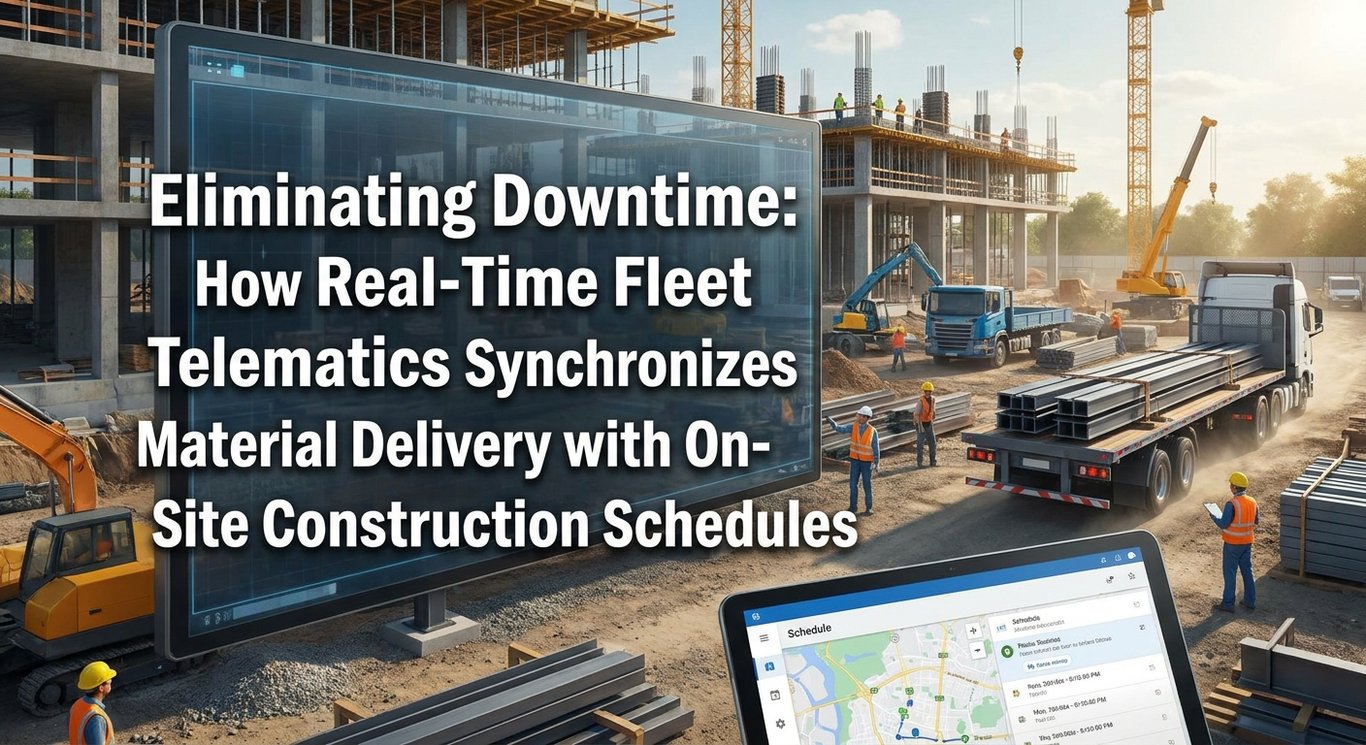
One of the most powerful capabilities of a connected jobsite is the ability to track materials from the moment they leave a supplier until they are installed or consumed on site. Telematics and connected tracking tools can record material dispatch times, delivery routes, arrival windows, unloading locations, and subsequent movement between staging areas. Instead of calling a dispatcher to find out where a load of aggregate is, a project manager can simply check the dashboard and see exactly where the delivery truck is and when it is expected to arrive. That kind of visibility eliminates guesswork and keeps crews ready to receive materials on time.
A variety of technologies work together to make this level of tracking possible. GPS tracks the vehicles carrying materials, while RFID tags, Bluetooth Low Energy beacons, and QR codes can be attached directly to pallets, bundles, or containers to identify individual items. Sensors confirm when loads are picked up or set down. Electronic tickets replace paper manifests, creating a digital record of every delivery. Geofences trigger automatic notifications when a delivery vehicle enters or exits a designated zone, confirming arrival without requiring a phone call. Together, these tools create a seamless, connected chain of custody from supplier to site. 📦
Real-time tracking does more than just satisfy curiosity about where things are. It helps project teams verify that deliveries match purchase orders, reduces the risk of materials being lost or misplaced on large or distributed jobsites, and creates reliable records that can be referenced during disputes or audits. When a subcontractor claims a material was never delivered, the digital record tells the real story. When a crew cannot find a shipment of conduit, a quick location query narrows the search to a specific zone. These capabilities save time, reduce frustration, and protect the project’s financial interests.
Optimizing Haul Cycles, Dispatch, and Material Flow
Haul cycle efficiency is one of the biggest levers in earthmoving and material transport operations, and telematics puts that lever firmly in the hands of project managers. By measuring loading time, travel time, unloading time, queue time, and return time for every cycle, telematics systems reveal exactly where bottlenecks are forming. Maybe trucks are spending too long waiting at the crusher. Maybe loading is fast but unloading is creating a backup at the fill area. Whatever the issue, having precise cycle-time data makes it visible and measurable – which is the first step toward fixing it. 🚛
“Telematics allows the contractor to get accurate utilization information on his fleet. He not only can identify how much a machine is being used, but when it is being used.” -For Construction Pros
With live vehicle locations and real-time machine availability on their screens, dispatchers can make smarter, faster decisions about which truck or piece of equipment to assign to which task. Instead of guessing which truck is closest to the loading zone, they can see it instantly. Instead of sending an empty truck on a long detour, they can redirect it to a closer pickup point. This kind of intelligent dispatching reduces empty miles, cuts unnecessary waiting, and keeps material flow moving at a steady pace throughout the shift.
Beyond daily dispatching, cycle-time data supports better strategic decisions about the overall operation. Managers can determine the optimal number of trucks needed to keep a crusher or loader fully utilized without creating excessive queues. They can evaluate whether stockpile placement is adding unnecessary travel distance. They can coordinate crew schedules to align with peak material delivery windows. And they can set realistic daily production targets based on actual cycle performance rather than optimistic estimates. All of this adds up to a more efficient, more predictable material flow from start to finish.
Reducing Fuel Waste and Nonproductive Idling
Fuel is one of the largest variable costs in any construction fleet, and a surprising amount of it gets burned for nothing. Telematics identifies the specific behaviors and patterns that drive up fuel consumption – excessive idling, inefficient routing, unauthorized equipment use, speeding, harsh acceleration, and poor operating technique. Instead of accepting high fuel bills as an unavoidable cost of doing business, managers can use telematics data to pinpoint exactly where the waste is happening and take targeted action to reduce it. ⛽
[cta-call:Call2]
Once the data is in hand, the options for improvement are practical and straightforward. Managers can establish idle-time thresholds and receive automatic alerts when equipment exceeds them. Operators can be coached with specific, data-backed feedback rather than vague instructions to “be more careful.” Equipment performance can be compared across operators, shifts, or machine types to identify best practices worth spreading. And fuel-saving initiatives can be tracked over time to confirm whether they are delivering real results. This kind of continuous improvement loop turns telematics from a monitoring tool into a genuine cost-reduction engine.
Improving Inventory Accuracy and Preventing Material Loss
Keeping an accurate picture of materials inventory on a busy construction site is genuinely difficult. Materials arrive, get consumed, get transferred between areas, get returned, and sometimes just disappear. Connected asset and material records change this dynamic by providing a current, reliable view of what has been ordered, delivered, consumed, transferred, returned, or is awaiting inspection. Instead of relying on a foreman’s memory or a weekly inventory count, project teams can query the system at any time and get an up-to-date answer. That accuracy has real value when it comes to planning purchases, managing cash flow, and keeping work on schedule. 📋
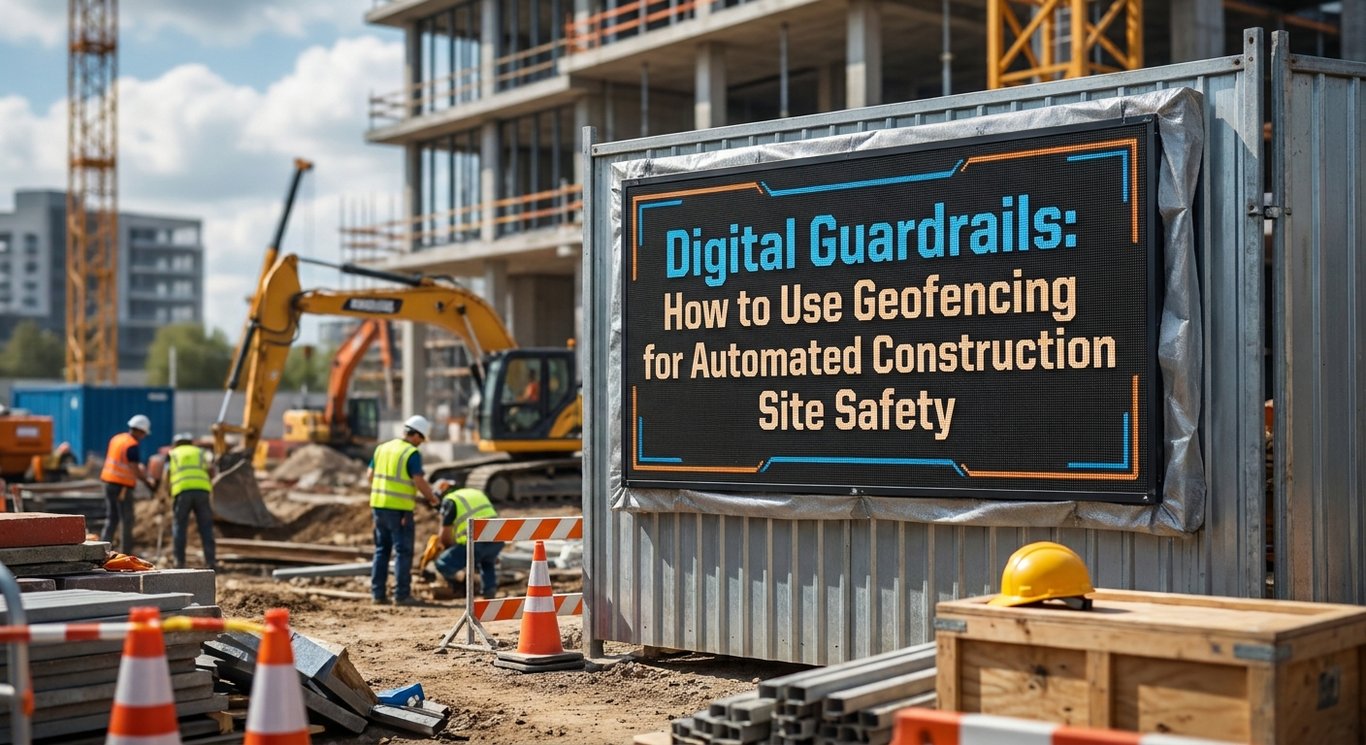
Geofencing and location alerts add an important layer of security to materials management. When a piece of equipment or a tagged material load moves outside of a designated storage zone without authorization, the system can send an immediate alert. If a truck leaves the site with a load that was not dispatched, that departure is flagged in real time. These capabilities make it significantly harder for theft or unauthorized removal to go unnoticed, and they create a documented record that can support investigations or insurance claims if something does go missing.
“Equipment tracking provides peace of mind in knowing where all assets are located at a given time, minimizing the threat of theft.” -Construction Business Owner
The downstream benefits of inventory accuracy extend well beyond theft prevention. Accurate records reduce duplicate purchases that happen when teams cannot confirm whether a material has already been delivered. They eliminate emergency orders placed because no one realized stock was running low. They reduce material spoilage by ensuring that time-sensitive materials are used in the right sequence. And they prevent disputes with suppliers over delivery quantities or condition, because the digital record provides an objective account of what arrived, when, and where it went. All of these savings add up quickly on large projects.
Connecting Equipment Utilization With Materials Productivity
Materials do not move themselves. Behind every ton of aggregate placed, every structural steel beam lifted, and every yard of concrete poured is a coordinated effort involving loaders, excavators, trucks, cranes, forklifts, pavers, and a host of other equipment. When that equipment is underperforming, materials productivity suffers right along with it. Understanding the connection between equipment utilization and materials output is essential for any contractor serious about improving efficiency on the connected jobsite. 🔧
Telematics makes it possible to compare engine hours, active work time, idle time, payload data, cycle counts, and material movement across the entire fleet. A loader might be logging impressive engine hours, but if half of those hours are spent idling or repositioning without moving material, its true productivity is far lower than the raw numbers suggest. Conversely, a truck that appears to be running constantly might actually be underloaded on every cycle, carrying far less material per trip than it is capable of. Telematics surfaces these discrepancies so managers can act on them.
With utilization insights in hand, contractors can make smarter decisions about fleet composition and deployment. Underused assets can be reassigned to where they are needed most, or returned to the rental yard to stop the meter from running. Overloaded equipment can be supplemented before it becomes a bottleneck or a maintenance problem. The balance between material supply and installation capacity can be fine-tuned based on actual performance data rather than gut feel. The result is a fleet that works harder, smarter, and more cost-effectively – which ultimately means more materials moved per dollar spent.
Predictive Maintenance and Reliable Material Movement
Every piece of equipment on a construction site is a potential single point of failure for material flow. When a loader goes down, the trucks it was feeding sit idle. When a crane is out of service, structural materials pile up waiting to be lifted. When a forklift breaks down, the entire unloading operation grinds to a halt. Telematics helps prevent these disruptions by continuously monitoring fault codes, engine hours, fluid levels, operating temperatures, battery condition, and service intervals to identify maintenance needs before they become failures. 🔩
The connection between equipment uptime and materials management is direct and consequential. A failed haul truck does not just cost the price of a repair – it creates a queue at the loading area, delays delivery to the placement crew, potentially forces overtime to make up lost production, and can cascade into schedule impacts that ripple across multiple trades. By catching problems early, telematics-driven maintenance programs protect not just the equipment itself but the entire chain of material movement that depends on it. That makes maintenance a materials management strategy, not just a mechanical one.
“We have found that the average piece of construction equipment in the U.S. idles over 40%.” -For Construction Pros
Preventive and predictive maintenance workflows powered by telematics are more structured and reliable than traditional calendar-based approaches. Automated service reminders trigger based on actual engine hours rather than estimated time. Remote diagnostics allow technicians to review fault codes before they arrive on site, showing up with the right parts and knowledge to fix the problem efficiently. Maintenance schedules can be coordinated with production plans so that equipment comes offline during low-demand periods rather than at the worst possible moment. And digital maintenance records create a documented history that supports warranty claims, resale value, and compliance requirements.
Safety, Security, and Compliance Benefits
Safety on a construction site is always the top priority, and telematics contributes to it in meaningful, practical ways. Location awareness ensures that supervisors always know where equipment is operating relative to workers and other machines. Proximity alerts can warn operators when they are approaching restricted zones or areas where workers are present. Route monitoring catches unsafe driving behavior before it leads to an incident. Speed tracking and operator behavior data create accountability and support coaching conversations grounded in facts rather than impressions. These capabilities make material handling operations not just more efficient, but genuinely safer. 🦺
Equipment theft is a serious and growing problem in the construction industry, and telematics provides a strong deterrent and response capability. Geofences trigger alerts the moment equipment moves outside authorized boundaries, whether during working hours or in the middle of the night. Unauthorized-use notifications fire when ignitions are activated outside of scheduled shifts. Historical location records can help law enforcement track and recover stolen assets. The combination of real-time alerts and detailed records makes telematics one of the most effective theft-prevention tools available to fleet managers today.
Beyond safety and security, telematics supports a range of compliance and documentation requirements. Digital records of equipment locations, operating hours, and operator behavior can support safety audits and incident investigations with objective, timestamped data. Environmental reporting is easier when fuel consumption and idle time are automatically logged. Hours-of-service compliance, where applicable to on-highway vehicles, is supported by accurate trip records. And insurance documentation becomes more straightforward when loss events can be reconstructed from detailed telematics histories. In a regulatory environment that is only getting more complex, that kind of automatic documentation is genuinely valuable.
Integrating Telematics With Construction Software
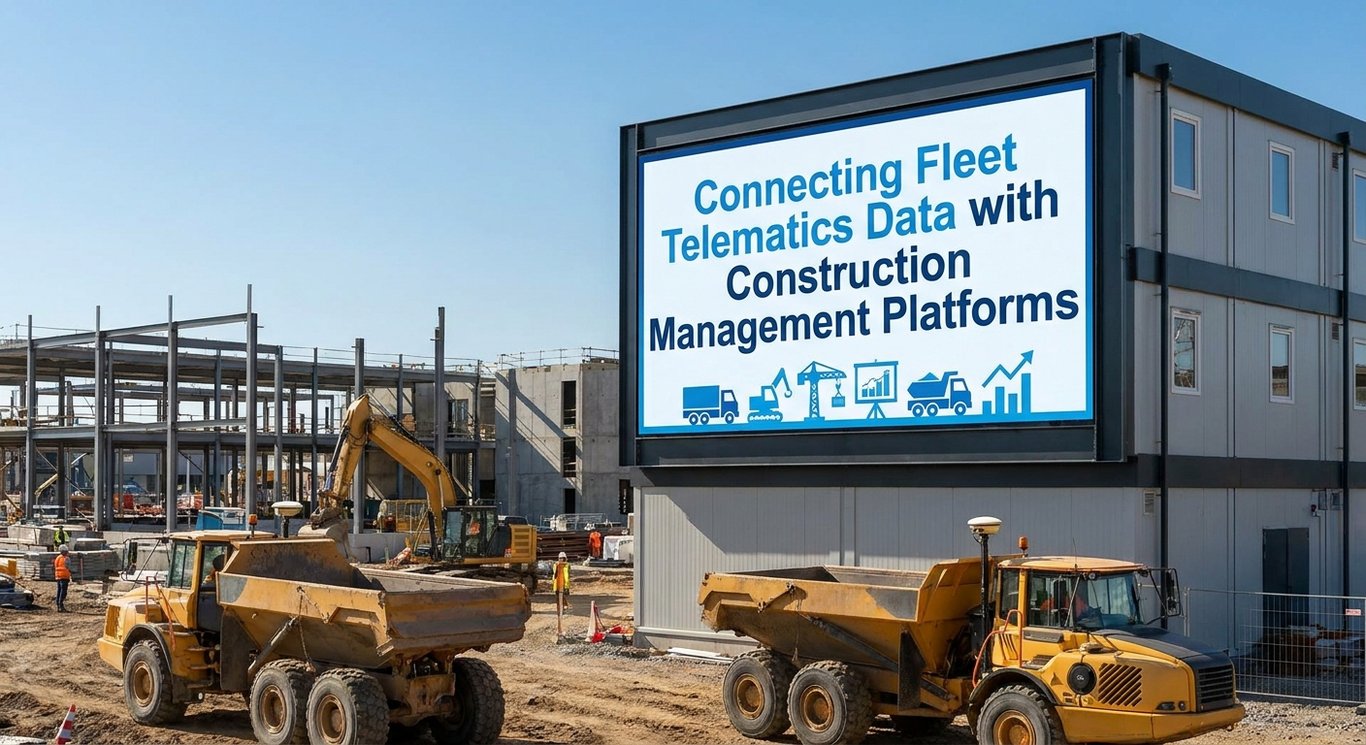
Telematics data is most powerful when it does not live in isolation. Connecting telematics platforms with enterprise resource planning systems, project management software, dispatch tools, accounting platforms, procurement systems, inventory databases, maintenance management applications, and building information modeling environments creates a unified operational picture that no single system could provide on its own. When a haul cycle is completed, that data can automatically update production records, trigger an invoice, adjust inventory levels, and feed into the project schedule – all without anyone manually transferring information between systems. 💻
Making these integrations work smoothly requires attention to the technical foundations that enable data sharing. Open application programming interfaces allow telematics platforms to exchange data with other software without custom development work for every connection. Standardized data formats ensure that information means the same thing in every system that receives it. Single sign-on capabilities reduce friction for users who need to move between platforms. Shared dashboards bring the most important information together in one place, so managers do not have to log into five different systems to get a complete picture of what is happening on the jobsite.
“By analyzing real-time data trends rather than isolated events, fleet managers can anticipate mechanical issues weeks before an operator notices a change in machine behavior.” -Construction Equipment
Integration is not without its challenges, and it is worth being honest about them. Mixed-brand fleets often use different telematics hardware with varying data formats, making it difficult to create a unified view. Inconsistent equipment identifiers can cause the same asset to appear as different records in different systems. Duplicate records, limited cellular connectivity in remote areas, vendor lock-in agreements, and varying data quality can all undermine the value of an otherwise well-designed integration strategy. Contractors who plan for these challenges from the beginning – rather than discovering them after deployment – will have a much smoother experience building a truly connected jobsite.
Using Telematics Data for Cost and Schedule Control
One of the most compelling business cases for fleet telematics is its ability to support accurate, real-time job costing. By connecting fuel consumption, equipment hours, haul cycles, material quantities, delivery activity, and labor productivity to individual projects or cost codes, telematics gives accounting and project management teams the data they need to understand where money is actually going. Instead of waiting until the end of the month to reconcile costs, managers can see job cost trends as they develop and make adjustments before small overruns become large ones. 💰
Schedule control benefits just as much as cost control. Telematics data supports schedule forecasting by providing real production rates rather than theoretical ones. Earned-progress verification becomes more reliable when material quantities and equipment cycles are automatically recorded. Production-rate analysis reveals whether the project is on track to meet milestones or whether adjustments are needed. And early identification of delays caused by equipment availability or material flow gives project teams the lead time they need to respond effectively, rather than scrambling after the fact.
To get the most out of telematics data for cost and schedule management, it helps to define and track a clear set of key performance indicators from the start. Cost per ton and cost per load translate equipment and fuel expenses into material-flow terms that are easy to understand and compare. Idle percentage and equipment utilization reveal how productively assets are being deployed. Delivery accuracy tracks whether materials are arriving on time and in the right quantities. Cycle time, downtime, and material variance round out the picture, giving managers a comprehensive scorecard for fleet and materials performance on every project.
Implementing a Fleet Telematics Program
Before selecting any technology, the most important step is understanding your own operation well enough to know where telematics can deliver the greatest value. Start with a thorough business assessment that identifies the most expensive and persistent problems in your material handling, fleet management, delivery coordination, inventory control, and equipment downtime. Are fuel costs spiraling out of control? Are deliveries consistently late or inaccurate? Is idle time eating into your margins? Is equipment theft a recurring issue? The answers to these questions should drive every decision that follows. 📊
Selecting the right telematics platform is a critical decision that deserves careful evaluation. Look for compatibility with your existing fleet – both owned and rented. Assess cellular and satellite coverage in the regions where you work. Understand exactly who owns your data and what happens to it if you switch providers. Evaluate the platform’s integration capabilities with the software systems you already use. Review alert customization options, reporting flexibility, cybersecurity practices, mobile access for field teams, and the quality of vendor support. A platform that looks impressive in a demo but cannot integrate with your accounting system or work in a rural coverage dead zone will not deliver the value you need.
“These technologies connect equipment, tools and site infrastructure to cloud-based platforms that help teams make faster, more confident decisions about fleet size, equipment deployment and resource utilization.” -Construction Executive
Rather than rolling out telematics across your entire fleet at once, a phased approach significantly improves the chances of success. Start with a pilot on a single project or a subset of your fleet. Establish clear baseline measurements before the pilot begins so you have something to compare against. Train users thoroughly and give them time to get comfortable with the tools. Test the workflows, alert configurations, and integrations in a real-world environment before expanding. When measurable results – reduced idle time, improved delivery accuracy, lower fuel costs – are documented and understood, the case for broader rollout becomes easy to make. 🚀
Technology alone will not transform your jobsite. Change management is just as important as the hardware and software. Operators and field crews need to understand why telematics is being implemented and how it benefits them, not just the office. Be transparent about what data is being collected, how it will be used, and what privacy protections are in place. Establish clear data-governance policies and role-based access controls so that sensitive information is available to those who need it and protected from those who do not. Define clear procedures for responding to alerts so that the system generates action, not just notifications that get ignored.
Common Challenges and Limitations
Fleet telematics is a powerful tool, but it is not a perfect one. Incomplete data caused by sensor failures, weak cellular coverage in remote areas, incorrect asset assignments, or devices that fall offline can create gaps in the operational picture. When operators do not consistently use the system as intended – skipping check-ins, ignoring alerts, or working around the software – data quality suffers. And when telematics platforms cannot share information with other systems, the result is yet another data silo rather than the unified view the technology promises. Knowing these limitations upfront helps teams plan around them rather than being blindsided. ⚠️
It is also important to be clear about what telematics can and cannot do on its own. The technology does not automatically make a fleet more productive or a materials operation more efficient. It generates data, and data only creates value when teams define clear goals, develop the skills to interpret what they are seeing, and commit to acting on the insights. A dashboard full of metrics that no one reviews is just expensive wallpaper. The human element – managers who understand the data, supervisors who coach based on it, and operators who trust the system – is what actually drives improvement.
There are also practical cost and risk considerations that deserve honest attention. Cybersecurity is a real concern when sensitive operational and financial data is flowing through cloud platforms. Data privacy expectations, particularly around operator tracking, require clear policies and open communication. Hardware installation and ongoing subscription costs need to be weighed against expected savings. And there is a genuine risk of collecting far more data than any team has the capacity to analyze and act on. The goal should be focused, purposeful data collection aligned with specific business objectives – not data collection for its own sake.
What the Future Holds for Connected Construction Materials Management
The connected jobsite of tomorrow will be dramatically more intelligent than what exists today, thanks to rapid advances in artificial intelligence and machine learning. AI-powered demand forecasting will predict material needs based on project schedules, weather forecasts, and historical consumption patterns, triggering replenishment orders before shortages develop. Anomaly detection algorithms will flag unusual patterns in equipment behavior or material movement before they become problems. Automated dispatch systems will assign trucks and equipment to tasks without human intervention, optimizing the entire fleet in real time. The role of the dispatcher and materials manager will shift from reactive problem-solving to strategic oversight. 🤖
Beyond AI, a wave of emerging technologies is set to reshape how construction sites operate. Digital twins – virtual replicas of physical jobsites updated in real time with telematics and sensor data – will allow managers to simulate scenarios and test decisions before implementing them. Autonomous and semi-autonomous equipment will handle repetitive haul cycles with minimal human input. Computer vision systems will count materials, verify load quantities, and monitor safety compliance automatically. Connected wearables will track worker locations and health metrics. Drone surveys will update stockpile volume estimates in minutes rather than days. Smart materials embedded with sensors will report their own location and condition throughout the supply chain.
Looking further ahead, the most advanced platforms will bring together project schedules, equipment data, material inventories, environmental measurements, and financial information into a single operational control system. A project manager will be able to see, in one view, whether the project is on schedule, whether materials are flowing at the right rate, whether equipment is performing efficiently, whether environmental conditions are within acceptable limits, and whether costs are tracking to budget – all updated continuously and automatically. That level of integrated intelligence will fundamentally change what it means to manage a construction project, making today’s connected jobsite look like just the beginning. 🌐
FAQ: Fleet Telematics and Construction Materials Management
What is fleet telematics in construction?
Fleet telematics in construction refers to the use of connected hardware, GPS receivers, machine data streams, onboard sensors, and cloud-based software to monitor and manage construction vehicles and equipment in real time. A telematics system continuously collects data on location, engine performance, fuel use, idle time, operating behavior, and maintenance status, then transmits that information to a central platform where managers can view it, analyze it, and act on it. In the construction context, telematics applies to everything from haul trucks and excavators to cranes, forklifts, and light support vehicles.
How does telematics improve construction materials management?
Telematics improves construction materials management by providing real-time visibility into every aspect of the material supply chain that involves a vehicle or piece of equipment. Managers can monitor material deliveries from dispatch to arrival, track transportation routes and cycle times, verify that equipment is available and performing efficiently, measure fuel consumption tied to material movement, and confirm that inventory records match actual site activity. This level of visibility reduces delays, prevents waste, improves planning accuracy, and creates the kind of reliable operational data that paper-based systems simply cannot provide.
Can telematics track construction materials directly?
Telematics primarily tracks connected vehicles and equipment rather than materials themselves. However, when telematics is integrated with complementary technologies – such as RFID tags, Bluetooth Low Energy beacons, QR codes, GPS-enabled sensors, or digital inventory systems – materials can be tracked directly through their journey from supplier to installation. The telematics platform provides the transportation and equipment layer, while these additional tools provide the material-level layer, and together they create a comprehensive, end-to-end tracking capability for construction materials management.
How much does construction fleet telematics cost?
The total cost of a construction fleet telematics program depends on a range of factors, including the number of assets being tracked, the type of hardware required, installation complexity, monthly or annual subscription fees, integration costs with existing software systems, connectivity requirements in remote locations, and the level of analytics and support included in the platform. Costs can range from modest per-asset monthly fees for basic GPS tracking to significantly higher investments for enterprise-grade platforms with advanced analytics and full system integrations. The most useful way to evaluate cost is to compare the total cost of ownership against the expected savings from reduced idle time, lower fuel consumption, fewer equipment failures, reduced theft losses, fewer unnecessary rentals, and improved material flow efficiency.
How can contractors get employees to adopt telematics?
Successful telematics adoption starts with honest, transparent communication about why the system is being implemented and how it will benefit the people using it – not just the executives reviewing dashboards. Involving field teams early in the implementation process, listening to their concerns, and incorporating their feedback builds trust and reduces resistance. Setting clear and reasonable privacy expectations, providing thorough and practical training, and starting with alerts and features that genuinely help operators do their jobs more easily all make adoption much more likely. When employees see that telematics data is used to improve operations and support them rather than to punish or micromanage them, engagement tends to follow naturally.
Conclusion: Turning Construction Data Into Material-Flow Performance
The connected jobsite is not a distant vision – it is a practical reality for contractors who are willing to invest in the right tools and commit to using them well. Fleet telematics creates real-time visibility across the entire operation, improving delivery accuracy and inventory management, reducing idle time and fuel waste, supporting predictive maintenance programs, strengthening safety and security, and connecting equipment activity directly to project costs and schedules. Each of these benefits is meaningful on its own, but together they represent a fundamental shift in how construction projects can be managed – from reactive and approximate to proactive and precise. 🏆
If you are a contractor, fleet manager, or project leader reading this, the best next step is a clear-eyed look at your current material-flow challenges. Where are your biggest pain points? Where is money being lost to idle equipment, delayed deliveries, or inaccurate inventory? Start there. Pilot The Connected Jobsite: How Fleet Telematics Revolutionizes Construction Materials Management on a high-value project where the stakes are real and the results will be visible. Define your KPIs before you start, measure rigorously, and let the data guide your decisions about where to expand. Assess your fleet data today, choose telematics tools that fit your operation and integrate with your existing systems, and start building a jobsite that is smarter, more connected, and ready to compete in an industry that is rapidly leaving the paper ticket era behind. 🚀