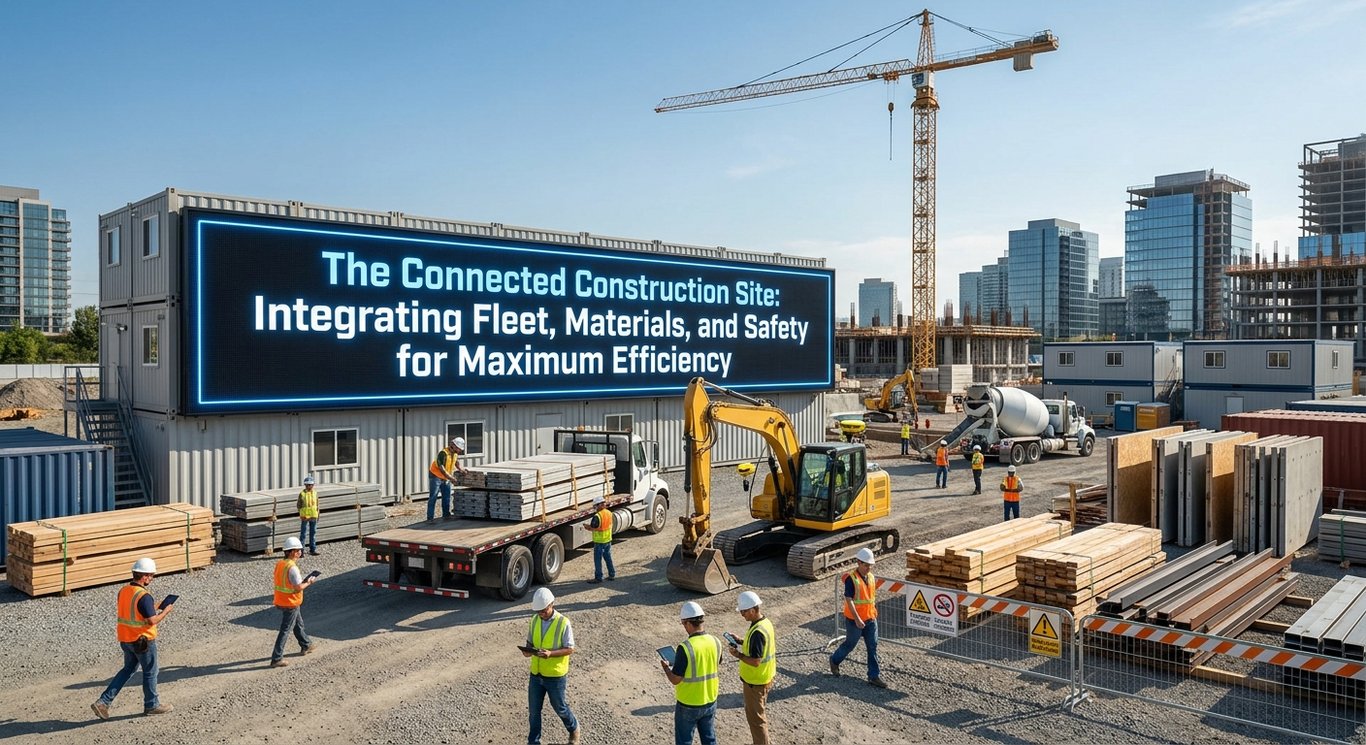
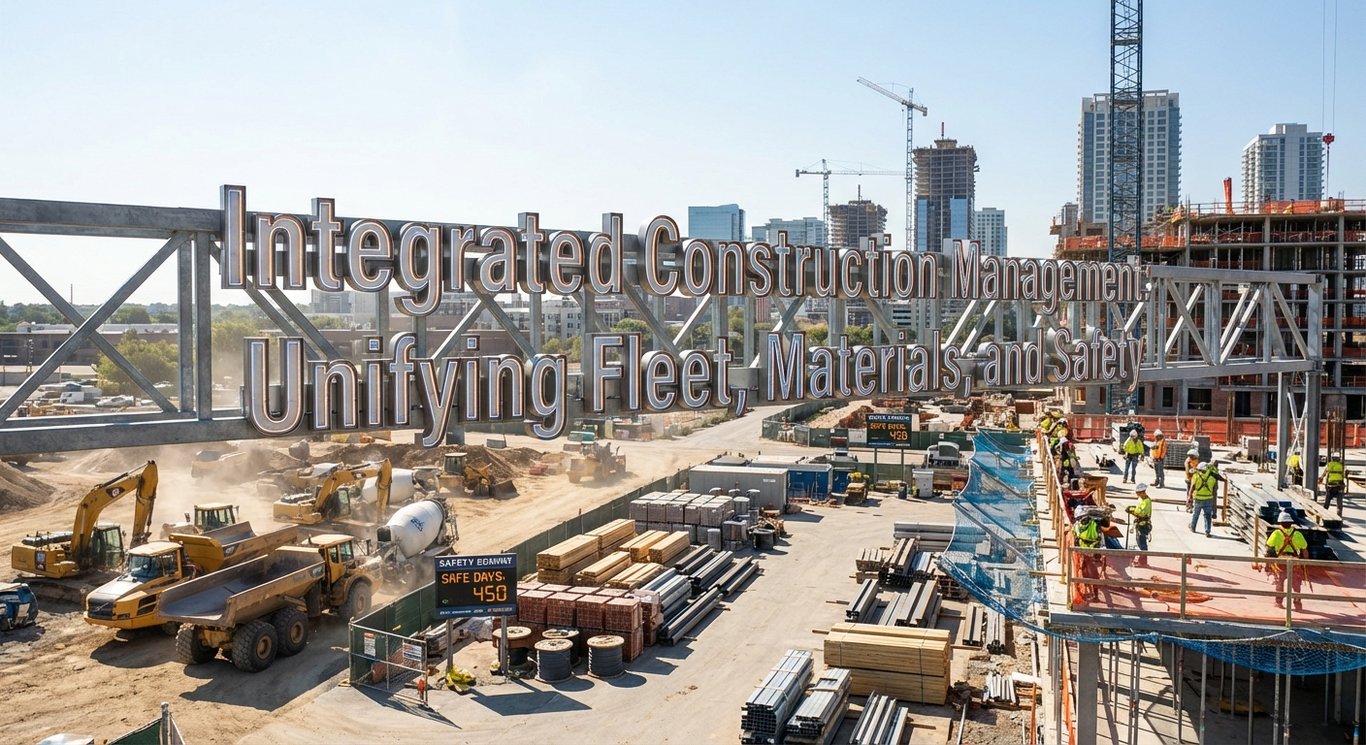
Integrated Construction Management is like the central nervous system of a building project, bringing together fleet operations, material handling, and safety protocols into one place. Instead of having separate teams managing trucks, supplies, and worker safety in isolation, this approach connects them all. It creates a complete picture of the job site, ensuring that everyone is looking at the same information at the same time. 🏗️
When these different areas work alone, it creates “silos” where information gets stuck, leading to mistakes and delays. Unifying these functions breaks down those walls, allowing data to flow freely between departments. This smooth communication improves the overall outcome of the project, saving time and reducing stress for the management team.
In this guide, we will explore the three main pillars of this system: fleet, materials, and safety integration. We will look at how connecting your equipment tracking with your supply chain and safety checks can transform how you build. Understanding these connections is the first step toward a more efficient and profitable construction business.
What Is Integrated Construction Management?
Integrated Construction Management is a smart way of running projects that uses “lean” methodology and a single source of coordination. It focuses on cutting out waste and making sure every part of the process adds value to the final building. By bundling all services together, from the planning phase to the final handover, it ensures nothing gets lost in the shuffle.
In the past, companies used “point solutions,” which meant buying one piece of software for accounting, another for scheduling, and a third for safety. These old tools rarely talked to each other, forcing people to enter the same data twice or three times. Integrated management contrasts this by using one connected platform that handles everything, eliminating the mess of disjointed apps.
The real power of this system is its role in unifying fleet, materials, and safety into a single workflow. It means that when a crane (fleet) is scheduled to lift steel beams (materials), the system automatically triggers the necessary risk assessments (safety). This deep connection ensures that no task is planned without considering the equipment, the supplies, and the safety of the crew.
Modern integrated management relies heavily on cloud-based data consolidation to make this work. This means all the project information lives online, giving the team real-time access whether they are in the office or standing in the mud on the job site. Having instant access to data helps managers make quick, informed decisions without waiting for a paper report. ☁️
Core Benefits of Unifying Fleet, Materials, and Safety
One of the biggest benefits of this approach is improved efficiency and much better cost certainty. When you know exactly where your materials are and when your fleet is available, you stop wasting money on idle time. This tight control over resources helps keep the budget on track and prevents surprise costs from popping up at the end of the job.
Another major plus is enhanced decision-making capabilities through consolidated data. Instead of guessing based on old information, leaders can look at a dashboard and see the health of the entire project instantly. This allows them to spot trends and fix small issues before they turn into expensive disasters.
Finally, companies that use these systems gain a serious competitive advantage. They can bid more accurately because they understand their true costs, and they manage risk much better than disjointed competitors. Clients prefer working with contractors who have a clear, organized process, leading to more won contracts. 🚀
“Software integrations in construction combine disparate tools and systems into a cohesive digital ecosystem, promoting seamless communication and data flow across departments and project phases.” -Trimble
Managing Fleet Operations in an Integrated System
Fleet tracking and optimization are much easier when they are part of an integrated platform. You can see exactly where every excavator, truck, and generator is located using GPS data right on your main map. This helps you understand how your equipment is being used and prevents expensive machinery from sitting unused in a corner of the site.
Real-time equipment allocation allows managers to schedule maintenance without disrupting the work. If the system sees that a bulldozer is due for service, it can alert the shop and help you swap in a replacement machine instantly. This proactive maintenance keeps the fleet healthy and prevents breakdowns that stop the job.
Ideally, fleet data links directly to materials and safety for seamless operations. For example, the system can ensure that a truck is rated to carry the specific weight of materials ordered for delivery. Connecting these dots prevents overloading vehicles and ensures that the right equipment is always paired with the right task. 🚜
Optimizing Materials Management Across Projects
Tracking inventory and integrating procurement are essential for keeping a project moving. An integrated system lets you watch materials move from the vendor’s warehouse all the way to installation on your site. This visibility ensures you order exactly what you need, reducing waste and storage costs.
[cta-call:Call2]
It all starts with quantity takeoff, which is linked directly to your estimating tools. When you measure the materials needed from the blueprints, that data flows right into your budget and order forms. This connection reduces math errors and ensures that the estimate matches reality.
Handling pricing fluctuations and vendor issues is also easier with a unified view. If the price of lumber spikes, you can see the impact on your budget immediately and adjust your plans. It also helps you track which vendors are reliable, so you can avoid those who constantly deliver late. 💰
Finally, integrating materials data with fleet and safety workflows closes the loop. You can schedule the right forklift (fleet) to be available exactly when the pallet of bricks (materials) arrives, while ensuring the operator has the right certification (safety). This level of coordination makes the supply chain unbreakable.
“When you have estimating software that can ‘speak’ to takeoff software, takeoff data is not only fed into the initial estimate, but all updates to quantities going forward are immediately reflected and recalculated within the evolving estimate, yielding more cost certainty for you and the client.” -InEight
Enhancing Safety Through Integrated Protocols
Safety inspections and punch lists become much more effective when they are digital and part of the main system. Workers can use a mobile device to snap photos of hazards and tag them to a specific location on the digital map. This makes sure that problems are fixed quickly and that nothing is ignored.
Real-time risk forecasting is a game-changer when tied to fleet and materials data. The system can warn you if high-risk activities, like heavy lifting, are scheduled in a crowded area of the site. Being able to predict these risks allows the safety team to put extra protections in place beforehand. 👷
Commissioning and defect remediation also benefit from this coordination. Before a project is handed over, the system verifies that all safety checks are done and all defects are fixed. This organized approach ensures the building is safe and ready for the client without a chaotic rush at the end.
Key Technologies for Integrated Construction Management
Cloud platforms and integrated software are the foundation of modern construction management. These tools allow teams to collaborate from anywhere in the world, breaking the chains that used to tie managers to their desks. They serve as the central hub where all the project’s information lives.
There are specific tools designed to facilitate data sharing across fleet, materials, and safety. These applications use “APIs” to let different programs talk to each other, ensuring that your accounting software knows what your inventory software is doing. This seamless sharing is what makes the “integrated” part of the title possible.
Automation and real-time dashboards are the features that save the most time. Instead of manually typing reports, the software automatically gathers data and presents it in easy-to-read charts. This lets managers focus on solving problems rather than building spreadsheets. 🖥️
Implementation Steps for Unifying Systems
The first step in this journey is careful planning and getting all the stakeholders aligned. You need to sit down with your team and decide exactly what problems you want to solve before you look at software. If the people who will use the system aren’t on board, the implementation will fail.
“One of the primary benefits of integrating construction management systems is ensuring data consistency. When different tools and platforms are interconnected, data can flow seamlessly between them, reducing the need for manual data entry and minimizing the risk of errors.” -StruxHub
Next, you need to focus on selecting integrated platforms that fit your specific needs. Don’t just buy the most popular tool; look for one that handles fleet, materials, and safety in a way that makes sense for your company. The right choice will feel like a natural extension of your work.
Data migration and training are the hardest parts of the process. You have to move all your old records into the new system and teach your staff how to use the new tools. This takes patience, but investing in good training ensures that your team feels confident and supported.
Finally, you must address monitoring and change control to keep the system healthy. Once the software is running, you need to keep checking that it is delivering the results you expected. Regular reviews help you tweak the process and ensure the technology continues to serve the business.
Real-World Case Studies and Success Metrics
Many construction firms have already seen success by using projects with unified fleet, materials, and safety. For example, large infrastructure projects often use these systems to coordinate hundreds of trucks and thousands of tons of material without losing track of a single item. These real-world examples prove that integration is not just a theory.
The metrics from these projects show impressive results, such as reduced delays and significant cost savings. Companies often report that they finish jobs faster because they aren’t waiting on missing materials or broken equipment. When you can measure every part of the job, you can find savings you didn’t know existed. 📈
Analyzing lessons learned from these implementations helps new adopters avoid mistakes. One common lesson is that communication is just as important as the technology. Success comes when the software supports a team that is already committed to working together.
Overcoming Common Challenges in Integration
The biggest challenge is often identifying silos and data silos that exist within the company. Departments are used to hoarding their own data, and breaking these habits requires strong leadership. You have to prove to them that sharing information makes everyone’s job easier.
“Integrations simplify workflows by automating repetitive tasks, eliminating manual errors, and accelerating data exchange. This streamlining translates into significant time and cost savings, enhancing profitability through optimized operations.” -Trimble
Resistance to change is another hurdle, highlighting the need for extensive training. Some workers might be afraid that the new technology will replace them or make their work harder. Showing them how the tools automate boring tasks usually helps overcome this fear.
To succeed, you need strategies for risk minimization and better coordination. Start small by integrating one part of the business before tackling the whole thing. Taking a phased approach reduces the chaos and gives the team time to adjust.
Future Trends in Integrated Construction Management
The future looks bright with AI and predictive analytics entering the field. Artificial Intelligence will soon be able to look at your project data and warn you about weather delays or supply shortages weeks in advance. This predictive power will make construction managers even more effective. 🤖
The Internet of Things (IoT) will revolutionize fleet and materials tracking. Tiny sensors on tools and pallets will broadcast their location and status automatically. This means you will have a live digital twin of your job site without having to manually scan anything.
As the industry evolves, we will see evolving safety standards and better scalability in software. Systems will need to be flexible enough to handle new regulations and grow as construction companies take on larger projects. The tools of the future will be safer and more adaptable than ever.
FAQ
What are the main benefits of integrated construction management?
The main benefits include a huge boost in efficiency and the ability to make data-driven decisions. By having all information in one place, teams stop wasting time looking for answers and start solving problems faster. It streamlines the entire workflow from the office to the field.
Additionally, it leads to significant risk reduction across the project. When safety, fleet, and materials are connected, you can spot potential hazards or shortages before they cause an accident or a delay. This proactive approach saves money and keeps workers safe.
How does fleet integration improve construction projects?
Fleet integration improves projects by providing real-time tracking of all machinery. This ensures that equipment is where it needs to be, reducing idle time and fuel costs. Managers can see utilization rates instantly and move assets to where they are most needed.
It also streamlines maintenance and resource allocation. The system tracks engine hours and alerts the mechanic when service is due, preventing unexpected breakdowns. This keeps the iron moving and the project on schedule.
Why unify materials management with safety and fleet?
Unifying these areas creates a seamless data flow that prevents bottlenecks. For instance, knowing exactly when heavy materials will arrive allows you to have the right offloading equipment and safety zones ready. It turns three separate tasks into one coordinated action.
It also helps in error prevention. If the systems are separate, a dispatcher might send a truck that is too small for the load, creating a safety hazard. Integration catches these mismatches automatically, ensuring compliance and safety.
What software is best for integrated systems?
The best software is usually a cloud-based platform that offers an “all-in-one” solution or connects easily with other tools. You want a system that is accessible from mobile devices so field teams can use it easily. Flexibility and ease of use are key features to look for.
Many leading industry providers offer these integrated suites. The right choice depends on the size of your company and the specific type of construction you do. It is important to demo a few options to see which interface your team prefers.
How to measure ROI from integration?
You can measure ROI by looking at KPIs like cost savings and reduction in rework. Compare your profit margins on projects before and after using the software. You should see a decrease in wasted materials and fewer budget overruns.
Timeline improvements are another great way to measure success. If you are consistently finishing jobs ahead of schedule because of better coordination, that is a clear return on investment. Time is money in construction, and saving time is the ultimate win.
Conclusion
Unifying fleet, materials, and safety under one integrated management system is the key to streamlining modern construction projects and reducing risks. By breaking down the barriers between these departments, companies gain **key takeaways**: improved efficiency through real-time data sharing, cost certainty in estimating and procurement, enhanced safety via integrated inspections, and competitive bidding advantages. This holistic approach ensures that every resource is used effectively and every worker returns home safe.
Adopting this technology is no longer just an option; it is a necessity for staying competitive. To get started on your journey toward a more organized and profitable business, download “The Complete Guide to Integrated Construction Management: Unifying Fleet, Materials, and Safety” today. This resource will give you access to step-by-step strategies, checklists, and expert templates to transform your construction operations.