Understanding the Limitations of Traditional Driver Scorecards
Driver scorecards have long been the standard tool for measuring basic behind-the-wheel behaviors like speeding, harsh braking, and rapid acceleration. 🚗 These simple grading systems offer a helpful starting point for fleet managers who want to monitor their drivers and establish baseline safety expectations. By assigning a numerical value to driving habits, companies can easily identify who is driving safely on the highway and who might need a quick reminder to slow down. Ultimately, these scorecards provide a foundational layer of accountability that is essential for basic fleet monitoring.
However, relying solely on driver scorecards leaves massive blind spots in a comprehensive construction safety program. 🏗️ These traditional metrics focus almost entirely on highway driving events, completely ignoring what happens once a vehicle or piece of heavy machinery actually enters the jobsite. In the construction industry, the biggest risks often involve improper equipment use, unsafe backing maneuvers in tight spaces, or ignoring site-specific speed limits. Because scorecards miss these critical operational details, they fail to provide the complete picture needed to truly protect your crew.
To bridge this dangerous gap, construction companies must look toward a broader telematics integration that covers the entire scope of fleet safety. 🌐 Upgrading to a full telematics system means you are no longer just tracking how fast a truck is moving on the interstate, but also how safely equipment is being operated in the dirt. By expanding your safety view beyond simple scorecards, you can build a robust, 360-degree safety program that protects your people, your assets, and your bottom line.
Key Components of Fleet Telematics for Construction Safety
A modern fleet telematics system is built on a network of advanced technologies, including GPS trackers, AI-powered dash cams, and specialized equipment sensors. 📡 GPS trackers provide pinpoint location data, while AI dash cams act as a second set of eyes, automatically detecting risky behaviors like distracted driving or tailgating. Meanwhile, heavy equipment sensors monitor machine health, power take-off (PTO) usage, and load weights directly on the construction site. Together, these high-tech components create a powerful web of data that captures every aspect of your fleet’s daily operations.
Furthermore, these integrated components capture vital information that goes far beyond standard road travel. 🛑 For example, sensors can alert managers to excessive engine idling on jobsites, which wastes fuel and harms the environment, or flag a driver who skips their mandatory pre-trip vehicle inspection. By monitoring these off-road activities, telematics systems ensure that safety and compliance protocols are followed from the moment the engine starts until the job is completely finished.
Steps to Integrate Telematics into Your Safety Program
Selecting Scalable Technology
Choosing the right telematics hardware and software requires looking for solutions that can easily scale as your construction fleet grows. 📈 You need a platform that works just as well for ten pickup trucks as it does for a mixed fleet of a hundred heavy excavators and transport vehicles. It is crucial to select vendors that offer flexible, cloud-based software and durable hardware built to withstand harsh construction environments. Ultimately, investing in scalable technology ensures you won’t outgrow your safety system after just a few successful seasons.
In addition to scalability, placing a strong emphasis on AI integrations is vital for receiving real-time, actionable alerts. 🧠 Artificial intelligence can instantly analyze video footage and sensor data, warning drivers of impending collisions or alerting managers to immediate dangers. This smart technology filters out the noise, ensuring that your safety team only spends time addressing genuine risks rather than sifting through hours of useless data.
“Scorecards consolidate data from telematics, dash cams, and fleet management, such as speeding, harsh braking and acceleration, idling time, seatbelt usage, and compliance with regulations like daily vehicle and equipment inspections.” -Tenna
Customizing Metrics for Construction Risks
Tailoring your telematics metrics to address construction-specific risks is a critical step in making the data work for your unique needs. 🚧 Instead of just tracking highway speeds, you should configure your system to monitor rough equipment handling, unauthorized use of machinery, and compliance with strict jobsite geofences. By focusing on the exact hazards your crew faces daily, you make the safety program highly relevant to their actual work environment. Customizing these metrics guarantees that your safety standards align perfectly with the realities of the construction yard.
Next, it is important to establish weighting factors for these metrics based on your specific fleet profile and regulatory requirements. ⚖️ A harsh braking event in a light-duty supervisor truck might carry less penalty weight than the same event in a fully loaded dump truck. By adjusting how different risks impact overall safety scores, you can ensure your program remains fair, accurate, and compliant with local safety laws. This careful balancing act turns raw data into a highly accurate reflection of your fleet’s true safety performance.
Building a Proactive Safety Culture with Telematics Data
Transitioning from a reactive to a proactive safety culture is entirely possible when you leverage real-time telematics alerts. ⏱️ Instead of waiting for an accident to happen and reviewing the footage days later, managers can intervene the moment a risky behavior is detected. If a driver starts nodding off or texting behind the wheel, instant alerts allow dispatchers to step in and prevent a disaster before it occurs. This forward-thinking approach fundamentally shifts a company’s mindset from damage control to accident prevention.
[cta-call:Call2]
A major part of this proactive shift relies on the role of in-cab coaching and immediate feedback for your drivers and operators. 🗣️ Modern AI dash cams can emit audible warnings when a driver drifts out of their lane or follows another vehicle too closely. This instant, automated feedback acts like a digital driving coach, gently correcting bad habits in real-time without requiring a manager’s direct involvement. Consequently, operators learn to self-correct on the fly, leading to safer driving habits over the long term.
Finally, fostering a deep sense of accountability is achieved through data-driven recognition and targeted training. 🏆 When telematics data is transparent, you can easily identify and reward your safest operators, turning safety into a point of pride rather than a punishment. Recognizing top performers with bonuses or public praise encourages the whole team to buy into the safety culture. By celebrating the good alongside correcting the bad, you build a workplace where everyone is genuinely invested in getting home safely.
“AI dash cams and in-cab driver coaching is shown to reduce accidents by up to 60%.” -IntelliShift
Measuring Success: KPIs Beyond Basic Scores
To truly understand the impact of your telematics program, you must define advanced Key Performance Indicators (KPIs) that go beyond simple driver grades. 📊 Metrics such as overall accident reduction rates, near-miss frequencies, and improvements in your company’s CSA (Compliance, Safety, Accountability) scores offer a much deeper view of your safety health. Tracking these high-level indicators proves whether your safety interventions are actually preventing crashes and keeping you in good standing with regulators. Ultimately, these advanced KPIs provide the hard evidence needed to justify your investment in safety technology.
Moreover, utilizing telematics data allows you to confidently benchmark your fleet’s performance against broader industry standards. 🥇 By comparing your accident rates and compliance scores to other construction fleets of similar size, you can easily spot areas where you are leading the pack or falling behind. This comparative analysis helps you set realistic, data-backed goals for continuous improvement. Benchmarking ensures your safety program never grows stagnant and always strives for industry-leading excellence.
Training and Coaching Programs Powered by Telematics
Automating training assignments based on specific telematics insights takes the guesswork out of driver education. 📚 If the system notices a particular operator frequently triggering harsh cornering alerts, it can automatically assign them a brief, interactive training module on safe turning techniques. This means drivers only spend time on the specific training they actually need, rather than sitting through generic, hours-long safety seminars. As a result, your training program becomes highly efficient and deeply personalized.
Integrating actual dash cam footage into these targeted coaching sessions makes the feedback incredibly impactful. 🎥 When a manager sits down with an operator to review a near-miss, watching the actual video of the event removes any debate about what happened. Seeing their own driving behavior on screen helps operators understand their mistakes in a tangible, undeniable way. This visual proof transforms defensive coaching conversations into constructive, eye-opening learning experiences.
To ensure these educational efforts are working, you must track training effectiveness through follow-up metrics. 📉 After an operator completes a coaching session, managers can use the telematics dashboard to monitor their driving behavior over the next few weeks to see if the risky habits disappear. If the alerts drop, the training was a success; if not, further intervention may be required. This continuous loop of tracking, coaching, and reviewing guarantees that your safety training yields permanent, positive results.
“Using a fleet telematics platform can have a direct impact on insurance costs, with some companies realizing up to a 25% reduction in associated fees.” -Geotab
Cost Savings and Insurance Benefits in Construction
Quantifying the financial benefits of telematics reveals massive reductions in fuel consumption, maintenance bills, and accident claims. 💰 By cutting down on jobsite idling and aggressive driving, companies can slash their annual fuel budgets significantly while simultaneously reducing wear and tear on expensive machinery. Fewer accidents mean fewer costly repairs, less equipment downtime, and a dramatic drop in worker’s compensation claims. Ultimately, the system easily pays for itself by plugging the hidden financial leaks that drain a construction company’s profits.
Additionally, having a documented history of safety data greatly improves your company’s insurability and can lead to lower premiums. 🛡️ Insurance providers love risk mitigation, and when you can hand them concrete telematics reports proving your fleet’s exceptional safety record, you gain massive leverage during policy renewals. Many insurers even offer specific discounts for fleets equipped with AI dash cams and active coaching programs. By proving your commitment to safety with hard data, you turn a major operational expense into a manageable, optimized cost.
Overcoming Common Implementation Challenges
Addressing the challenge of data overload and software integration is the first hurdle many fleets face when adopting new telematics. 💻 It is easy for managers to feel overwhelmed by thousands of daily alerts and data points flooding their screens. To solve this, companies must work closely with their providers to set up customized dashboards that highlight only the most critical, actionable information. By filtering out the noise and seamlessly integrating the software with existing fleet management tools, the data becomes a helpful asset rather than a daily headache.
Gaining enthusiastic buy-in from both drivers and upper management is another crucial step for a successful rollout. 🤝 Drivers often fear that telematics are just “Big Brother” watching them to find reasons to fire them, while management might balk at the initial price tag. Clear communication is key; explain to drivers that cameras are there to exonerate them in false claims, and show management the projected ROI through reduced accidents and fuel savings. When everyone understands how the technology benefits them personally, resistance quickly turns into cooperation.
Finally, ensuring strict compliance with privacy laws and union regulations is essential to keep your program running smoothly. 📜 Construction companies must be transparent about what data is being collected, who has access to it, and how long it is stored. Drafting clear company policies that align with local privacy laws protects both the business and the employees’ rights. By prioritizing transparency and legal compliance from day one, you build a foundation of trust that keeps your safety program legally sound and highly respected.
“Studies show that driver-related behaviors-such as distraction, fatigue, and poor decision-making-account for more than 90% of serious crashes.” -DEKRA
Future Trends in Telematics for Construction Fleets
The future of construction telematics is rapidly moving toward predictive analytics and total, unified fleet visibility. 🔮 Soon, advanced algorithms will not just report on what happened yesterday, but will accurately predict which vehicles are likely to break down or which drivers are at the highest risk of a crash next week. This shift toward predictive safety will allow managers to stop accidents and mechanical failures long before they even materialize. Embracing these emerging technologies will give forward-thinking fleets a massive competitive advantage.
Furthermore, these advanced systems are increasingly aligning with strict, recognized safety standards like ANSI/ASSP Z15. 📋 As the technology matures, telematics platforms are being designed out-of-the-box to help companies easily meet these rigorous national frameworks for safe fleet operations. This alignment takes the guesswork out of regulatory compliance, making it simpler than ever to maintain a world-class safety program. Staying ahead of these trends ensures your fleet remains safe, compliant, and ready for the future of construction.
FAQ
What are the main differences between driver scorecards and full telematics integration?
Driver scorecards typically provide a basic, numerical grade based on limited road events like speeding or hard braking, offering only a narrow view of driver behavior. In contrast, full telematics integration uses GPS, AI cameras, and equipment sensors to monitor everything from jobsite idling and machine health to real-time collision prevention. While scorecards are a simple reactive tool, full telematics creates a comprehensive, proactive safety ecosystem. 🌍
How can telematics data improve jobsite safety beyond road driving?
Telematics data improves jobsite safety by monitoring off-road activities that scorecards miss, such as proper heavy machinery operation, adherence to geofenced speed limits, and mandatory equipment inspections. It can alert managers if a worker is operating a crane roughly or if a dump truck is idling dangerously close to an active trench. By tracking these specific site behaviors, telematics ensures safety protocols are followed in the dirt, not just on the pavement. 🚜
What metrics should construction fleets prioritize in telematics programs?
Construction fleets should prioritize metrics that reflect their unique daily hazards, such as seatbelt compliance in heavy machinery, PTO (power take-off) engagement, off-hour equipment usage, and harsh maneuvers on uneven terrain. Tracking site-specific speed limit violations and pre-trip inspection completion rates are also vital for maintaining compliance. Focusing on these tailored metrics ensures you are mitigating the actual risks your crew faces on the job. 🏗️
How much can telematics reduce insurance costs for construction companies?
While exact savings vary, construction companies can often see insurance premium reductions ranging from 10% to 20% after implementing robust telematics and AI dash cam programs. Insurers reward fleets that can prove they actively reduce risk, prevent accidents through in-cab coaching, and quickly exonerate drivers from false claims using video evidence. Over time, the drastic reduction in actual claims filed will naturally drive your insurance costs down significantly. 💵
What steps are needed to start integrating telematics today?
To start integrating telematics today, begin by evaluating your fleet’s specific safety blind spots and researching scalable technology vendors that offer AI dash cams and equipment sensors. Next, secure buy-in from your team by clearly communicating how the technology will protect them and make their jobs easier. Finally, customize your alerts and dashboards to focus purely on actionable data, allowing you to launch a proactive safety program without overwhelming your management team. 🚀
Conclusion
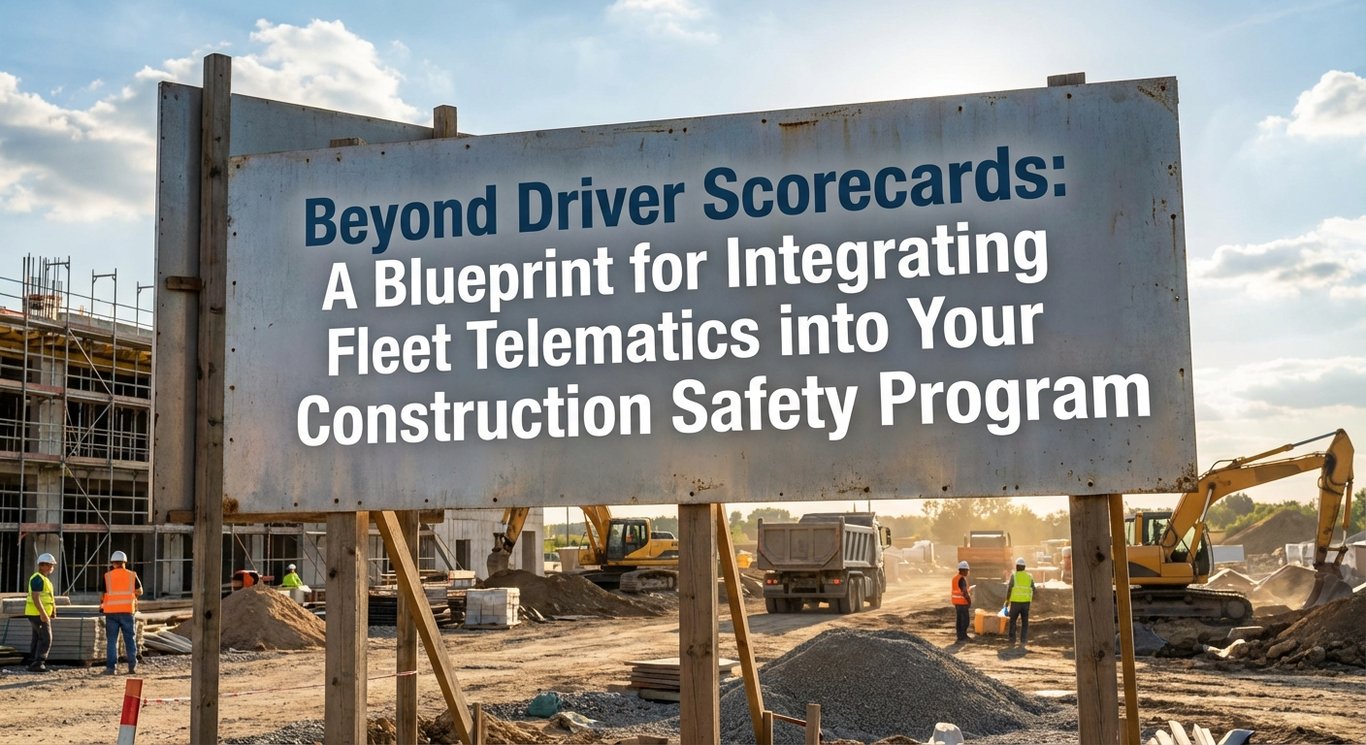
Moving beyond basic driver scorecards requires a strategic blueprint that embraces the full power of modern fleet telematics. 🏗️ By integrating GPS tracking, AI dash cams, and heavy equipment sensors, construction companies can capture a complete picture of their daily operations. We explored how selecting scalable technology, customizing risk metrics, and overcoming implementation hurdles are all critical steps in this journey. Ultimately, this comprehensive approach ensures that no safety blind spot is left unchecked, whether your vehicles are cruising down the highway or navigating a crowded jobsite.
The transformative impacts of this technology on safety, costs, and overall efficiency cannot be overstated. 📈 By shifting from a reactive mindset to a proactive safety culture, fleets can drastically reduce accidents, slash fuel waste, and lower expensive insurance premiums. In-cab coaching and automated alerts empower drivers to correct their own behaviors in real-time, creating a safer work environment for everyone. These operational improvements quickly turn a safety expense into a massive driver of company profitability.
The key takeaways for any fleet manager are to customize your metrics, use real-time data proactively, measure success with advanced KPIs, and constantly benchmark against industry standards. 🥇 Do not settle for basic grades; demand actionable insights that allow you to assign targeted training and reward your safest operators. By treating telematics as a dynamic coaching tool rather than just a tracking device, you build a culture of accountability and continuous improvement. This data-driven strategy is the ultimate key to mastering construction fleet safety.
Download your free copy of “Beyond Driver Scorecards: A Blueprint for Integrating Fleet Telematics into Your Construction Safety Program” today to start building a safer, more efficient fleet-visit [your resource link] to get instant access and transform your safety program now. 📥