
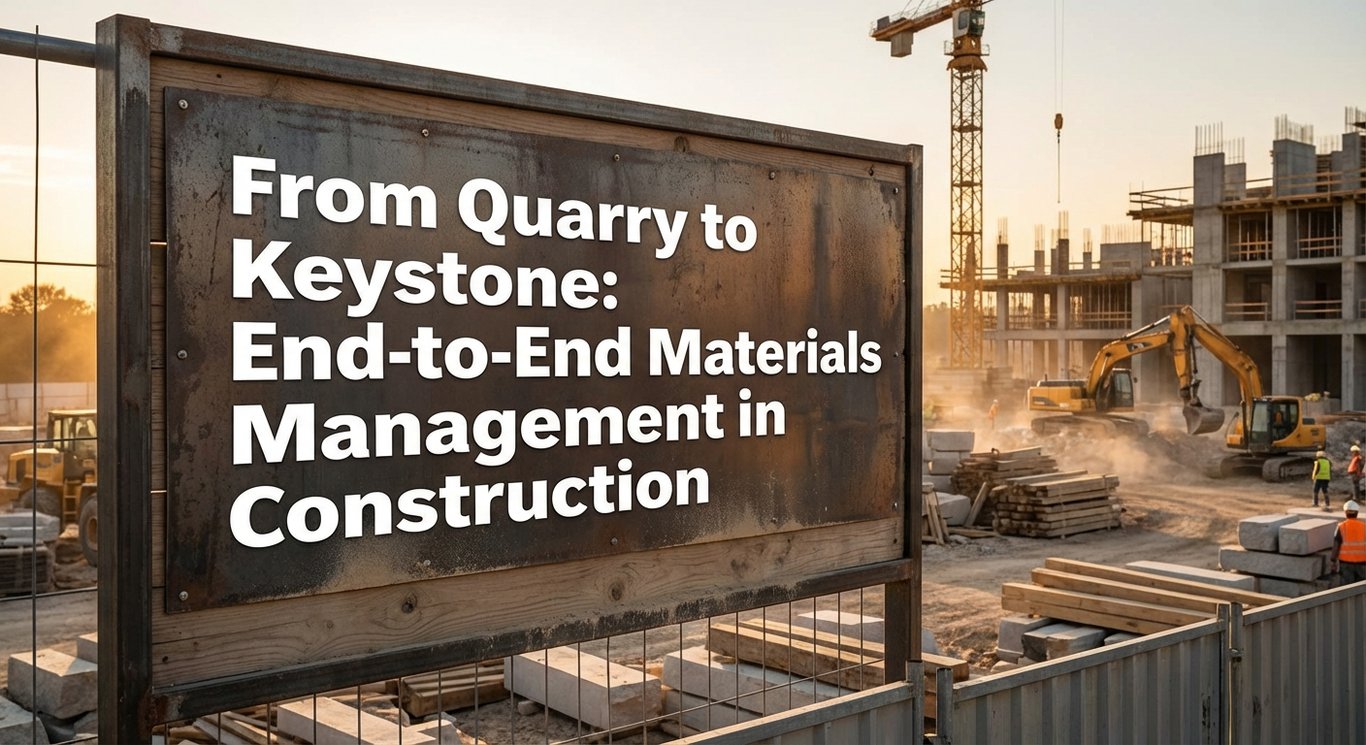
Every great building begins its life long before the first shovel hits the dirt, starting an incredible journey from raw quarry extraction to the final keystone placement. 🏗️ This journey is the heartbeat of any construction project, dictating whether a build finishes on time or falls painfully behind schedule. By mastering this flow of resources, construction teams can ensure that every single piece of the puzzle arrives exactly when and where it is needed. Ultimately, understanding this monumental journey is the ultimate secret to unlocking true project success.
To truly grasp this concept, we need to look at the end-to-end process overview of how materials move through a project. This comprehensive cycle involves careful planning, strategic buying, safe storage, and precise usage on the job site. It is not just about ordering supplies; it is about creating a seamless pipeline that connects the raw earth to the finished skyscraper. Moving forward, having a bird’s-eye view of this entire operation keeps project managers one step ahead of potential disasters.
When this pipeline runs smoothly, the benefits are absolutely game-changing for construction companies. 💰 Teams enjoy massive cost savings, reduced waste, and a serious boost in overall efficiency on the job site. Nobody likes a project that bleeds money because a pile of bricks went missing or a concrete truck arrived three days late. By locking down these processes, you set the stage for a profitable, stress-free build that keeps everyone from the crew to the client smiling.
What Is End-to-End Materials Management?
At its core, end-to-end materials management is the art and science of coordinating materials from their initial quarry sourcing all the way to their final installation. It means taking full responsibility for every grain of sand, beam of steel, and sheet of glass that enters the project ecosystem. Rather than treating purchasing and building as two separate tasks, this approach links them together in a continuous, well-oiled machine. Consequently, this holistic view ensures that nothing slips through the cracks during the chaotic building process.
To make this work, managers must closely monitor the various lifecycle stages of every material. This lifecycle kicks off with identifying requirements during the planning phase, moves into buying and delivery, and continues through on-site storage and final usage. Each stage requires specific attention, as a bottleneck in one area will inevitably cause a ripple effect down the line. Therefore, tracking materials through each of these distinct phases is non-negotiable for a smooth operation.
Furthermore, this management style thrives at the busy intersection of procurement, logistics, and scheduling. 📅 It is not enough to just buy the right items; you have to figure out how to transport them and ensure they arrive exactly when the schedule demands. If logistics fail, the schedule crashes, and if the schedule crashes, procurement budgets often skyrocket. Balancing these three pillars requires constant communication and a proactive mindset from the entire management team.
Finally, mastering this coordination plays a massive role in overall cost control for the project. When materials are managed correctly, you avoid the hidden costs of expedited shipping, replacing damaged goods, or paying workers to stand around waiting for supplies. Every dollar saved on wasted materials is a dollar added directly to the project’s profit margin. In the end, tight materials management is one of the most effective ways to protect your bottom line.
Key Steps in the Materials Management Process
Material Takeoff (MTO) and Planning
The entire material journey kicks off with the creation of a Material Takeoff (MTO), which requires close collaboration with the engineering team. An MTO is essentially a comprehensive list of every single item needed to complete the build, calculated directly from the project designs. Engineers and estimators work together to count, measure, and quantify everything from structural steel to the last box of screws. This foundational step ensures that the project starts with a realistic understanding of what needs to be purchased.
Once the list is created, the next step is aligning these quantities with the blueprints and Required On-Site (ROS) dates. ⏱️ It is crucial to know not just what to buy, but exactly when each item needs to be physically present on the job site to keep work moving. By syncing the MTO with the construction schedule, managers can prevent the site from becoming overcrowded with materials that aren’t needed yet. This careful alignment keeps the workspace safe, organized, and ready for action.
To wrap up the planning phase, the team must engage in a collaborative review to guarantee absolute accuracy. Mistakes made during the MTO phase will haunt the project later, leading to either severe shortages or expensive overages. Estimators, project managers, and lead engineers should all double-check the numbers before any orders are finalized. Ultimately, taking the time to review these details upfront saves countless hours of frustration down the road.
Developing the Material Requisition Plan (MRP)
With the MTO in hand, the team moves on to detailing the Material Requisition Plan (MRP), which relies heavily on structured requisition forms and approvals. 📋 This plan dictates exactly how and when the items listed in the MTO will actually be requested from the purchasing department. It sets up a clear chain of command, ensuring that every request is reviewed and approved by the right supervisor before money is spent. Establishing this formal process prevents rogue spending and keeps the budget tightly controlled.
“Construction materials management encompasses every stage of the material lifecycle from initial vendor sourcing through transportation and installation or disposal. Its synchronized approach helps prevent materials shortages while avoiding excess inventory, all in an effort to control costs, meet project deadlines, and reduce waste.” -NetSuite
Next, the MRP outlines the specific procurement and delivery planning required to get the materials to the site. This involves mapping out lead times, deciding which items need to be ordered months in advance, and planning the logistics of getting heavy freight to the location. A well-crafted MRP acts as a roadmap, guiding the purchasing team on when to pull the trigger on specific orders. Consequently, this strategic planning ensures a steady, predictable flow of resources.
Finally, a robust MRP must cover the verification processes used to double-check requests against the original budget and schedule. Before a requisition becomes a real purchase order, someone needs to verify that the requested materials actually match the approved MTO. This step catches human errors, like accidentally ordering ten times the required amount of copper wiring. By enforcing strict verification, the MRP acts as a critical safety net for the project’s finances.
Sourcing Materials: From Quarry Extraction to Supplier Selection
Sourcing begins at the very root of the supply chain, often involving direct quarry sourcing for aggregates, stone, and raw materials. 🪨 Understanding where your raw materials come from helps you gauge their quality, availability, and the environmental impact of your project. For heavy civil and commercial builds, securing a reliable quarry can make or break the foundation of the entire structure. Transitioning from the raw earth to a usable building product is the first major hurdle in the procurement process.
[cta-call:Call2]
After identifying the raw needs, the focus shifts to identifying reliable suppliers through Requests for Proposals (RFPs). Sending out detailed RFPs allows you to cast a wide net, inviting various vendors to explain how they can meet your specific material needs. This process weeds out the suppliers who can’t handle your volume or meet your strict deadlines. Ultimately, a well-written RFP is your best tool for finding partners who are truly up to the task.
Once the proposals roll in, the team must meticulously evaluate the bids and negotiate contracts. It is rarely just about picking the lowest price; you have to weigh the cost against the supplier’s reputation, delivery capabilities, and financial stability. Smart negotiators will lock in favorable terms, ensuring price protection even if market rates fluctuate during a long project. Securing a solid contract sets a tone of mutual respect and reliability between the builder and the supplier.
To finalize the sourcing phase, managers must heavily emphasize quality specifications and industry certifications. You cannot afford to build a skyscraper with substandard steel or weak concrete, so verifying that a supplier meets ISO standards or local building codes is critical. Demanding proof of quality upfront prevents disastrous structural failures and costly rework later on. By prioritizing certified materials, you guarantee that the final keystone will rest on a foundation of absolute strength.
“Every successful materials management system begins with a detailed material takeoff, which lists all materials required for a project and aligns them with the construction schedule. Using historical data from similar projects helps improve estimation accuracy and avoid planning mistakes.” -How to Manage Construction Materials | Phoenix, AZ Guide
Purchasing and Procurement Strategies
The purchasing phase officially begins with issuing purchase orders (POs) and diving into terms negotiation. 🤝 A purchase order is a legally binding document that locks in the exact quantities, prices, and delivery dates agreed upon with the supplier. Negotiating favorable payment terms, such as net-60 or net-90 days, can significantly improve the construction company’s cash flow during a tight build. Getting these details right on the PO ensures that both parties have clear, documented expectations.
To maximize efficiency, many successful companies rely on centralized procurement to drive massive cost savings. Instead of letting each individual job site buy its own supplies, a central purchasing department handles the buying for all company projects at once. This strategy allows the company to buy in bulk, negotiate long-term discounts, and build stronger relationships with key vendors. As a result, centralized buying turns procurement from an administrative chore into a strategic financial advantage.
The final piece of the procurement puzzle involves actively tracking orders to guarantee timely delivery. Issuing a PO is not the end of the job; procurement teams must follow up with suppliers to ensure manufacturing and shipping are staying on schedule. If a delay is detected early, the team can pivot and find alternative solutions before the construction crew is left waiting. Continuous tracking bridges the gap between the purchasing office and the muddy reality of the job site.
Receiving and Inspection Procedures
When the delivery trucks finally roll onto the site, the first critical task is verifying quantities against the original purchase orders. 🚚 The receiving team must physically count the items and check the packing slips to ensure they aren’t being shortchanged by the supplier. Skipping this step can lead to nasty surprises weeks later when a crew realizes they are missing half the drywall they need. Diligent counting at the gate is the first line of defense against inventory shrinkage.
Immediately following the count, the team must conduct thorough quality checks and handle any discrepancies. It is not enough to have the right amount of materials; they also need to be free of damage, rust, or manufacturing defects. If a shipment arrives damaged, the receiving team must document it with photos, quarantine the bad materials, and immediately file a claim with the vendor. Handling these issues on the spot prevents defective materials from ever making it into the actual building.
Once the materials pass both quantity and quality checks, the final step is logging them into the project’s inventory systems. This data entry updates the central database, letting the project managers and procurement team know that the goods have officially arrived. Accurate logging transforms physical piles of wood and steel into trackable digital assets. Consequently, everyone on the project gets real-time visibility into what is actually available on the ground.
“Materials management often focuses on implementing efficient processes for managing material flow to construction sites. This minimizes the risk of shortages and delays, reduces storage and handling costs, and ultimately enhances overall project efficiency. Striking a balance between material availability and storage costs is key.” -Construction Materials Management: An Essential Guide
On-Site Storage and Organization Best Practices
Proper storage begins with selecting the right storage locations and methods based on the specific material type. You wouldn’t store bags of cement in a damp basement, just as you wouldn’t leave expensive copper piping out in the open. Heavy aggregates might need dedicated bins, while sensitive electrical components require climate-controlled trailers. By matching the material to its ideal storage environment, you protect your investment from unnecessary degradation.
Beyond basic organization, prioritizing safety and weather protection is absolutely vital on a chaotic job site. 🌧️ High winds, freezing rain, and blistering sun can destroy unprotected materials in a matter of days, turning expensive supplies into useless trash. Furthermore, materials must be stacked safely to prevent tip-overs that could seriously injure a worker. Implementing sturdy tarps, proper shelving, and secure fencing keeps both the materials and the crew completely safe.
To keep the storage area functioning smoothly, teams must maintain strict inventory documentation. Every time a pallet is moved or a new shipment is placed in the yard, it needs to be recorded on a site map or in a digital ledger. If workers have to spend two hours searching a massive laydown yard for a specific valve, the project bleeds money in lost labor. Clear documentation ensures that anyone can find exactly what they need in minutes.
Finally, excellent storage organization is a primary strategy for minimizing waste on the job site. When materials are kept neat and accessible, workers are less likely to accidentally damage them or order unnecessary replacements because they couldn’t find the originals. A clean, well-organized site promotes a culture of respect for the materials and the budget. Ultimately, treating your storage yard like a well-run warehouse pays massive dividends in waste reduction.
Issuing Materials and Usage Tracking
Getting materials out of storage and into the hands of the builders requires a strict issuing process complete with check-in and check-out protocols. 👷 Think of the storage yard like a library; workers shouldn’t just walk in and grab what they want without leaving a record. Implementing a formal sign-out sheet or digital barcode scan ensures that every item is assigned to a specific crew or task. This accountability stops materials from mysteriously wandering off the job site.
This issuing process must be perfectly aligned with the daily construction schedules. The warehouse manager needs to know what tasks are happening tomorrow so they can prep the exact materials the crews will need first thing in the morning. If the framing crew has to wait an hour for lumber to be issued, the entire day’s schedule gets pushed back. Seamless alignment keeps the site buzzing with productive, uninterrupted work.
“Documented SOPs convert good intentions and training into consistent, repeatable execution. Every project should have clear procedures covering at minimum: receiving materials, movement control, and storage practices.” -How to Manage Construction Materials | Phoenix, AZ Guide
To close the loop, it is essential to detail and record all material transactions to prevent inventory discrepancies. When a worker returns unused materials at the end of the day, those items must be logged back into the system just as carefully as they were checked out. Tracking actual usage against planned usage helps managers spot trends, like a specific crew consistently wasting too much wiring. By keeping the books balanced daily, the project avoids massive inventory nightmares at the end of the month.
Common Challenges and Solutions in Materials Management
Even the best-planned projects face significant issues, often starting with unexpected supply chain disruptions and strict storage limits. 🛑 Global shipping delays can leave a site starved for materials, while tight urban job sites might lack the physical space to store bulk orders. These external pressures force managers to constantly adapt and find creative ways to keep the project moving. Acknowledging these hurdles is the first step toward building a resilient management strategy.
Another massive headache for construction teams is the ripple effect caused by inaccurate forecasting. If the initial MTO was wrong, or if the schedule shifts dramatically, teams can end up with too much of the wrong material and none of what they actually need. This leads to emergency rush orders, which carry exorbitant shipping fees and blow up the project budget. To combat this, teams must constantly revise their forecasts based on real-time site conditions.
Furthermore, theft and material waste are persistent threats that require strict prevention via Standard Operating Procedures (SOPs). Copper wire, power tools, and lumber are prime targets for theft, while careless handling leads to mountains of wasted scrap. Implementing SOPs like locked perimeters, security cameras, and daily scrap audits helps lock down the site’s assets. A zero-tolerance policy for sloppy handling and poor security saves thousands of dollars over the life of a build.
To truly mitigate these modern challenges, experts highly recommend adopting digital tools and management software. Trying to manage a multi-million dollar supply chain on a paper clipboard is a recipe for absolute disaster. Software solutions can automatically alert managers to low stock, track weather delays, and flag suspicious inventory drops. By arming the team with the right technology, you turn chaotic challenges into manageable, data-driven tasks.
The Role of Technology in Modern Materials Management
The digital revolution has transformed construction, starting with the introduction of powerful MRP software and advanced inventory tracking tools. 💻 These platforms replace messy spreadsheets, offering a centralized hub where procurement, engineering, and site managers can all look at the exact same data. Software can automate the creation of purchase orders and send instant alerts when a delivery is running late. Embracing these tools takes the guesswork out of the daily material grind.
“Materials management is important because construction materials often make up a large portion of project costs. Proper management helps reduce waste, prevent delays, control expenses, and ensure materials are available when workers need them.” -How to Manage Construction Materials | Phoenix, AZ Guide
A massive leap forward in this tech space is the use of asset tracking systems like GoCodes and RFID tags. By slapping a durable QR code or scannable tag onto a pallet of materials, workers can instantly update the inventory database using just their smartphones. This eliminates manual data entry errors and makes checking materials in and out incredibly fast. Asset tracking brings warehouse-level precision right into the mud and dust of the construction site.
Ultimately, the greatest benefits of these technologies are the real-time visibility and massive boosts in efficiency they provide. When a project manager can see exactly how much steel is on site from a tablet in their truck, they can make split-second decisions with confidence. This visibility prevents duplicate orders, speeds up the auditing process, and keeps the entire team perfectly synced. Technology is no longer just a luxury; it is the engine that drives modern construction profitability.
Measuring Success: KPIs for Materials Management
To know if your strategy is actually working, you have to define and track Key Performance Indicators (KPIs) like on-time delivery rates and cost variance. 📊 On-time delivery measures how often suppliers hit their promised dates, which is critical for evaluating vendor reliability. Cost variance tracks the difference between what you budgeted for materials and what you actually spent. Keeping a close eye on these numbers tells you exactly where your procurement strategy is succeeding or failing.
Another crucial set of metrics covers inventory turnover and overall waste reduction. Inventory turnover shows how quickly materials are used after they arrive; a low turnover rate means you are storing items for too long, risking damage and tying up cash. Waste reduction metrics track how much material ends up in the dumpster versus the actual building. Improving these two KPIs guarantees a leaner, more cost-effective job site.
Finally, measuring success requires regular auditing and a commitment to continuous improvement. KPIs are useless if you just look at them and do nothing; you have to use the data to tweak your processes for the next project. If an audit reveals that a specific supplier is constantly late, it is time to find a new partner. By constantly analyzing performance data, construction teams can refine their materials management into a sharp, competitive edge.
Sustainable Practices in End-to-End Materials Management
Modern construction is increasingly focused on the environment, starting with the proactive sourcing of recycled and eco-friendly materials. 🌍 Instead of always relying on virgin quarry extraction, forward-thinking teams are using recycled concrete aggregates and reclaimed steel. This not only reduces the destructive impact on the earth but often results in cheaper material costs. Sourcing sustainably proves that you can build for the future while still protecting the bottom line.
Another major pillar of sustainability is strict waste minimization on the job site. Construction generates a massive amount of landfill waste, but clever materials management can drastically reduce this footprint. By ordering precise quantities, storing items safely to prevent damage, and recycling scrap materials, sites can cut their trash output in half. Waste minimization is a win-win, saving the company disposal fees while helping the planet.
Finally, integrating these green practices ensures compliance with strict green building standards like LEED certification. Clients and local governments are increasingly demanding that new builds meet high environmental benchmarks to qualify for tax breaks or permits. By tracking the carbon footprint of material deliveries and proving the use of sustainable goods, managers easily check these compliance boxes. Ultimately, sustainable materials management is becoming the gold standard for top-tier construction firms.
FAQ
What are the five rights of materials management?
The five rights of materials management are a foundational rule of thumb ensuring you have the right materials, at the right time, in the right quantities, at the right cost, and from the right sources. Hitting all five of these targets guarantees that a construction project will run efficiently without budget blowouts or schedule delays. If even one of these “rights” is off-like getting the right material but at the wrong time-the entire workflow can grind to a costly halt.
How does Required On-Site (ROS) scheduling work?
Required On-Site (ROS) scheduling works by working backward from the construction master schedule to determine the exact date a material must physically arrive at the job site. Planners look at when a specific task, like pouring a foundation, is set to begin, and then factor in lead times, shipping, and inspection periods to set the ROS date. This ensures materials aren’t ordered too early, which clutters the site, or too late, which forces workers to stand around waiting.
What is a Material Takeoff (MTO)?
A Material Takeoff (MTO) is a highly detailed, comprehensive list of every single physical material required to complete a construction project, derived directly from the engineering blueprints and designs. Estimators analyze the drawings to count and measure everything from the cubic yards of concrete to the number of door hinges needed. This document serves as the absolute baseline for creating budgets, planning procurement, and starting the requisition process.
Why is centralized procurement important?
Centralized procurement is important because it consolidates the purchasing power of an entire construction company into one dedicated department, rather than letting individual sites buy their own goods. This allows the company to negotiate massive bulk discounts, secure long-term contracts with reliable vendors, and standardize the quality of materials used across all projects. Ultimately, it cuts down on rogue spending and drastically improves the company’s overall profit margins.
How can technology improve construction materials tracking?
Technology improves tracking by replacing error-prone manual spreadsheets with real-time digital software, barcode scanners, and RFID tags. When materials arrive, they are instantly scanned into a cloud-based system, giving project managers instant visibility into exactly what is on-site and where it is stored. This digital oversight prevents lost inventory, speeds up the check-out process for workers, and provides accurate data for future project forecasting.
Conclusion
The monumental journey from a raw quarry to the final, polished keystone is a complex web of logistics, planning, and execution. 🏆 End-to-end materials management is the vital thread that ties this whole process together, ensuring that earth’s raw resources are transformed into towering structures without unnecessary chaos. By understanding each phase-from the initial MTO to final site usage-construction professionals can take total control of their job sites. Mastering this journey separates the struggling contractors from the industry leaders.
Looking back at the process, the key takeaways always circle back to mastering the five rights: securing the right materials, at the right time, in the right quantities, at the right cost, and from the right sources. Furthermore, we’ve seen how a rock-solid Material Requisition Plan (MRP) acts as the project’s financial shield, while the integration of modern technology brings unprecedented visibility to the supply chain. Embracing these core concepts ensures that no detail, no matter how small, is ever overlooked.
When these strategies are implemented correctly, the benefits to project budgets and timelines are absolutely undeniable. Efficient materials management slashes the hidden costs of waste, prevents expensive schedule delays, and keeps the construction crew working safely and productively. It turns the unpredictable nature of building into a streamlined, highly profitable manufacturing process. Ultimately, taking care of your materials means taking care of your business.
If you are ready to stop losing money to disorganized job sites and supply chain chaos, it is time to take action. Download “From Quarry to Keystone: A Complete Guide to End-to-End Materials Management in Construction” to implement these strategies on your next project and transform your operations. 🚀