From Data to Action: Using Fleet Telematics to Proactively Reduce Jobsite Incidents and Material Waste
Fleet telematics is transforming the way construction and field-based operations are managed – and it’s about time. 🚧 At its core, telematics is the integration of GPS tracking, onboard sensors, engine diagnostics, AI-powered cameras, and cloud-based data analytics to monitor vehicles, heavy equipment, and operator behavior in real time. Whether it’s a dump truck hauling materials across a sprawling jobsite or an excavator working in tight quarters, telematics gives fleet managers a continuous, data-rich view of what’s happening on the ground. But this article isn’t just about collecting data – it’s about doing something meaningful with it. The central idea here is moving from passive observation to proactive action, using telematics to reduce jobsite incidents, cut material waste, and manage risk before problems spiral out of control.
Jobsite incidents and material waste aren’t just operational headaches – they’re serious threats to safety, profitability, regulatory standing, and even the environment. A single vehicle collision on a construction site can result in injuries, OSHA investigations, project delays, and skyrocketing insurance premiums. Meanwhile, material waste driven by inefficient deliveries, equipment misuse, or rework from preventable damage quietly erodes project margins. Fuel waste adds another layer of cost and environmental impact that many organizations underestimate. The good news is that telematics shines a light on exactly the behaviors and patterns that drive these problems – risky driving, excessive idling, unauthorized equipment use, and inefficient routing – giving managers the visibility they need to step in early and course-correct before small issues become expensive disasters.
This article is designed to be a practical guide, not just a high-level overview. We’ll walk through the key telematics capabilities that matter most for safety and waste reduction, explore real-world use cases for reducing jobsite incidents and cutting fuel and material costs, and cover implementation best practices for organizations at any stage of their telematics journey. We’ll also tackle common challenges, break down ROI and the metrics that matter, and answer the questions fleet and safety managers ask most often. The goal is simple: help you move from data to action, with confidence and clarity. Let’s dig in. 💡
Understanding Fleet Telematics and Its Role on Modern Jobsites
Fleet telematics is, at its most fundamental level, the marriage of telecommunications and informatics – two disciplines that together make it possible to transmit real-time data from vehicles and machines to centralized management platforms. When a truck is moving across a jobsite, telematics systems are capturing its location via GPS, its speed, engine RPM, fuel consumption, and the behavior of the person behind the wheel – all simultaneously. Unlike basic GPS tracking, which simply tells you where an asset is, advanced telematics goes much deeper. It analyzes how a vehicle is being driven, flags anomalies like harsh braking or speeding, integrates video footage from cameras, and surfaces trends over time that basic location data would never reveal. That distinction – between knowing where something is and understanding how it’s being used – is what makes modern telematics so powerful.
On a typical construction or industrial jobsite, the telematics ecosystem includes several interconnected components working together. Vehicle tracking devices installed in trucks and light fleet vehicles capture movement, speed, and engine data. Machine control modules attached to heavy equipment like excavators, loaders, and graders monitor runtime, load cycles, and fuel burn. AI-powered dashcams watch for distracted driving, phone use, and near-miss events. Fuel sensors track consumption at the tank level, and cloud analytics platforms pull all of this data together into dashboards that managers can access from anywhere. Collectively, these systems create something close to a real-time “digital twin” of fleet operations – a live, data-driven mirror of everything happening across multiple jobsites at once. That kind of visibility simply wasn’t possible a decade ago. 📡
The reason telematics is foundational for proactive safety and waste reduction comes down to one critical capability: it allows managers to act on information before problems escalate. Traditional safety and efficiency programs rely heavily on after-the-fact reporting – incident reports filed after a collision, fuel bills reviewed at the end of the month, equipment breakdowns discovered when a machine stops working. Telematics flips that model on its head. Continuous monitoring, objective data streams, trend analysis, and automated alerts mean that a supervisor can be notified the moment a driver starts speeding through a congested zone, or when a piece of equipment has been idling for two hours with no productive output. That shift from reactive to proactive is where telematics delivers its most significant value.
From Raw Data to Actionable Insights: Turning Telematics into Safety Improvements
The range of safety-related data that telematics captures is genuinely impressive – and every metric on that list is tied directly to real-world collision and incident risk. Speeding is one of the most obvious: vehicles traveling too fast have less time to react to hazards, especially in the dynamic, unpredictable environment of a construction site. Harsh braking and rapid acceleration indicate aggressive driving patterns that increase wear on vehicles and raise the likelihood of losing control. Cornering events flag drivers taking turns too aggressively, which is particularly dangerous in heavy vehicles. Add to that near-miss event detection, seat belt monitoring, and camera-triggered alerts for behaviors like phone use or drowsiness, and you have a comprehensive picture of risk at the operator level. Vehicle health alerts – warning about brake wear, tire pressure, or engine faults – round out the picture by flagging mechanical conditions that could contribute to incidents if left unaddressed.
Of course, raw data on its own doesn’t change anything. The transformation from data to insight requires the right analytical tools and the right mindset. Most modern telematics platforms offer dashboards that highlight high-risk drivers or assets based on aggregated behavior scores, trend reports that reveal recurring risk patterns across shifts or locations, and safety scorecards that blend multiple metrics into a single, easy-to-interpret rating. A driver might have one harsh braking event that’s explainable – a child ran into the road – but a pattern of ten harsh braking events in a week tells a very different story. Safety managers who understand how to read these dashboards can prioritize their attention on the operators and assets that genuinely need intervention, rather than spreading limited time and resources too thin. The value isn’t in the numbers themselves; it’s in the story those numbers tell when analyzed together. 📊
Once insights are in hand, the real work begins: turning them into practical actions that actually change behavior and reduce risk. Targeted coaching for specific operators is one of the most effective interventions available – when a manager can sit down with a driver and show them exactly where and when they were speeding or distracted, the conversation becomes specific and credible rather than general and dismissive. Insights also drive updated safety policies, such as revised speed limits for certain jobsite zones or mandatory rest protocols based on fatigue detection data. Route changes can be made to steer vehicles away from high-hazard areas or congested intersections. And maintenance interventions can be scheduled before a failing component causes an unexpected breakdown that puts workers at risk. Each of these actions is grounded in data, which makes them far more defensible and effective than gut-feel decisions.
“Telematics-assisted safety programs have been shown to reduce collisions by as much as 40-70% while lowering maintenance and fuel costs by double-digit percentages.” -Geotab
Using Telematics to Proactively Reduce Jobsite Incidents
Jobsite incidents involving fleet and equipment operations fall into several distinct but related categories, and understanding them helps clarify where telematics can have the greatest impact. Vehicle collisions on and around active jobsites are among the most common and costly – these can involve construction vehicles, delivery trucks, or personal vehicles entering the site. Struck-by and run-over incidents, where workers on foot are hit by moving equipment, represent some of the most tragic outcomes in the industry. Rollovers, particularly with heavy equipment operating on uneven terrain, pose significant risk of serious injury or death. Equipment contact with buried utilities or overhead lines causes both safety emergencies and major project disruptions. And incidents related to blind spots or poor visibility – especially with large machines – are a persistent challenge that technology is increasingly equipped to address. ⚠️
[cta-call:Call2]
Telematics-based prevention strategies address these incident categories in direct, measurable ways. Real-time speed alerts notify operators and managers the moment a vehicle exceeds a defined threshold within a geofenced jobsite boundary. Geofencing itself is a powerful tool – it can trigger warnings when equipment enters restricted zones, approaches utility corridors, or operates outside of approved hours. Automatic incident recording via video telematics captures the moments before, during, and after a collision or near miss, providing objective evidence that supports both investigation and coaching. Driver behavior monitoring creates accountability by making operator performance visible and measurable over time. And safety event thresholds – configured to trigger coaching or escalation when a driver accumulates too many risk events – create a structured, consistent response process rather than leaving intervention to chance or individual manager judgment.
AI-powered video telematics and dashcams deserve special attention because they represent one of the most significant recent advances in proactive risk management. 🎥 These systems don’t just record – they analyze. Using computer vision and machine learning, AI dashcams can detect distracted driving behaviors like phone use, eating, or drowsiness in real time and deliver an audible in-cab alert to the driver before the behavior leads to an incident. They can identify when a driver’s eyes leave the road for too long, or when a pedestrian or cyclist enters a vehicle’s path. Near-miss events are automatically flagged and uploaded for review, giving safety managers a library of real-world risk scenarios to use in training. The combination of real-time correction and after-the-fact coaching creates a feedback loop that steadily improves operator behavior over time – and that’s exactly the kind of proactive risk management that prevents incidents rather than just documenting them.
The organizations seeing the strongest safety results from telematics aren’t just using the technology in isolation – they’re weaving it into the fabric of their broader safety culture. Telematics data gets incorporated into toolbox talks, where specific events or trends from the previous week are discussed openly with crews. Safety incentive programs reward operators who maintain strong behavior scores over time, creating positive motivation alongside accountability. Corrective action plans are built around documented telematics events rather than vague observations, making them more specific and actionable. And continuous improvement processes use trend data to identify systemic issues – like a particular intersection or time of day that consistently generates risk events – and redesign operations accordingly. Organizations that commit to this integrated approach report not just fewer incidents and lower insurance claims, but a measurable shift in safety culture where operators genuinely take ownership of their behavior on the road and the jobsite. 🏆
“The data gathered through telematics can inform decisions from maintenance schedules to route optimization, helping businesses cut costs, boost productivity, and increase fleet safety.” -Wheels
Cutting Material Waste and Fuel Consumption with Telematics
The connection between fleet operations and material waste is closer than many people realize, and it runs through several different pathways. When a vehicle breaks down because of a missed maintenance window, deliveries get delayed – and time-sensitive materials like concrete or asphalt can be rendered unusable, resulting in direct material waste and costly rework. Inefficient routing between jobsites causes vehicles to arrive late or out of sequence, disrupting workflows and creating situations where materials are stored improperly or for too long. Poor visibility into equipment location and availability leads to over-ordering as a buffer against uncertainty, which drives up material costs and creates excess inventory that may never be used. And incidents or collisions that damage materials in transit add another layer of waste that compounds over time. Fuel waste sits at the center of all of this – it’s both a direct cost and an environmental burden, and it’s often the most immediate target for telematics-driven improvement.
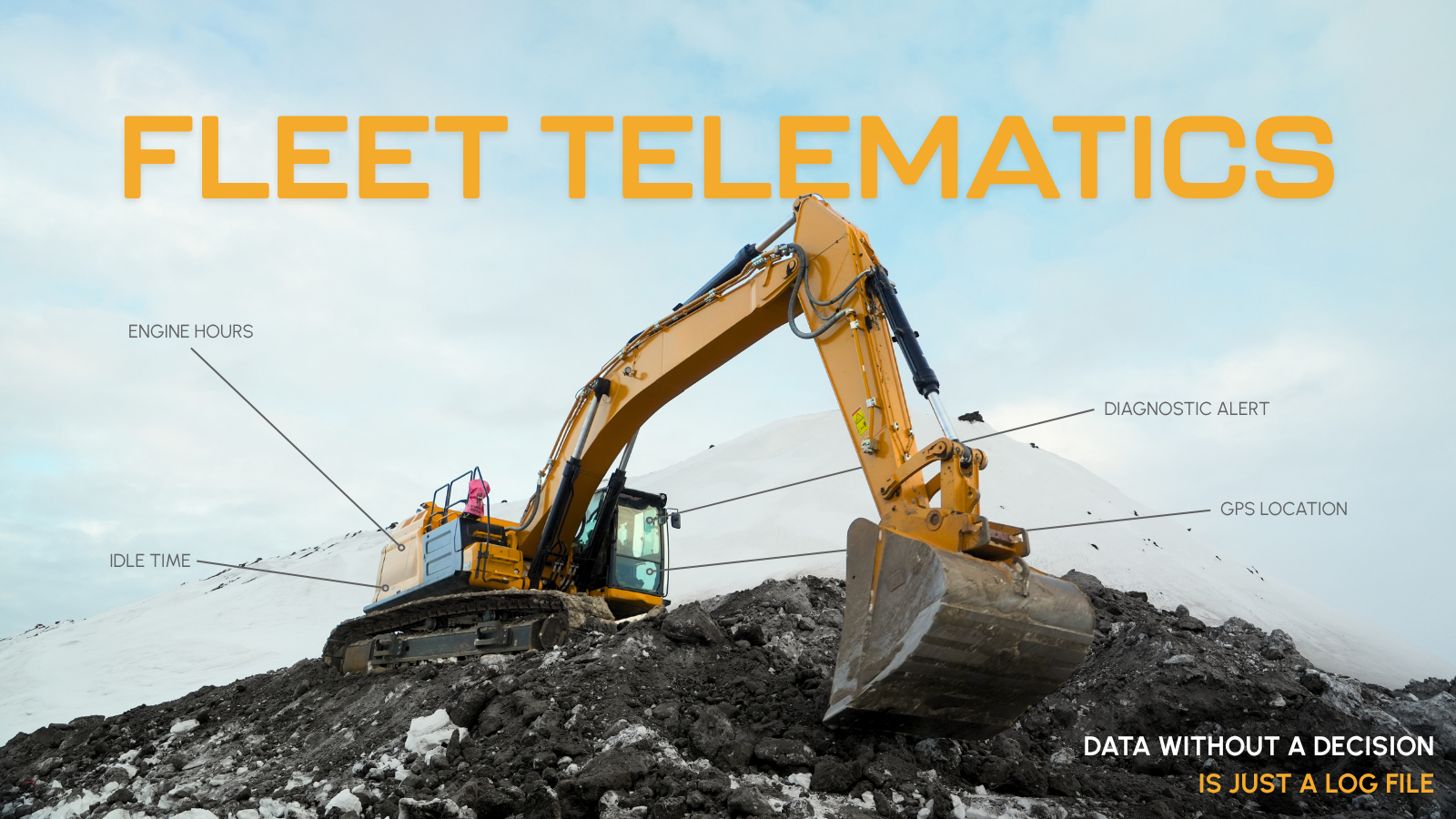
Telematics is remarkably good at pinpointing exactly where fuel and material waste are occurring, because it captures the specific behaviors and patterns that drive them. Excessive idling is one of the biggest culprits – a heavy equipment engine left running during lunch breaks or between tasks burns fuel without producing any output, and telematics systems can track idle time down to the minute for every asset in the fleet. Unauthorized trips, where vehicles are used outside of approved hours or routes, waste fuel and create liability exposure. Inefficient routing between jobsites adds unnecessary miles and delays. Underutilized equipment – machines that are on-site and running but not actually doing productive work – consumes fuel and accumulates maintenance hours for no return. And vehicles that are burning more fuel than engine diagnostics suggest they should be may have mechanical issues that are costing money quietly in the background. Telematics makes all of these patterns visible, which is the essential first step toward fixing them. 🔍
Once the sources of waste are identified, telematics enables a set of targeted, practical strategies to address them. Idling reduction programs use telematics alerts to notify operators and supervisors when a vehicle or machine has been idling beyond a set threshold – say, five minutes – prompting action to shut down or reassign the asset. Optimized routing tools analyze traffic, distance, and jobsite schedules to recommend the most efficient paths for deliveries and equipment movements, reducing miles driven and improving on-time performance. Preventive maintenance scheduling based on actual runtime hours and diagnostic data – rather than fixed calendar intervals – ensures that equipment is serviced when it actually needs it, reducing both unexpected breakdowns and the over-maintenance that wastes parts and labor. Better scheduling of equipment and deliveries, informed by real utilization data, reduces the guesswork that leads to over-ordering and excess inventory sitting unused on a jobsite. Each of these strategies is practical, data-driven, and directly tied to measurable cost reduction.
The outcomes of a well-executed telematics-based waste reduction program can be substantial. Fuel consumption drops as idling is curtailed and routing is optimized – leading sources in the industry suggest that telematics-driven idling reduction alone can cut nonproductive fuel burn by 10 to 15 percent for construction fleets. Unnecessary machine hours decrease when utilization data reveals equipment that can be redeployed or returned, reducing rental costs and wear-and-tear. Fewer delays mean less damaged or spoiled material, which directly reduces rework and waste disposal costs. Lower fuel consumption translates into lower emissions, which matters both for environmental compliance and for corporate sustainability commitments. And improved cost control across all of these dimensions gives project managers and finance teams the visibility they need to make better decisions – not just reacting to cost overruns after the fact, but preventing them in the first place. 💰
“Real-time visibility into driver behavior reduces risk before incidents become costly claims, enabling targeted coaching and instant feedback for at-risk drivers.” -SureCam
Key Telematics Features That Drive Safety and Waste Reduction
When evaluating telematics solutions for safety improvement, several core features stand out as essential. Driver behavior monitoring tracks speeding, harsh braking, rapid acceleration, and aggressive cornering, creating a comprehensive profile of how each operator performs behind the wheel. Speed management tools allow managers to set and enforce speed limits within geofenced jobsite zones, ensuring that vehicles slow down in high-risk areas regardless of operator habits. AI video analytics and dashcams detect distracted driving, phone use, seat belt non-compliance, and near-miss events, providing both real-time alerts and recorded evidence for coaching. Automatic incident detection uses accelerometer data to identify collisions or sudden impacts and immediately trigger video upload and alert notifications. Near-miss event logging captures the close calls that often precede serious incidents, giving safety teams the opportunity to intervene before the next event is more serious. Together, these features create a safety monitoring system that is both comprehensive and actionable. 🛡️
On the efficiency and waste-reduction side, a different but equally important set of features comes into play. Fuel level and consumption monitoring tracks how much fuel each vehicle or machine is using in real time, flagging anomalies that might indicate mechanical issues or unauthorized use. Idle time tracking records how long engines run without productive output, enabling targeted idling reduction programs. Engine load analysis reveals whether equipment is being operated within its designed parameters or pushed in ways that accelerate wear and increase fuel consumption. Route optimization tools analyze historical and real-time data to recommend more efficient paths for deliveries and equipment movements. Equipment utilization reports show how many hours each asset is actually being used productively versus sitting idle or running unnecessarily. And maintenance scheduling based on actual usage data – runtime hours, engine cycles, and diagnostic readings – replaces fixed-interval maintenance with smarter, condition-based servicing that reduces both costs and downtime.
The real power of a modern telematics platform comes from bringing all of these features together in a single, integrated system rather than managing safety, fuel, and utilization data in separate silos. When a fleet manager can see that a particular operator has a high safety event score, an above-average idling rate, and a vehicle with a pending maintenance alert – all on one dashboard – they can prioritize that asset for immediate attention and address multiple risk and waste factors in a single intervention. Integration also makes it easier to identify systemic patterns: if a specific jobsite consistently generates high idling times and elevated safety events, that’s a signal that something about the site’s layout, workflow, or scheduling may need to change. A holistic view of each asset and each jobsite enables better decisions, faster responses, and more efficient use of limited management time and resources. 🔗
Implementation Roadmap: Going from Pilot to Organization-Wide Adoption
A successful telematics rollout starts long before any hardware gets installed. The first step is an honest assessment of your current pain points – where are incidents happening most frequently, what are your fuel costs telling you, where are project delays consistently originating, and what does your material waste look like across jobsites? This diagnostic work sets the foundation for defining measurable objectives that will guide the entire implementation. From there, vendor and hardware selection should be driven by your specific jobsite needs and equipment types – a company running a mixed fleet of light vehicles and heavy construction equipment has very different requirements than one managing a homogeneous fleet of delivery trucks. Taking the time to align technology choices with operational realities upfront prevents costly mismatches down the road. 🗺️
“When telematics data is used effectively, the results include fewer accidents, stronger regulatory compliance, less material waste, and higher overall productivity.” -Nektar
The pilot phase is where theory meets reality, and it’s worth doing carefully. Choose representative jobsites and fleet segments that reflect the diversity of your operations – not just the easiest or most cooperative sites. Configure alerts and dashboards to focus on the specific KPIs you defined in the planning phase, rather than trying to monitor everything at once. Train both managers and operators on how the system works, what data it collects, and how it will be used – transparency here is critical for building trust and cooperation. Collect baseline data on incidents, fuel consumption, idle time, and material waste during the pilot period so you have a clear before-and-after comparison when you evaluate results. The pilot isn’t just about testing technology – it’s about learning what works in your specific operational context and building the internal knowledge base you’ll need to scale effectively.
Scaling from a successful pilot to organization-wide adoption requires deliberate attention to standardization and integration. Establish consistent definitions for your KPIs across all sites so that performance comparisons are meaningful and fair. Integrate telematics data with existing fleet management systems, safety management platforms, and maintenance software to create a unified operational picture rather than another data silo. Develop governance policies that define who has access to what data, how it can be used, and how privacy concerns will be addressed. And establish consistent coaching and enforcement protocols across all sites – one of the fastest ways to undermine a telematics program is to have some managers using data rigorously while others ignore it entirely. Consistency is what turns a pilot success into an organization-wide transformation. 📈
Change management is arguably the most underestimated element of any telematics implementation, and it deserves as much attention as the technical rollout. Frontline supervisors need to be involved early and genuinely – not just informed after decisions are made – because they are the ones who will use telematics data day-to-day to coach operators and manage risk. Operators need to understand the benefits of telematics for their own safety and career development, not just experience it as surveillance. Concerns about monitoring are legitimate and should be addressed directly with clear, honest communication about what is tracked and why. And early wins – a reduction in incidents at a pilot site, a measurable drop in fuel costs, positive feedback from operators who avoided a collision thanks to an in-cab alert – should be communicated broadly to build momentum and enthusiasm for broader adoption. People support what they help create and what they can see working. 🤝
Measuring ROI: Safety, Cost, and Sustainability Outcomes
The return on investment from fleet telematics spans several dimensions, and tracking all of them gives a complete picture of the program’s value. The most direct ROI comes from reductions in crashes and incidents – fewer collisions mean lower repair costs, reduced workers’ compensation claims, fewer OSHA fines, and less project downtime. Fuel savings from idling reduction and route optimization contribute directly to the bottom line. Lower maintenance costs result from catching problems early through diagnostic monitoring, and reduced unplanned downtime means projects stay on schedule. Material waste reduction shows up in lower procurement costs and less rework. And improved insurance terms – which many insurers now offer to fleets with documented telematics programs – can deliver significant ongoing savings. Tracking before-and-after metrics across all of these categories gives a comprehensive view of what the investment is actually delivering. 📉
“Telematics systems provide insight that enables firms to improve resource utilization, driver performance, and productivity while enhancing safety through faster detection of unsafe practices.” -Teletrac Navman
Quantifying those savings requires connecting telematics metrics to financial outcomes in a disciplined way. Calculate your cost per incident by adding up all direct and indirect costs – repairs, medical expenses, legal fees, project delays, and administrative time – and divide by the number of incidents in a given period. Track cost per gallon of fuel and multiply by the gallons saved through idling reduction and route optimization. Assign a dollar value to idle hours by calculating the fuel cost of idling per hour for each equipment type and multiplying by the hours reduced. Estimate the cost of damaged or wasted material by reviewing procurement records and comparing periods before and after telematics implementation. When safety managers can show finance teams a clear line from “we reduced speeding events by 40 percent” to “we had three fewer incidents this quarter, saving an estimated $180,000,” the business case for telematics becomes impossible to ignore. 💵
Beyond the direct financial returns, telematics delivers meaningful sustainability and compliance benefits that are increasingly important to organizations navigating ESG commitments and regulatory requirements. Lower fuel consumption translates directly into reduced greenhouse gas emissions – a benefit that matters both for environmental responsibility and for meeting carbon reduction targets that many organizations are now publicly committed to. Better documentation of fleet operations, driver behavior, and maintenance records strengthens an organization’s position during regulatory audits and insurance claims. And a demonstrated commitment to data-driven safety management builds reputational capital with clients, partners, and regulators who are paying increasing attention to how construction and field operations companies manage risk. A strong telematics program, in other words, isn’t just a cost management tool – it’s a strategic asset that delivers financial, environmental, and reputational returns simultaneously. 🌱
Common Challenges and How to Overcome Them
Even the best telematics programs run into obstacles, and being honest about common challenges is the first step toward overcoming them. Data overload is one of the most frequently cited issues – when a system generates hundreds of alerts per day across a large fleet, managers can quickly become overwhelmed and start ignoring notifications that actually matter. Lack of internal analytics expertise means that some organizations collect mountains of data but struggle to extract meaningful insights from it. Operator resistance to monitoring is real and can undermine adoption if not addressed thoughtfully. Inconsistent use of coaching – where some managers follow up on every alert while others let them pile up unreviewed – creates unfairness and reduces program effectiveness. And fragmented systems that store safety data, maintenance records, and fleet operations data in separate platforms make it genuinely difficult to get the unified view needed for good decision-making. 😤
Fortunately, each of these challenges has practical solutions. Starting with a focused set of safety and waste KPIs – rather than trying to monitor everything at once – dramatically reduces data overload and keeps attention on what matters most. Most reputable telematics vendors offer pre-built analytics templates and dashboards designed for fleet and safety managers without deep data science backgrounds, which lowers the expertise barrier significantly. Implementing clear, written policies about what data is collected, how it is used, and what protections are in place for operators addresses privacy concerns directly and builds the trust needed for genuine cooperation. Involving operators in defining fair performance thresholds and feedback processes – rather than having standards imposed from above – creates buy-in and reduces the perception that telematics is punitive rather than supportive. And investing in integration between telematics and existing systems, while it requires upfront effort, pays off quickly in the form of a unified operational view. 🔧
Perhaps the most important practice for sustaining a telematics program’s effectiveness over time is what safety professionals call “closing the loop.” An alert that goes unreviewed is worse than no alert at all, because it creates a false sense of monitoring without any actual risk reduction. Every alert should lead to a documented action – whether that’s a coaching conversation, a maintenance work order, or a policy update – and that action should be tracked to completion. Coaching conversations should be logged and followed up to verify that behavior has changed. And lessons learned from incidents, near misses, and coaching outcomes should be fed back into the system’s configuration – adjusting alert thresholds, adding new monitoring parameters, or retiring alerts that are generating noise without value. A telematics program that closes the loop steadily improves over time, becoming more precise, more effective, and more trusted by the people who use it every day. 🔄
Best Practices for Integrating Telematics into Safety and Operational Culture
The organizations that get the most from telematics are the ones that weave it into the fabric of their daily safety routines rather than treating it as a separate monitoring system. Using telematics data in toolbox talks – sharing specific events, trends, or near-miss videos from the previous week – makes safety conversations concrete and relevant rather than abstract and generic. Incorporating telematics metrics into pre-trip inspection checklists and supervisor walkthroughs keeps data-driven awareness alive throughout the workday. Positive reinforcement for operators who improve their safety scores or maintain consistently strong behavior over time builds motivation and goodwill, making telematics feel like a support tool rather than a surveillance apparatus. The culture shift from reactive to proactive safety doesn’t happen overnight, but embedding telematics into daily routines accelerates it significantly. 🌟
Clear accountability and ownership structures are essential for keeping a telematics program running effectively at scale. Someone needs to own the dashboard – reviewing it regularly, prioritizing alerts, and ensuring that follow-up actions are taken and documented. Defining who is responsible for following up on specific types of alerts (safety events versus maintenance alerts versus fuel anomalies) prevents things from falling through the cracks. KPI reporting to leadership should be regular and structured, connecting telematics metrics to business outcomes that executives care about – incident rates, fuel costs, project delays, and insurance premiums. And tying telematics performance metrics into performance reviews for both managers and operators creates genuine accountability at every level of the organization, reinforcing the message that this data matters and that it drives real consequences and rewards. 📋
Continuous improvement is the mindset that separates organizations that sustain telematics value over the long term from those that see initial gains and then plateau. Periodically reassessing which data streams and alerts are generating the most actionable insights – and which ones have become background noise – keeps the system sharp and relevant. Adjusting alert thresholds over time to reflect improving operator performance reduces fatigue and keeps notifications meaningful. And using telematics insights to redesign broader operational processes – adjusting traffic flow patterns on jobsites, changing equipment staging layouts to reduce blind-spot risk, or rescheduling deliveries to avoid peak congestion periods – extends the program’s impact beyond individual operator behavior into the systemic conditions that shape risk and waste. The best telematics programs never stop evolving, because the jobsites and fleets they monitor never stop changing. 🚀
Frequently Asked Questions About Using Fleet Telematics to Reduce Jobsite Incidents and Material Waste
How does fleet telematics actually reduce jobsite accidents, not just record them? This is one of the most important questions to get right, because the answer clarifies the difference between a telematics system that delivers real safety value and one that just creates a record of bad outcomes. Telematics reduces accidents through proactive interventions – real-time in-cab alerts that correct driver behavior in the moment, trend-based coaching conversations that address patterns before they lead to incidents, policy changes informed by data on where and when risk is highest, and targeted training programs built around documented near misses and safety events. Simply installing hardware and letting data accumulate in a dashboard does not make jobsites safer. The technology is only as effective as the action plan behind it – and organizations that treat telematics as a complete safety solution without building the human processes around it will be disappointed with the results. ⚡
What kind of material and fuel waste can telematics help identify on construction sites? The short answer is: quite a lot. Telematics excels at surfacing the hidden waste that often goes unnoticed in day-to-day operations. Excessive idle time – engines running with no productive output – is one of the biggest and most easily addressable sources of fuel waste on construction sites. Inefficient routes between jobsites add unnecessary miles and delay deliveries, sometimes causing time-sensitive materials to arrive out of sequence or in unusable condition. Unauthorized trips outside of approved hours or routes waste fuel and create liability exposure. Unnecessary machine hours on underutilized equipment accumulate maintenance costs and rental fees for no productive return. And delays caused by breakdowns or poor scheduling can lead to spoilage or damage of materials that were waiting too long in suboptimal conditions. Visibility into all of these patterns is the essential first step toward targeted waste-reduction programs that actually move the needle. 🗑️
Is telematics only useful for large fleets, or can smaller contractors benefit too? Smaller contractors sometimes assume that telematics is a large-enterprise solution that doesn’t make financial sense for a fleet of ten or twenty vehicles – but that assumption underestimates how much value even basic telematics delivers at small scale. A small contractor with a handful of trucks and a couple of pieces of heavy equipment can gain significant value from basic GPS tracking, idle time monitoring, and driver behavior analytics. Modern telematics solutions have become increasingly affordable, with cloud-based platforms that scale down to small fleets without requiring large upfront hardware investments. And for a small business where a single serious incident or a month of excessive fuel costs can meaningfully impact cash flow, the ROI of even a modest telematics investment can be substantial. The technology scales – what matters is choosing a solution that matches your fleet size, equipment types, and operational complexity. 🏗️
How long does it usually take to see measurable results in incidents and waste after implementation? The timeline varies depending on how comprehensively the program is implemented and how actively the data is used, but there are some general patterns worth understanding. In the first few weeks after installation, the primary activity is data collection and baseline establishment – you’re learning what normal looks like for your fleet before you can measure improvement. Within the first one to three months, organizations that actively use telematics data for coaching and alerts typically see early behavior changes – operators become aware that their performance is visible and begin self-correcting, and managers start addressing the highest-risk patterns. More substantial reductions in incidents, fuel costs, and material waste typically emerge over a six-to-twelve-month horizon as coaching programs mature, policies are updated based on data, and the culture of data-driven accountability takes hold. Patience and consistency are key – telematics is a long game, and the organizations that commit to it fully see compounding returns over time. ⏱️
What about privacy and operator concerns about being monitored? Operator concerns about telematics monitoring are legitimate and deserve a genuine, thoughtful response – not dismissal. Most people have an instinctive discomfort with the idea of being tracked and recorded at work, and that discomfort doesn’t disappear just because the monitoring is framed as being for safety purposes. The most effective approach is transparent communication from the very beginning: clearly explain what data is collected, how it is used, who has access to it, and what protections are in place. Emphasize that the purpose of monitoring is to support safety and provide fair, objective performance feedback – not to catch people doing something wrong. Involving operators in the process of setting performance thresholds and reviewing aggregate data helps shift the perception of telematics from surveillance to a shared safety tool. And when operators see that telematics data is used to exonerate them in disputed incidents – as it often is – trust in the system tends to grow naturally. Transparency, fairness, and genuine respect for operators’ concerns are the foundation of a telematics program that people actually support. 🤲
Conclusion: Moving From Data to Action on Your Jobsites
The core message of everything we’ve covered here is straightforward, even if the execution requires real commitment: fleet telematics provides powerful, continuous visibility into jobsite risks, operator behavior, fuel consumption, and equipment utilization – but that visibility only creates value when organizations move from passive data collection to active, structured intervention. The technology itself is not the solution. The solution is what you do with the data. Use safety and waste-focused KPIs to cut through the noise and focus attention where it matters most. Integrate telematics with coaching programs, maintenance workflows, and safety management processes so that data drives action at every level. And treat your telematics program as a continuous improvement engine – something that gets smarter, more precise, and more effective over time as you learn from what the data is telling you and adjust accordingly. 🎯
If you’re ready to take the next step, start by assessing your current baseline – what do your incident rates, fuel costs, idle time reports, and material waste figures actually look like right now? Define measurable goals for improvement across safety, fuel, and waste dimensions, and then pilot telematics on your highest-priority jobsites with a cross-functional team that includes safety, operations, fleet, and finance stakeholders. Use early results to build organizational momentum, address concerns openly, and refine your approach before scaling. The journey from data to action isn’t always easy, but the organizations that commit to it fully – building the processes, culture, and accountability structures that turn telematics insights into real-world change – can expect safer jobsites, meaningfully lower fuel and material costs, stronger regulatory compliance, and more sustainable, profitable operations for the long term. The data is ready. The question is: what will you do with it? 💪