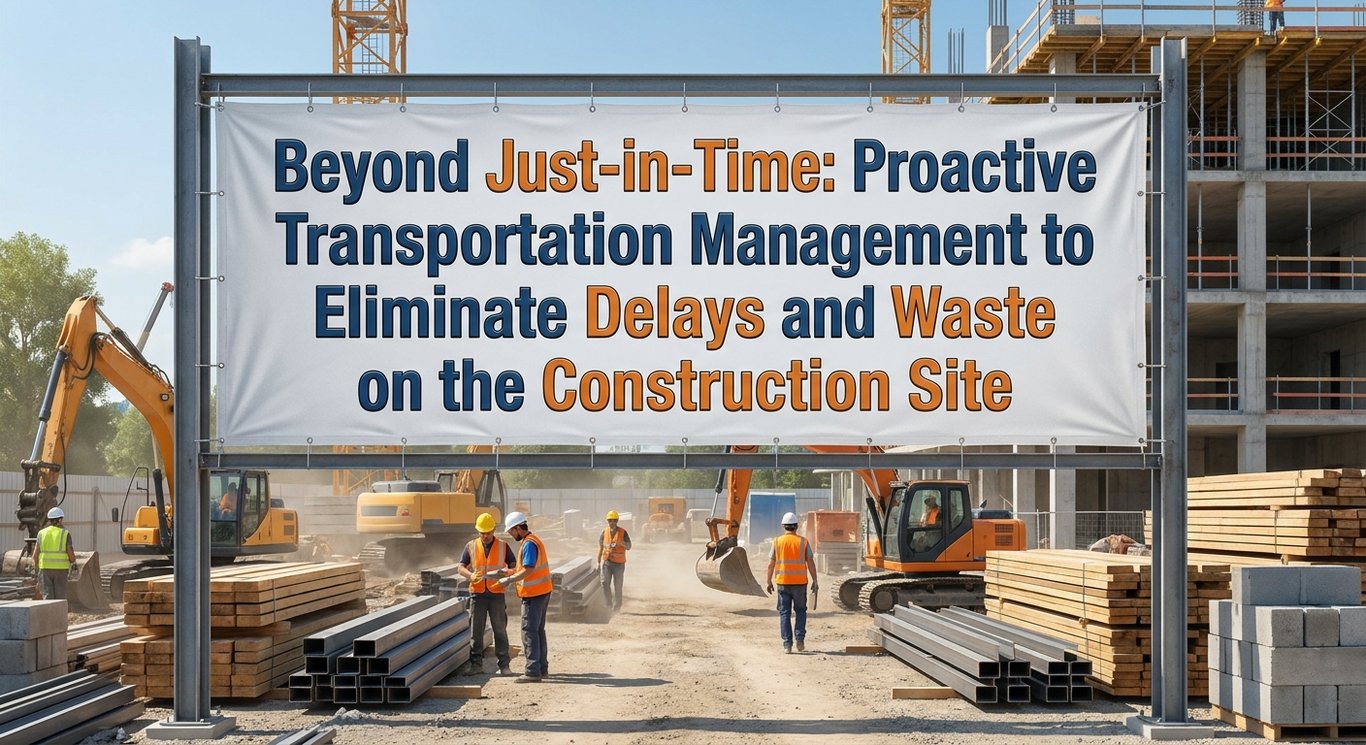
Introduction to Proactive Transportation Management
Proactive transportation management represents a significant evolution beyond the traditional just-in-time (JIT) delivery model that construction has relied on for decades. Rather than simply scheduling materials to arrive exactly when needed, proactive transportation management uses advanced planning, predictive analytics, and smart technology to anticipate problems before they ever happen. It’s the difference between playing defense and playing offense – and in construction, where every hour of downtime costs real money, being on offense matters enormously. 🏗️
The shift from reactive JIT to proactive strategies changes how project teams think about logistics entirely. Instead of scrambling to fix a delivery that’s stuck in traffic or a supplier that’s suddenly out of stock, proactive teams have already identified those risks days or even weeks in advance. They’ve mapped out traffic patterns, monitored supply chain signals, and assessed site constraints so that when disruptions do occur – and they always do – there’s already a plan in place. This forward-thinking mindset is what separates construction projects that finish on time from those that spiral into costly overruns.
Throughout this article, we’ll explore how moving beyond just-in-time delivery can unlock serious benefits for construction teams of all sizes. From reduced material waste and lower operational costs to dramatically improved site efficiency, the case for proactive transportation management is compelling. We’ll cover the technologies that make it possible, the strategies that make it practical, and the real-world results that prove it works. Whether you’re managing a small residential build or a large commercial megaproject, these insights are built for you. 💡
Understanding Just-in-Time Delivery in Construction
Just-in-time delivery has been a popular logistics model in construction because it offers some genuinely attractive benefits. By scheduling materials to arrive only when they’re needed on site, contractors can dramatically improve cash flow – there’s no need to pay for materials weeks before they’ll actually be installed. On-site storage requirements shrink significantly, which is a huge advantage on tight urban job sites where space is at a premium. Scheduling accuracy also improves because teams are forced to plan their material needs precisely, which often leads to better overall project organization and less clutter on the job site.
However, the same precision that makes JIT appealing also makes it fragile. The entire model depends on flawless timing, and construction is rarely a flawless environment. A single traffic jam, a supplier running behind, or a miscommunication between the site manager and the logistics coordinator can throw the whole schedule into chaos. When materials don’t arrive exactly when expected, workers stand idle, deadlines slip, and costs climb fast. JIT offers little room for error, and in an industry where unexpected variables are practically guaranteed, that lack of flexibility is a serious vulnerability that project managers must honestly reckon with.
Limitations of JIT and the Need for Proactive Approaches
The most common pitfalls of just-in-time delivery in construction tend to snowball quickly. A material shortage at a supplier’s warehouse leads to a delayed delivery, which means workers arrive on site with nothing to install, which means labor costs pile up without any productive output. Miscommunication between drivers, site managers, and subcontractors can result in deliveries arriving at the wrong gate, at the wrong time, or with the wrong materials altogether. Each of these failures generates waste – wasted time, wasted labor, and sometimes wasted materials that get damaged or misplaced in the confusion. 😤
The critical distinction between reactive and preventive logistics strategies comes down to timing. JIT, despite its structured appearance, often operates in reactive mode – teams respond to problems as they arise rather than preventing them from arising in the first place. A reactive approach means the damage is already done by the time anyone acts. A preventive strategy, on the other hand, identifies the warning signs early enough to course-correct before any real harm occurs. Construction projects that rely purely on JIT without preventive overlays are essentially flying without a safety net, and the industry’s notoriously high rate of delays and cost overruns reflects exactly that.
Proactive transportation management steps in as a direct solution to these JIT vulnerabilities by using forecasting tools and data analysis to eliminate disruptions before they start. Instead of waiting to see if a supplier delivers on time, proactive managers are already tracking shipment status, monitoring traffic conditions along delivery routes, and maintaining relationships with backup suppliers. Instead of hoping the schedule holds, they’ve built in buffers and contingency options that keep work flowing even when something goes wrong. This approach transforms transportation from a source of stress into a reliable, manageable function that supports project success rather than threatening it.
“The reliance on international suppliers and just-in-time delivery models increases vulnerability to global crises, leading to longer lead times and increased costs.” -[Citrin Cooperman]
Core Principles of Proactive Transportation Management
At the heart of proactive transportation management are several key principles that work together to create a resilient logistics system. Real-time traffic prediction allows project teams to reroute deliveries dynamically, avoiding congestion before it causes delays. Contingency planning ensures that backup options – alternative suppliers, secondary routes, flexible delivery windows – are already identified and ready to activate. Integrated stakeholder communication keeps everyone from the site foreman to the delivery driver on the same page at all times, reducing the miscommunication that so often derails JIT schedules. Together, these principles create a logistics ecosystem that bends without breaking. 🔄
Data-driven decision-making is the engine that powers all of these principles, replacing guesswork with reliable, actionable information. When project managers can look at historical delivery data, current traffic patterns, weather forecasts, and supplier performance metrics all in one place, they make better decisions faster. Material flow becomes predictable and controllable rather than a constant source of anxiety. The shift from gut-feel logistics to evidence-based logistics is one of the most powerful changes a construction company can make, and it’s the foundation on which every other proactive strategy is built.
Key Technologies Enabling Proactive Strategies
Project management software and Building Information Modeling (BIM) have become essential tools for construction teams looking to take a proactive approach to transportation. BIM allows project managers to create detailed 3D visualizations of the entire project, making it possible to see exactly when and where specific materials will be needed throughout the build. Combined with project management platforms that track resource allocation, procurement timelines, and delivery schedules in real time, these tools give teams an unprecedented level of visibility into their logistics operations. When you can see the whole picture clearly, planning ahead becomes much more achievable. 🖥️
[cta-call:Call2]
Artificial intelligence, the Internet of Things (IoT), and advanced data analytics are pushing proactive transportation management to an entirely new level. AI algorithms can analyze vast amounts of historical and real-time data to predict where delays are likely to occur, often days before they materialize. IoT sensors on vehicles, equipment, and even material pallets provide continuous location and condition updates, so project teams always know where their deliveries are and whether they’re on track. Data analytics platforms then synthesize all of this information into clear dashboards and alerts that make it easy for managers to act quickly and confidently when conditions change.
Drones and smart route planning tools are adding another powerful dimension to proactive delivery management. Drones can survey job sites quickly to assess storage capacity, identify access issues, and confirm site readiness before a delivery truck even leaves the supplier’s facility. Smart route planning software uses live traffic data, road condition reports, and historical congestion patterns to identify the fastest and most reliable delivery routes at any given time of day. These technologies reduce the likelihood of deliveries arriving late or encountering unexpected obstacles, making the entire logistics chain smoother and more predictable for everyone involved. 🚁
“Material shortages or delays in their delivery can cripple progress. Without the necessary materials on-site at the right time, construction teams are left waiting, which further elongates project timelines.” -[Streetworks US]
The real power of these technologies emerges when they’re integrated into a unified proactive management system rather than used in isolation. When BIM data feeds into AI prediction models, which in turn inform smart route planning tools, which then push real-time updates to site managers via project management software, the result is a seamlessly coordinated logistics operation. Integration eliminates the information silos that cause miscommunication and delays, creating a single source of truth that every stakeholder can rely on. Building this kind of connected technology ecosystem takes investment and planning, but the payoff in reduced delays and waste is substantial.
Implementing Contingency Planning for Transportation
One of the most practical steps a construction team can take toward proactive transportation management is establishing relationships with multiple suppliers and maintaining a roster of backup labor options. When a primary supplier experiences a shortage or a delivery vehicle breaks down, having a vetted alternative ready to activate can mean the difference between a minor hiccup and a major project delay. Smart project managers don’t wait until a crisis hits to start searching for alternatives – they build those relationships during the planning phase and keep them warm throughout the project lifecycle. This kind of preparation is exactly what separates resilient projects from vulnerable ones. 🛡️
Flexible scheduling with built-in buffers is another critical component of effective contingency planning for transportation. Rather than scheduling deliveries with zero margin for error, proactive teams build realistic time cushions into their logistics timelines to account for weather disruptions, unexpected traffic, and the inevitable minor delays that come with any complex operation. These buffers don’t mean padding the schedule unnecessarily – they mean being honest about the realities of construction logistics and planning accordingly. A schedule that accounts for variability is far more likely to be met than one that assumes everything will go perfectly every time.
Building a robust contingency plan for transportation requires a structured approach that covers all the key risk areas. Start by identifying the most critical delivery points in your project schedule – the materials and equipment whose late arrival would cause the most disruption. For each of those critical deliveries, document at least one backup supplier, an alternative delivery route, and a flexible window during which the delivery could be rescheduled without causing downstream problems. Review and update these plans regularly as the project evolves and new risks emerge. Share the plans with all relevant stakeholders so everyone knows what to do if the primary plan falls through. A contingency plan that lives only in one person’s head is not really a plan at all. 📋
Proactive Communication and Stakeholder Coordination
Effective proactive transportation management depends heavily on clear, consistent communication between all parties involved in the logistics chain. Assigning a dedicated primary contact for each supplier and delivery relationship eliminates the confusion that comes from having multiple people sending conflicting instructions. Regular check-ins – whether daily briefings, weekly logistics reviews, or real-time status updates – keep everyone aligned and make it much easier to spot potential problems before they become actual delays. When stakeholders know exactly who to call and what to expect, the whole operation runs more smoothly and with far less friction. 📞
“A robust logistics plan… can lead to a substantial reduction in project delays, mitigating a significant portion of that 37% average project schedule overrun – and their associated costs to the tune of several million dollars.” -[Trangistics]
Digital communication tools have transformed the way construction teams coordinate logistics in real time, and leveraging these tools is essential for any proactive transportation strategy. Platforms that provide live delivery tracking, automated alerts for schedule changes, and shared project dashboards ensure that everyone from the project manager to the site foreman has access to the same up-to-date information. When a delivery is running late, the right people know immediately and can start activating contingency plans without delay. Replacing phone tag and email chains with integrated digital communication doesn’t just save time – it actively prevents the kind of miscommunication that turns small logistics hiccups into major project crises.
Case Studies: Success with Proactive Transportation
Several high-profile construction projects have demonstrated the transformative power of predictive logistics in action. Large infrastructure projects in urban environments, for example, have used AI-powered delivery scheduling systems to coordinate hundreds of daily material deliveries across congested city streets without causing significant delays. By analyzing traffic patterns and adjusting delivery windows dynamically, project teams were able to maintain consistent material flow even during peak congestion periods. Similarly, large commercial developments have implemented integrated BIM and logistics platforms that reduced delivery-related downtime by identifying scheduling conflicts weeks in advance and resolving them before they impacted site operations. 🌆
The outcomes from these proactive approaches have been impressive across multiple dimensions. Projects that adopted predictive logistics platforms reported measurable reductions in delivery-related delays, with some teams cutting idle worker time by 20% or more compared to previous projects using traditional JIT methods. Cost overruns attributable to logistics failures dropped significantly, and overall project timelines became more predictable and reliable. Client satisfaction improved as well, since fewer surprise delays meant fewer difficult conversations about budget and schedule changes. These results demonstrate clearly that the investment in proactive transportation technology and planning delivers a strong and measurable return.
The lessons from these successful projects translate well across different construction scales and types. The core takeaway is that proactive logistics doesn’t require a massive budget or a large dedicated team – it requires a commitment to planning ahead, using available data intelligently, and maintaining open communication with all stakeholders. Even smaller contractors can apply these principles by starting with basic project management software, building supplier relationships, and creating simple contingency plans for their most critical deliveries. The scale of the tools may differ, but the fundamental approach – predict, plan, prevent – works just as effectively on a ten-unit residential development as it does on a major commercial build. 🏘️
Measuring ROI and Key Performance Indicators
To understand whether your proactive transportation strategy is actually working, you need to define and track the right key performance indicators from the start. On-time delivery rate is perhaps the most fundamental KPI – it measures what percentage of material deliveries arrive within the scheduled window and gives you a clear baseline for improvement. Waste reduction metrics track how much material is being damaged, lost, or left unused due to logistics failures, which directly reflects the efficiency of your delivery planning. Cost overruns avoided is another powerful KPI that quantifies the financial value of proactive planning by comparing actual logistics costs against what they would have been under a reactive approach. 📊
“JIT delivery reduces the amount of excess material on site, immediately reducing worksite congestion and clutter. Less material on hand also means a lower risk of theft, damage, weather exposure, and worker injuries.” -[HARDI]
Tracking and quantifying the benefits of proactive transportation versus JIT requires consistent data collection and honest comparison. Set up a simple logging system that records every delivery – on time, early, or late – along with the reason for any deviation from the schedule. Over time, this data will reveal patterns that help you refine your contingency plans and identify which suppliers or routes are most reliable. Compare your KPIs from projects using proactive strategies against historical data from JIT-only projects to calculate the real financial and operational impact of the change. When you can show stakeholders concrete numbers – reduced idle time, fewer delays, lower waste costs – the case for continued investment in proactive management becomes undeniable.
Overcoming Common Challenges in Adoption
One of the biggest hurdles in adopting proactive transportation management is resistance to change from teams that are comfortable with existing JIT workflows. People who have been doing things the same way for years often push back on new systems, especially when those systems require additional upfront effort and investment. The initial setup costs for predictive logistics platforms, new software subscriptions, and technology integration can also give budget-conscious project managers pause. It’s important to frame these costs not as expenses but as investments – ones that pay back through reduced delays, lower waste, and avoided cost overruns that typically far exceed the upfront price of implementation. 💰
Training needs and technology integration challenges are real obstacles that deserve honest attention during the adoption process. New software platforms require time and effort to learn, and not every team member will embrace the learning curve enthusiastically. Integrating multiple tools – BIM systems, project management software, AI platforms, and communication apps – into a cohesive workflow can be technically complex and may require outside expertise. Organizations that underestimate these challenges often end up with expensive tools that nobody uses effectively. Investing in proper training programs and potentially bringing in a technology integration specialist during the setup phase can make the difference between a successful adoption and a costly false start.
A phased implementation approach is the most practical way to transition from JIT to proactive transportation management without overwhelming your team or your budget. Start small by introducing one or two new tools or processes on a single project, gather data on their effectiveness, and use those results to build the case for broader adoption. In phase one, focus on improving communication protocols and building contingency supplier relationships – these changes cost little and deliver immediate value. In phase two, introduce project management and tracking software. In phase three, layer in AI analytics and predictive tools as your team’s comfort and capability grows. This gradual progression allows your organization to adapt at a manageable pace while continuously improving logistics performance. 🚀
Future Trends in Construction Transportation
The future of construction transportation is being shaped by technologies that would have seemed like science fiction just a decade ago. Autonomous delivery vehicles are moving from experimental pilots to practical applications, with self-driving trucks and robotic delivery systems beginning to appear in construction supply chains. Advanced AI prediction models are becoming increasingly sophisticated, capable of analyzing weather patterns, geopolitical supply chain risks, and real-time global logistics data to forecast disruptions weeks in advance. These emerging technologies will give construction teams an even greater ability to anticipate and prevent delivery problems, pushing proactive transportation management to levels of precision and reliability that current methods simply can’t match. 🤖
The broader industry shift toward fully proactive, zero-waste logistics is already underway, and it’s accelerating. As sustainability pressures increase and clients demand greater efficiency and accountability, construction companies that embrace proactive transportation management will have a significant competitive advantage over those still relying on reactive JIT approaches. The vision of a construction site where every material arrives exactly when needed, waste is virtually eliminated, and delays are the exception rather than the rule is becoming increasingly achievable with the right technology and mindset. The companies that invest in building these capabilities now will be the ones leading the industry in the decade ahead.
FAQ
What is the difference between JIT and proactive transportation management?
Just-in-time delivery focuses on scheduling materials to arrive exactly when they’re needed, minimizing storage but leaving little room for error. Proactive transportation management goes further by using predictive analytics, contingency planning, and real-time monitoring to anticipate and prevent delays before they occur. While JIT is essentially a scheduling strategy, proactive management is a comprehensive logistics system that wraps around scheduling with layers of protection against disruption. The key difference is that JIT reacts to problems while proactive management prevents them.
How can AI help predict transportation delays on construction sites?
AI helps predict transportation delays by analyzing large datasets that include historical delivery performance, real-time traffic conditions, weather forecasts, supplier reliability records, and supply chain signals. Machine learning algorithms identify patterns in this data that human planners would likely miss, flagging high-risk delivery windows or routes before any delay actually occurs. AI systems can also continuously learn from new data, improving their prediction accuracy over time. The result is a logistics operation that gets smarter and more reliable with every project. 🧠
What are the main causes of material delivery delays in construction?
The main causes of material delivery delays in construction include traffic congestion on delivery routes, supplier inventory shortages, poor coordination between project stakeholders, weather events, vehicle breakdowns, and inadequate site access planning. Miscommunication between procurement teams, site managers, and delivery drivers is also a surprisingly common cause of delays. Many of these issues are predictable and preventable with proactive planning, which is exactly why moving beyond JIT toward a more anticipatory logistics approach makes such a significant difference in project outcomes.
How much can proactive strategies reduce project costs?
Studies and industry reports suggest that proactive transportation and logistics strategies can reduce construction project cost overruns by anywhere from 5% to 15% compared to purely reactive approaches. The savings come from multiple sources: reduced idle labor time, lower material waste, fewer emergency procurement costs, and avoided penalties for project delays. The exact savings will vary depending on project size, complexity, and the specific proactive tools and strategies implemented, but virtually every project that makes the shift from reactive to proactive logistics sees meaningful cost improvements. 💵
What tools are best for implementing proactive transportation planning?
The most effective tools for proactive transportation planning include BIM software for project visualization and material scheduling, project management platforms like Procore or Autodesk Construction Cloud for real-time coordination, AI-powered analytics tools for delay prediction, IoT tracking devices for shipment monitoring, and smart route planning applications for optimized delivery routing. Communication platforms that provide shared dashboards and automated alerts round out a strong proactive toolkit. The best approach is to integrate these tools into a connected system rather than using them independently, so information flows seamlessly between all parts of the logistics operation.
Conclusion
The evidence is clear: proactive transportation management is a fundamentally superior approach to construction logistics compared to traditional just-in-time delivery. By shifting from reaction to prediction, construction teams can eliminate the delays, waste, and cost overruns that have long been accepted as unavoidable parts of the job. Preventive strategies consistently deliver measurable results, with cost overrun reductions of 5-15% being well within reach for teams that commit to the approach. The combination of smart technology, contingency planning, and integrated communication creates a logistics system that is resilient, reliable, and genuinely competitive. 🏆
Now is the time to take action and move your construction logistics beyond just-in-time. Start by honestly assessing your current delivery processes – where are the weak points, the recurring delays, the communication gaps? Then begin integrating predictive technologies, even at a basic level, to gain visibility into your logistics chain. Build contingency plans for your most critical material deliveries and establish clear communication protocols with all your suppliers and site stakeholders. Prioritize prediction over reaction, leverage technology for real-time insights, foster open communication at every level, and measure your progress with clear KPIs. Construction is a tough business, but with proactive transportation management as your foundation, your sites can become the efficient, delay-free operations you’ve always wanted them to be. The blueprint is here – it’s time to build. 🚧