
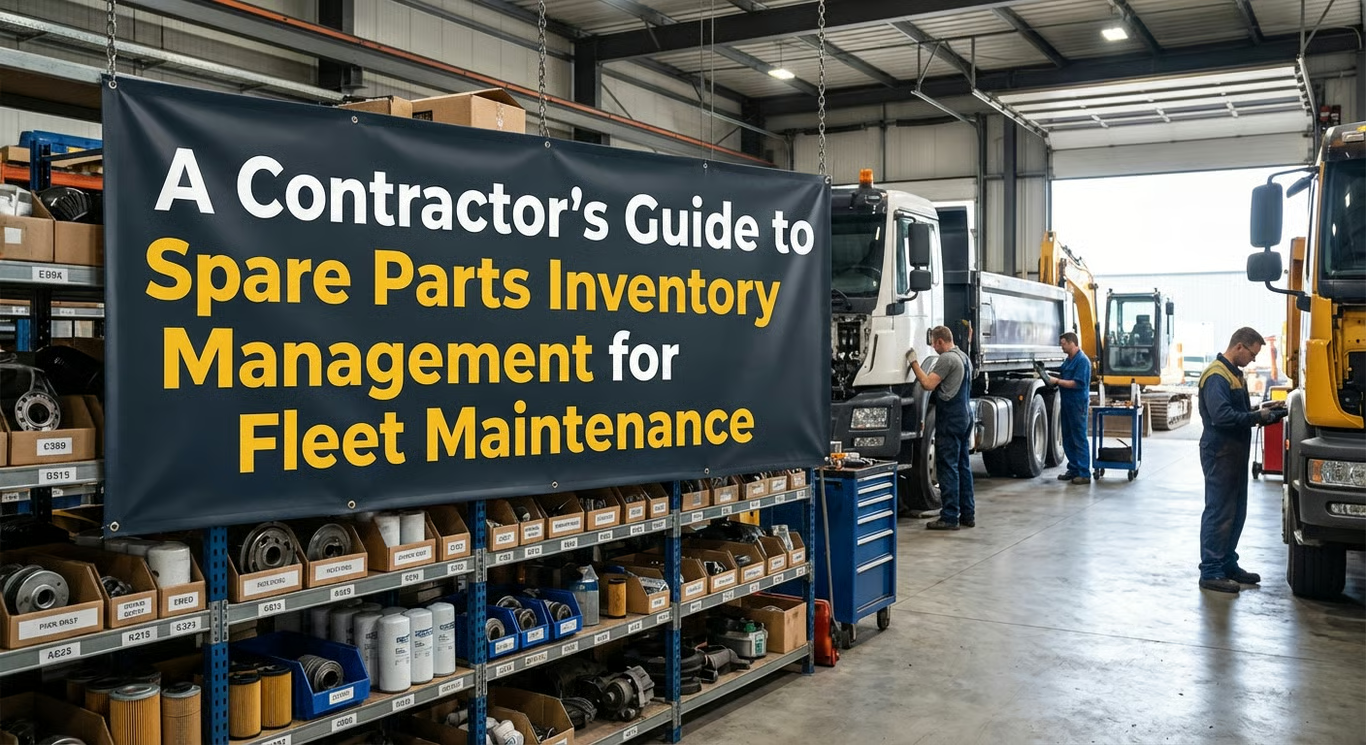
A Contractor’s Guide to Spare Parts Inventory Management for Fleet Maintenance
Introduction to Spare Parts Inventory Management
Spare parts inventory management is the systematic approach to ensuring that a contractor has the right vehicle components available exactly when they are needed. For fleet maintenance, this means balancing the need to keep trucks and heavy equipment on the road with the cost of storing extra items on the shelf. By maintaining an organized stock of essential parts, contractors can drastically minimize downtime and ensure that every vehicle is ready for the job site. Ultimately, this process is the backbone of a reliable fleet operation that keeps projects moving forward.
However, contractors often face significant hurdles when trying to keep their parts room under control. Unpredictable breakdowns can happen at the worst times, and sudden supply chain delays might leave a critical piece of equipment stranded in the shop for weeks. Additionally, there is always the struggle of balancing the budget; buying too many parts ties up cash, while buying too few leads to expensive rush orders and lost productivity. These challenges make it difficult to maintain a perfect equilibrium without a solid plan in place.
To help you navigate these issues, this guide will walk you through the most effective strategies and best practices for managing your fleet’s inventory. We will cover everything from how to classify your parts and organize your shelves to leveraging modern technology for better tracking. By the end of this article, you will have a clear roadmap to transform your spare parts management from a chaotic headache into a streamlined asset for your business.
Why Effective Spare Parts Management Matters for Contractors
When inventory management is neglected, the negative impact on fleet operations can be immediate and severe. If a critical part is missing when a truck breaks down, that vehicle sits idle, which directly translates to lost revenue and missed project deadlines. Furthermore, scrambling to find a replacement often leads to paying premium prices for expedited shipping or buying from expensive local retailers, driving up your overall repair costs significantly. Poor management essentially creates a cycle of reactive maintenance that drains resources and frustrates your team.
On the flip side, getting your inventory under control brings massive benefits, including substantial cost savings and improved operational efficiency. When you know exactly what you have and where it is, your mechanics can complete repairs faster, keeping your fleet compliant with maintenance schedules. Utilizing data-driven solutions, such as those offered by https://nektar.io, can further enhance this efficiency by helping you track asset data and streamline your maintenance workflows. A well-managed inventory system gives you the peace of mind that your fleet is supported and your bottom line is protected.
Classifying and Categorizing Spare Parts
Using ABC Analysis and Criticality Ratings
One of the smartest ways to get a handle on your inventory is by using ABC analysis, which prioritizes parts based on their value and how often they are used. In this system, “A” items are high-value parts that you use frequently, “B” items are moderate in value and usage, and “C” items are low-value consumables like nuts and bolts. To take it a step further, you should also apply VED analysis—classifying parts as Vital, Essential, or Desirable—to determine how critical a part is to the vehicle’s operation. This combination ensures you are focusing your budget and attention on the items that matter most.
For a fleet of construction vehicles, applying these classifications helps you make better stocking decisions. For example, a specialized engine component might be an “A” item that is also “Vital” because the truck cannot run without it, meaning you should always have one on hand or a quick source for it. Conversely, items like cosmetic trim pieces or standard wiper blades might be “Desirable” or “Essential” but are easy to source locally, so you don’t need to stock them heavily. By categorizing parts like tires, brakes, and filters this way, you ensure that your investment is targeted toward keeping your fleet operational .
Organizing and Labeling Your Inventory
The physical organization of your storage space is the foundation of an efficient spare parts system. You should arrange your shelves and bins in a logical layout that maximizes space and makes it easy for mechanics to move around. Heavier items like alternators or brake drums should be placed on lower shelves for safety, while lighter, fast-moving items should be at eye level for quick access. A clean, well-lit, and organized stockroom reduces the time mechanics spend searching for parts, allowing them to get back to fixing vehicles faster.
“Contingency planning, cycle counting, and optimizing storage space are among construction inventory management best practices.” -NetSuite
Once the physical layout is set, labeling becomes the next critical step for avoiding confusion and errors. Every bin and shelf spot should have a clear label, and implementing a barcoding or QR code system can revolutionize how you track items. With a quick scan, a mechanic can identify the part, check its compatibility, and log it out of inventory, which instantly updates your records. This level of precision eliminates the “guessing game” and ensures that the physical stock matches what your computer system says you have.
Another helpful tip is to group your parts based on vehicle type or how frequently maintenance is performed. For instance, you might have a specific section dedicated to Ford heavy-duty trucks or a “PM Service” aisle containing all the filters and fluids needed for routine oil changes. Grouping items this way creates an intuitive flow for your maintenance team, making it obvious where to look when a specific job comes in. This logical grouping saves time and reduces the frustration of walking back and forth across the warehouse.
Implementing Inventory Tracking Systems
Moving away from paper spreadsheets and adopting a Computerized Maintenance Management System (CMMS) or dedicated inventory software is a game-changer for contractors. These systems allow for real-time tracking, meaning you can see exactly what is on your shelves from your phone or office computer. A popular method is using a perpetual inventory system combined with barcode scanners, which updates your stock levels the second a part is used. Platforms like https://nektar.io can assist in digitizing these workflows, ensuring that your data is accurate and accessible whenever you need it.
To make the most of your tracking system, you need to create a complete parts list for every asset in your fleet. This involves building Bills of Materials (BOMs) for your vehicles, which is essentially a recipe list of every part needed to repair a specific truck. By linking a BOM to each vehicle in your system, your mechanics won’t have to guess which oil filter fits unit #105. This preparation streamlines the ordering process and ensures that you are tracking the right data for every repair.
“Categorizing parts by consumption value (ABC analysis) and criticality (Vital, Essential, Desirable analysis) helps you prioritize which items to stock, optimizing both cost and availability.” -MaintainX
Optimizing Stock Levels and Reorder Points
Calculating Safety Stock and Lead Times
Determining the right time to order more parts is a science that relies on setting accurate reorder points and maintaining safety stock. The reorder point is the specific inventory level that triggers a new purchase order, ensuring you get new parts before the old ones run out. Safety stock acts as a buffer or insurance policy against unexpected spikes in usage or shipping delays, preventing the dreaded “stockout” scenario. Balancing these levels prevents you from tying up too much cash in overstock while ensuring you aren’t caught empty-handed during a breakdown.
To calculate these numbers effectively, you must analyze the lead time for your common fleet parts. Lead time is the total time it takes from the moment you place an order until the part arrives at your shop door. For parts that can be delivered the same day, you can use a Just-in-Time (JIT) approach to keep inventory low, but for specialized parts that take weeks to ship, you will need higher stock levels. Understanding these timelines allows you to plan ahead and avoid paying for expedited shipping fees .
Finally, the best way to refine your stock levels is by using historical data from your fleet maintenance records. Look back at the last year or two to see how many brake pads, tires, or sensors you actually used. This data helps you forecast future needs with much higher accuracy than guessing. By relying on actual usage patterns rather than gut feelings, you can adjust your reorder points to match reality, ensuring your inventory is lean but sufficient for your fleet’s demands.
Best Practices for Supplier Management
Selecting reliable suppliers is just as important as organizing your own warehouse. You should look for vendors who offer quality parts, consistent delivery times, and fair pricing, and then work to negotiate contracts that benefit your business. It is important to monitor their performance regularly; if a supplier is constantly late or sending the wrong parts, it costs you money in downtime. establishing clear expectations and reviewing them periodically ensures that your supply chain remains a strong link in your maintenance operation.
“Balancing stock levels based on usage patterns, lead times, and criticality helps avoid overstocking or shortages.” -SafetyCulture
Building strong relationships with your vendors can also save you when you are in a pinch. If you have a good rapport with a supplier, they are more likely to help you out during an emergency or rush an order when you really need it. However, it is also smart to use multiple vendors for critical parts so you aren’t dependent on just one source. Integrating your Purchase Orders (POs) directly with your inventory levels helps automate this process, ensuring that restocking is seamless and your relationships remain professional and productive.
Conducting Regular Audits and Cycle Counts
Even with the best software in the world, physical audits are necessary to maintain accuracy and identify discrepancies in your inventory. Parts can get misplaced, stolen, or used without being logged, leading to “ghost inventory” where the computer thinks you have a part that isn’t actually there. Regular audits help you catch these errors early before they cause a maintenance delay. By verifying your stock, you ensure that your financial records are correct and that your mechanics can trust the system.
Instead of shutting down the entire shop for a massive annual inventory count, many contractors find success with cycle counting. This involves counting a small portion of your inventory every day or week on a rotating schedule until everything has been checked. Using software to schedule these counts makes the process efficient and less disruptive to daily operations. This continuous verification keeps your inventory accuracy high year-round and makes the end-of-year accounting process much less painful.
Leveraging Technology for Fleet Parts Management
Technology has revolutionized how contractors handle fleet maintenance, moving far beyond clipboards and spreadsheets. Modern CMMS platforms and inventory apps allow for automation that saves countless hours of administrative work. These tools can automatically generate purchase orders when stock gets low, track warranty information, and provide detailed reports on spending. For contractors looking to modernize, integrating tools like https://nektar.io can provide the visibility needed to manage assets and inventory data seamlessly across the organization.
“Managing spare parts inventory starts with physically organizing your parts… review your inventory storage strategy top to bottom, ensuring that your warehouses, shelves, stockrooms, and storage units are arranged as logically as possible.” -Sortly
Advanced features in these systems include automated alerts sent directly to your phone and mobile scanning capabilities. Imagine a mechanic taking a part off the shelf, scanning it with a tablet, and having it instantly charged to the work order while updating the inventory count. Some systems even integrate with fleet tracking GPS to predict when maintenance is due based on mileage. These features reduce human error and ensure that the data driving your business decisions is as accurate as possible.
For larger fleets, the technology might reveal that the volume of parts being moved justifies hiring a dedicated storeroom manager. While this adds a salary to the payroll, the cost is often recouped through reduced loss, better warranty recovery, and more efficient mechanic utilization. A dedicated staff member can manage the software, handle shipping and receiving, and ensure the data remains clean. This allows your skilled mechanics to focus on fixing trucks rather than hunting for parts or doing paperwork.
Reducing Costs and Surplus Inventory
One of the quickest ways to improve your bottom line is to implement lean inventory techniques and get rid of dead weight. Surplus inventory takes up valuable space and ties up capital that could be used elsewhere in the business. You should regularly review your stock for obsolete parts—items for vehicles you no longer own—and dispose of them through returns, sales, or scrap. Additionally, reviewing your pricing strategies and buying in bulk only when it makes financial sense can lower your per-unit costs significantly.
Monitoring usage patterns is the key to avoiding the buildup of excess stock in the future. If you notice that a certain sensor hasn’t been used in two years, there is no reason to keep five of them on the shelf. By constantly adjusting your stock levels based on actual consumption data, you prevent “inventory creep.” This proactive approach keeps your storeroom efficient and ensures that every dollar sitting on your shelf is there because it is necessary for keeping your fleet moving.
“It’s a spare parts inventory management best practice to combine the perpetual and barcode inventory system in order to achieve the best results.” -Fleetio
Common Challenges and Solutions in Fleet Maintenance
Contractors often face specific challenges like emergency orders, variable demand due to seasonality, and severe storage constraints. During peak construction season, the demand for parts might triple, overwhelming a small storage room. Furthermore, emergency orders often bypass standard procedures, leading to paperwork errors and inventory mismatches. These issues are common, but they can cause chaos if they aren’t addressed with a structured approach.
The best solution to these problems is proactive planning and the creation of Standard Operating Procedures (SOPs). You should have a contingency plan for emergencies that outlines exactly how to handle rush orders without breaking the system. For storage issues, utilizing vertical shelving or off-site storage for seasonal items can help. Establishing clear SOPs ensures that every team member knows how to handle the unexpected, keeping the chaos to a minimum and ensuring the fleet keeps running smoothly.
FAQ
What is ABC analysis in spare parts management?
ABC analysis is a method of categorizing inventory into three groups: A (high value/importance), B (moderate value), and C (low value). This helps contractors prioritize which parts require the most attention and tighter control.
How do I calculate reorder points for fleet parts?
To calculate a reorder point, multiply your average daily usage of a part by the lead time (in days) it takes to get it, and then add your safety stock level. This ensures you order new parts before you run out.
What role does CMMS play in inventory tracking?
A CMMS (Computerized Maintenance Management System) automates inventory tracking, manages work orders, and stores historical data. It helps maintain accurate stock levels and predicts future needs based on usage.
How can contractors avoid stockouts during peak seasons?
Contractors can avoid stockouts by analyzing historical data to forecast increased demand and temporarily increasing safety stock levels before the busy season begins.
Should I stock parts for non-critical fleet vehicles?
It is generally better to keep stock minimal for non-critical vehicles, especially if parts are easily available from local suppliers. Focus your inventory budget on critical assets that affect project timelines.
Conclusion
Mastering spare parts inventory management is a journey that pays off by transforming your fleet operations from reactive to proactive. By focusing on the core principles of organization, classification, and regular auditing, you can eliminate the chaos of a messy parts room. Leveraging technology and maintaining strong relationships with suppliers further strengthens your ability to respond quickly to breakdowns. These steps ensure that your mechanics have what they need, when they need it, without blowing the budget on unnecessary stock.
Key takeaways from this guide include the importance of using ABC analysis to prioritize your spending and the necessity of regular cycle counts to keep your data accurate. We also explored how modern software solutions can automate tedious tasks and provide visibility into your operations. Remember that supplier management is not just about buying parts; it is about building partnerships that support your business goals. When all these elements work together, your fleet becomes more reliable and efficient.
The long-term return on investment (ROI) for implementing these strategies is undeniable. Reduced downtime means your vehicles are out earning money rather than sitting in the shop, and optimized inventory levels free up cash flow for other business needs. Furthermore, the efficiency gains in your maintenance department reduce labor costs and stress for your team. Investing time in “A Contractor’s Guide to Spare Parts Inventory Management for Fleet Maintenance” is an investment in the profitability of your company.
Don’t wait for the next supply chain crisis or major breakdown to address your inventory issues. Start today by auditing your current spare parts inventory to see where you stand. Consider adopting a CMMS tool or utilizing services like https://nektar.io to streamline your data management. Download a free parts management checklist and begin implementing these best practices immediately to optimize your fleet maintenance operations with A Contractor’s Guide to Spare Parts Inventory Management for Fleet Maintenance.