
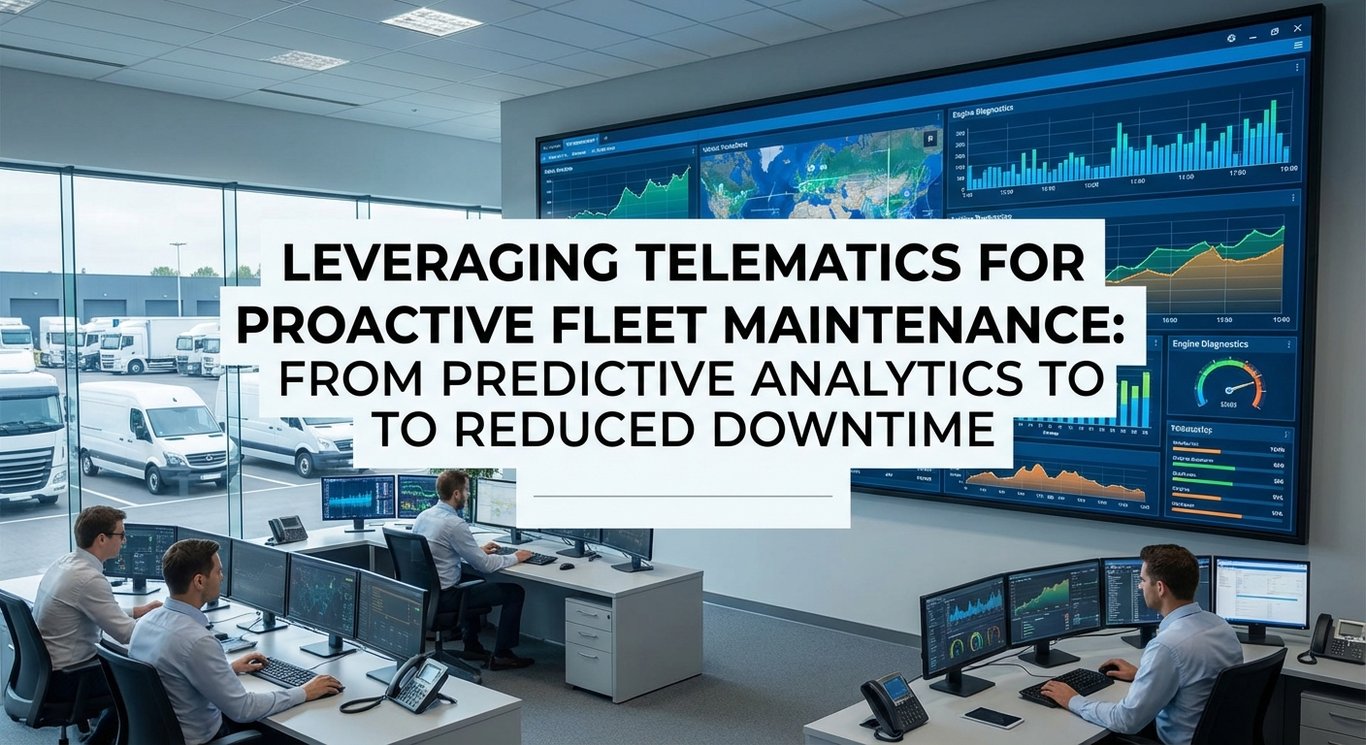
Understanding Telematics in Fleet Management
Telematics is a technology that combines telecommunications and informatics to send, receive, and store information about remote objects like vehicles. At its core, a telematics system relies on GPS tracking devices installed in vehicles to communicate with fleet management software via cellular networks. These systems collect critical real-time data points, including vehicle location, speed, idling time, and harsh braking events, creating a comprehensive digital picture of fleet operations. By integrating this hardware with sophisticated software, fleet managers gain visibility into what is happening on the road at any given moment.
This technology fundamentally shifts fleet maintenance strategies from a reactive approach to a proactive one by utilizing deep insights into vehicle health. Instead of waiting for a truck to break down on the side of the road, telematics systems monitor engine health, fuel usage, and driver behavior to identify potential issues early. For example, the system can detect if an engine is running too hot or if fuel efficiency has suddenly dropped, signaling a need for a check-up. Consequently, this data allows managers to address mechanical problems before they escalate into costly repairs.
The evolution of telematics has moved far beyond basic dots on a map to become a powerhouse of advanced analytics for modern fleets. In the past, the primary goal was simply to know where a vehicle was located, but today’s systems provide a constant stream of diagnostic data that powers decision-making 🚛. This transition means that fleets are no longer just tracking assets but are actively managing their health and performance through data-driven insights. As technology continues to advance, the ability to turn raw data into actionable maintenance strategies becomes the standard for successful fleet management.
What is Predictive Analytics in Telematics?
Predictive analytics in telematics involves using historical data combined with real-time inputs to forecast when a vehicle component is likely to fail. By analyzing trends from the past, such as how long a specific part usually lasts under certain driving conditions, the software can predict future outcomes with surprising accuracy. This process transforms a fleet manager’s role from putting out fires to preventing them entirely, acting almost like a weather forecast for vehicle health. Ultimately, this approach ensures that maintenance is performed exactly when it is needed, rather than too early or too late.
Machine learning algorithms play a huge role here by identifying subtle patterns that a human might miss, such as slight vibrations or temperature changes that precede a breakdown. For instance, the system might notice a pattern in brake wear or battery voltage drops that suggests a failure is imminent within the next 500 miles. These smart insights allow the fleet to schedule a repair during planned downtime rather than dealing with an emergency road call. Harnessing these patterns is the key to keeping vehicles moving and avoiding unexpected interruptions 🧠.
Key Benefits of Proactive Fleet Maintenance
One of the most significant benefits of proactive fleet maintenance is the substantial cost savings achieved by reducing major repairs and extending the life of the vehicle. When small issues, like a dirty filter or a loose belt, are caught early, they cost very little to fix compared to the catastrophic engine failure they could cause if ignored. Additionally, vehicles that are well-maintained simply last longer, meaning the company doesn’t have to buy new trucks as often. Therefore, investing in proactive care directly improves the bottom line by keeping assets in service longer.
Beyond money, safety is vastly improved because telematics allows for the constant monitoring of driver behavior and the early detection of mechanical faults. If a vehicle has worn brakes or bald tires, the system flags it immediately so the truck doesn’t go out on a dangerous run. Furthermore, monitoring things like speeding or harsh cornering helps managers coach drivers to be safer, reducing the risk of accidents caused by human error. This dual approach ensures that both the machine and the operator are safe, protecting everyone on the road 🛡️.
“Modern telematics systems collect thousands of data points from every vehicle, every day, enabling maintenance scheduling based on actual vehicle condition rather than arbitrary time intervals.” -Netradyne
Operational efficiency also sees a major boost through better fuel management and streamlined compliance with regulations. When vehicles run efficiently without mechanical drag, they burn less fuel, and automated tracking ensures that all maintenance logs are up to date for inspections. This means less time spent on paperwork and more time focusing on getting deliveries to customers on time. In short, proactive maintenance tightens up the entire operation, making the fleet more reliable and compliant.
How Telematics Enables Predictive Maintenance
Telematics enables predictive maintenance by providing real-time monitoring of critical metrics such as diagnostic trouble codes (DTCs), mileage, and engine hours. As the vehicle operates, the device is constantly “talking” to the engine’s computer, listening for error codes that indicate a malfunction is starting. It also tracks exactly how much work the engine has done, which is often a better indicator of wear and tear than just miles driven. This constant stream of precise data is the foundation that allows managers to know the exact health status of every vehicle in the fleet.
Once the data is collected, the system uses automated alerts to integrate with maintenance schedules based on Original Equipment Manufacturer (OEM) recommendations. If a truck hits a certain mileage milestone or triggers a specific fault code, the fleet manager receives an instant notification via email or SMS 📲. This automation removes the guesswork, ensuring that service appointments are booked based on actual vehicle needs rather than just a calendar date. By linking alerts directly to maintenance planning, fleets can ensure no necessary service is ever overlooked.
Reducing Downtime with Telematics Solutions
Strategies to minimize unscheduled repairs often rely on just-in-time scheduling, which ensures vehicles are serviced during planned stops rather than interrupting a route. By knowing exactly when a part is likely to fail, managers can schedule the replacement while the driver is already on a break or while the truck is being loaded. This coordination prevents the dreaded scenario of a breakdown in the middle of a delivery, which kills productivity. Effective scheduling transforms maintenance from a disruption into a routine part of the workflow.
[cta-call:Call2]
Centralized data platforms are essential for tracking maintenance history and optimizing resource allocation across the entire fleet. When all data is stored in one cloud-based system, mechanics can instantly see what work has been done previously and what parts are needed, speeding up the repair process. This visibility allows managers to allocate spare trucks efficiently while the primary vehicle is in the shop, ensuring no route is left uncovered. Having a single source of truth for fleet data keeps the operation organized and agile 📂.
“Diagnostic Trouble Codes (DTCs) are captured and transmitted immediately, allowing maintenance teams to identify developing problems before they cause breakdowns.” -Netradyne
Real-world examples consistently show that proactive interventions lead to significant improvements in vehicle uptime. For instance, catching a failing alternator before it dies means a two-hour shop visit instead of a tow truck ride and two days of downtime waiting for parts. Fleets that switch to this model often report that their trucks are available for dispatch much more often, directly increasing their revenue potential. Ultimately, keeping the wheels turning is the primary goal, and telematics provides the tools to make that happen.
Integrating Telematics with Fleet Management Software
Pairing telematics devices with cloud-based fleet management software creates automated workflows that streamline the entire maintenance process. Instead of manually entering mileage or writing down error codes, the data flows automatically from the vehicle to the dashboard, triggering work orders without human intervention. This integration connects the garage to the road, ensuring that the maintenance team is always in sync with the operations team. The result is a seamless flow of information that reduces administrative burden and speeds up reaction times.
Another major benefit of this integration is gaining real-time visibility into vehicle status and electronic inspection results. Drivers can perform pre-trip inspections on a mobile app, and if they report a defect, the mechanic sees it instantly on their computer screen. This eliminates the lag time associated with paper forms and ensures that safety issues are addressed before the vehicle leaves the yard. Immediate visibility into fleet health empowers managers to make smarter, faster decisions every day 💻.
Real-World Case Studies and ROI Examples
Many fleets have successfully transitioned to using telematics for predictive maintenance and have shared impressive success stories. For example, trucking companies often report that they have virtually eliminated roadside breakdowns by addressing engine fault codes as soon as they appear on the dashboard. These success stories highlight how moving away from “run-to-failure” models transforms chaotic operations into well-oiled machines. These real-world wins prove that the technology works across various industries, from delivery services to construction.
When breaking down the Return on Investment (ROI), the calculations often show significant savings per vehicle annually. By reducing fuel consumption, lowering towing costs, and preventing major engine replacements, fleets can save hundreds of dollars per asset every year. For a fleet of 50 vehicles, these savings can easily reach tens of thousands of dollars, paying for the telematics system many times over. The financial math is clear: investing in data yields a high return through cost avoidance 💰.
“Connected fleet solutions can predict when a vehicle component is likely to fail based on historical data and real-time monitoring.” -Element Fleet
Beyond just dollar amounts, key metrics like reduced downtime and increased productivity paint a clear picture of success. Fleets often see a double-digit percentage drop in the time vehicles spend in the shop, which translates directly to more deliveries and happier customers. Additionally, the lifespan of the vehicles increases, meaning capital expenditure on new trucks can be delayed. These metrics confirm that telematics is not just a cost center, but a strategic tool for growth.
Choosing the Right Telematics Provider
When selecting a telematics provider, it is crucial to evaluate key features such as real-time tracking, customizable maintenance alerts, and system scalability. You need a system that can read the specific diagnostic codes of your vehicles and one that can grow as your fleet expands. It is also important to look for mobile compatibility so that drivers and managers can access data from their phones. Focusing on these core features ensures the system will actually meet the operational needs of your business.
Advising on the selection process, fleet managers should also carefully assess ease of use, total cost of ownership, and integration capabilities. A system that is too difficult to learn will not be used effectively by your team, so a user-friendly interface is a must. Furthermore, check if the telematics solution integrates easily with your existing fuel cards or maintenance software to avoid data silos. Taking the time to vet providers on these practical points will prevent headaches down the road 🤝.
Overcoming Common Challenges in Telematics Implementation
One of the most common hurdles is dealing with data overload and alert fatigue, which can happen when basic systems send too many notifications. If a manager gets an email every time a truck hits a bump, they will eventually stop looking at the alerts altogether, missing the important ones. The solution is to configure the system to only flag critical issues or urgent maintenance needs, filtering out the noise. managing the flow of information is key to keeping the data useful and actionable.
Driver adoption can also be a challenge, as some employees may feel that telematics is simply a way for management to spy on them. To overcome this, it is essential to focus training on safety and vehicle health, explaining that the system is there to prevent breakdowns and accidents. Gamification, where drivers are rewarded for safe driving scores, can also turn skepticism into positive competition. Building trust with the team ensures they see the technology as a tool for their benefit, not a trap.
“Proactive maintenance reduces the frequency and severity of repairs, thereby improving vehicle uptime and productivity.” -Element Fleet
Finally, privacy concerns and regulatory compliance strategies must be addressed to protect both the company and the drivers. It is important to be transparent about what data is being collected and how it is being used, adhering to all local labor and privacy laws. Establishing clear policies regarding data usage helps mitigate legal risks and puts employees at ease regarding their personal privacy. Handling data responsibly is the foundation of a successful and ethical telematics program 🔒.
Future Trends in Telematics and Fleet Maintenance
The future of telematics is being shaped by advancements in Artificial Intelligence (AI) and integration with the Internet of Things (IoT) for even smarter predictions. AI will soon be able to analyze complex datasets to predict failures with near-perfect accuracy, considering factors like weather and traffic patterns. IoT will allow different parts of the vehicle to communicate with each other and the infrastructure around them, creating a fully connected ecosystem. These technologies will make maintenance almost entirely automated and incredibly precise.
Emerging roles in electric vehicle (EV) fleets and sustainability are also driving changes in how telematics systems are designed. EVs require different data points, such as battery state of charge and charging cycles, rather than oil pressure and transmission fluid levels. Telematics will play a crucial role in managing the range and battery health of these green fleets, helping companies meet their sustainability goals. As fleets go electric, telematics will be the brain that manages this energy transition ⚡.
FAQ
What are the main benefits of fleet telematics for maintenance?
The primary benefits include significant cost savings from preventing major repairs, drastically reduced vehicle downtime, and improved overall safety. By receiving predictive alerts and analyzing data insights, fleet managers can fix small issues before they become expensive problems, keeping the fleet running smoothly.
How does telematics support preventive maintenance?
Telematics supports preventive maintenance by offering real-time monitoring of vehicle health and automating scheduling based on actual usage data. Instead of guessing, the system tracks mileage and engine hours to trigger service reminders exactly when the Original Equipment Manufacturer (OEM) guidelines suggest.
Can telematics reduce fuel costs in fleets?
Yes, telematics can significantly reduce fuel costs by optimizing routes to reduce mileage and monitoring idling times to cut waste. Additionally, the system provides data for driver coaching, helping to eliminate fuel-wasting behaviors like speeding and harsh acceleration.
Is telematics suitable for small fleets?
Absolutely, telematics is highly suitable for small fleets because it offers scalability and a strong Return on Investment (ROI) regardless of fleet size. Small and Medium Enterprises (SMEs) benefit from better cost control, improved insurance rates, and the ability to compete with larger companies through increased efficiency.
What ROI can fleets expect from telematics?
Fleets can expect a robust ROI through reductions in emergency repairs, extended asset lifecycles, and lower fuel consumption. Industry data often quantifies these savings significantly, with some estimates suggesting savings of nearly $500 per vehicle annually, quickly offsetting the cost of the technology.
Conclusion
In summary, telematics has completely transformed the landscape of fleet maintenance by moving operations from reactive chaos to proactive precision via predictive analytics. By leveraging real-time data, fleets can foresee mechanical failures before they occur, drastically slashing downtime and keeping vehicles on the road where they belong. This technological shift is not just about tracking location; it is about understanding the heartbeat of every vehicle to ensure peak performance. The days of waiting for a breakdown are over, replaced by a smarter, data-driven approach.
The key takeaways are clear: real-time data drives proactive decisions that yield measurable cost savings, safety improvements, and operational efficiency. When managers have visibility into engine health and driver behavior, they can reduce fuel waste, extend vehicle life, and protect their drivers. These benefits compound over time, creating a more resilient and profitable business model. Embracing this technology is no longer optional but essential for staying competitive.
To see immediate impact, fleet managers should take actionable steps such as evaluating current providers and integrating telematics with existing fleet management software. Start by auditing your current maintenance workflow to identify bottlenecks that data could solve. Then, run a pilot program with a trusted provider to test the predictive capabilities on a small segment of your fleet. These small steps will pave the way for a full-scale transformation of your maintenance strategy.
Start leveraging telematics for proactive fleet maintenance today-audit your current systems, pilot a solution, and measure your ROI to reduce downtime and boost profitability using the power of predictive analytics 🚀.