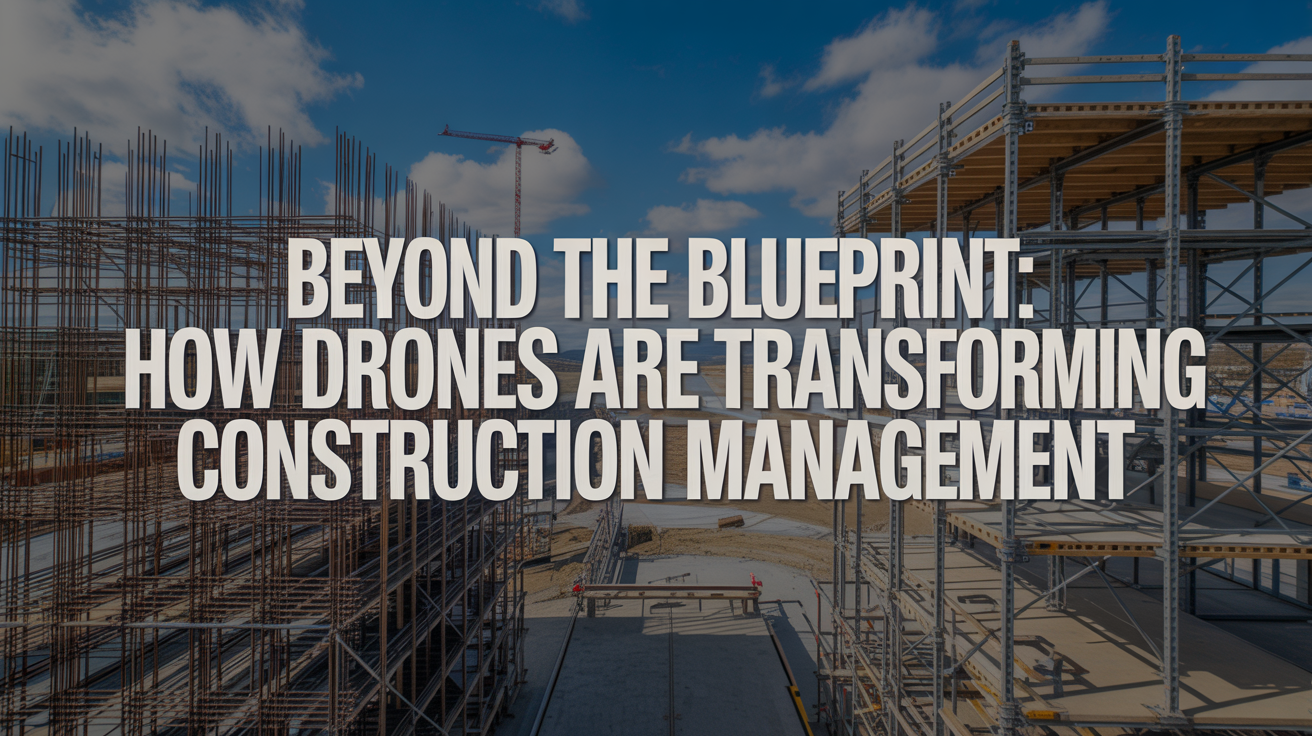
Beyond the Blueprint: How Drones Are Transforming Construction Management
Construction management is undergoing a revolution, and drones are at the forefront of this transformation. 🚀 These unmanned aerial vehicles (UAVs) are no longer just gadgets for hobbyists; they’ve become essential tools in construction projects worldwide. With their ability to capture high-resolution images, map sites with precision, and provide real-time data, drones are making operations faster, safer, and smarter. As technology continues to evolve, construction professionals are embracing these tools to stay competitive in an increasingly demanding industry.
The adoption of drone technology is driven by three key factors: efficiency, safety, and data-driven decision-making. Drones streamline processes that once took days or weeks, reducing delays and cutting costs. They also minimize risks for workers by keeping them out of hazardous areas. Most importantly, drones generate vast amounts of actionable data, empowering project managers to make informed decisions quickly. This combination of benefits is reshaping how construction projects are planned, executed, and monitored. Now, let’s explore how drones are changing the construction landscape in more detail.
How Drones Are Changing the Construction Landscape
The shift from traditional methods to drone-powered management represents a seismic change in the construction industry. Gone are the days when site surveys required hours of manual labor and cumbersome equipment. Today, drones equipped with advanced sensors can map an entire site in minutes, delivering detailed 3D models and topographical data. This leap in capability has made drones indispensable for modern construction teams looking to stay ahead of the curve.
What makes drones so attractive to construction professionals? Efficiency, safety, and accuracy are the main drivers. By automating repetitive tasks like site mapping and inspections, drones free up valuable time for workers to focus on higher-priority activities. Additionally, drones reduce human error, ensuring that measurements and assessments are precise every time. With these advantages, it’s clear why more companies are integrating drones into their workflows. Next, we’ll delve into the core functions of drones in construction management.
Core Functions of Drones in Construction Management
One of the most critical roles drones play is surveying and site mapping. Using techniques like photogrammetry or LiDAR, drones create highly accurate maps and 3D models of construction sites. These tools allow project managers to plan layouts, assess terrain, and identify potential challenges before breaking ground. For example, a drone can quickly scan a large plot of land to determine the best location for building foundations, saving both time and resources. 😊
Another key application is progress monitoring. Drones provide regular updates on construction milestones, ensuring that projects stay on track. By comparing aerial footage over time, managers can verify whether work aligns with the schedule and address any discrepancies immediately. Finally, drones excel at inspecting hard-to-reach areas, such as rooftops, bridges, or tall structures. Instead of sending workers into risky situations, drones can capture detailed images and videos, making inspections safer and more efficient. Clearly, drones are becoming indispensable across multiple aspects of construction management.
To summarize, drones offer unmatched versatility in surveying, monitoring, and inspecting construction sites. Their ability to deliver precise data and reduce risks makes them invaluable tools for modern construction teams. Let’s now look closer at how drones accelerate progress monitoring and documentation.
“Construction drones equipped with photogrammetry or LiDAR sensors can generate topographic maps, contour models, and 3D site reconstructions. These outputs replace manual inspections that often take days and require external crews.” -CMiC
Accelerating Progress Monitoring and Documentation
Drones have transformed the way construction projects are documented, providing objective, comprehensive records at regular intervals. Instead of relying on manual reports or sporadic site visits, project managers can access up-to-date visuals anytime. This real-time visibility not only ensures transparency but also helps catch issues early, preventing costly delays. For instance, if materials aren’t delivered as scheduled, drones can spot the problem instantly, allowing teams to act swiftly.
“Drones can survey up to 120 acres per hour, compared to approximately five acres per hour using traditional methods, resulting in a 60-fold increase in efficiency.” -UAV Coach
Beyond tracking progress, drones simplify payment verification and dispute resolution. High-resolution imagery serves as indisputable evidence of completed work, reducing conflicts between contractors and clients. In cases where disagreements arise, drone data offers a clear record to resolve disputes fairly. With these benefits, drones are proving to be game-changers in keeping projects on schedule and within budget. Moving forward, let’s examine how drones enhance safety on construction sites.
“Drone surveys require fewer personnel and less time, lowering overall expenses.” -UAV Coach
Enhancing Safety on Construction Sites
Safety is a top priority in construction, and drones are playing a pivotal role in minimizing risks. By conducting remote inspections of dangerous zones, drones eliminate the need for workers to climb scaffolding, enter confined spaces, or navigate unstable terrain. This not only protects lives but also reduces the likelihood of accidents that could halt production. For example, drones can inspect the structural integrity of bridges or high-rise buildings without putting anyone in harm’s way. 🛡️
“The most significant benefit drones bring to construction project management is the transformation from intuition based to data driven decision making.” -Struction Solutions
Moreover, drones contribute to proactive hazard identification. Equipped with thermal imaging and other sensors, they can detect potential dangers, such as gas leaks or electrical faults, before they escalate. Early detection allows teams to address issues promptly, creating a safer working environment. With fewer accidents and greater awareness of risks, drones are helping construction sites become safer than ever. Now, let’s discuss how drones drive efficiency and reduce project costs.
“Construction drones eliminate the need for ladders, scaffolding, or lifts in many situations. This lowers the likelihood of injury, limits reliance on temporary access equipment, and reduces liability associated with site access.” -CMiC
Driving Efficiency and Reducing Project Costs
Efficiency is the name of the game in construction, and drones are leading the charge. Traditional site surveys often require large crews and extended timelines, but drones can complete the same tasks in a fraction of the time. Automated progress assessments further speed things up, enabling quicker adjustments to schedules and resource allocation. This streamlined approach translates directly into cost savings, as less time spent on surveys means lower labor expenses.
“Drones enhance construction site communication by up to 65%. Real-time video data enables accurate and efficient information exchange among team members.” -JOUAV
In addition to reducing labor costs, drones help minimize errors and material loss. Accurate mapping prevents over-ordering of supplies, while real-time monitoring ensures materials are used efficiently. Theft and misplacement are also curbed thanks to enhanced asset management. By addressing these common pain points, drones are proving to be a cost-effective solution for construction projects of all sizes. With efficiency maximized, let’s explore how instant aerial data supports real-time decision-making.
“Improved inventory management and equipment tracking also contribute to cost savings. By minimizing material waste and equipment theft, drones …” -ABC Hawaii
Real-Time Decision Making and Resource Optimization
Instant access to aerial data empowers construction managers to make smarter, faster decisions. Whether it’s tracking inventory levels, monitoring equipment usage, or responding to weather disruptions, drones provide the insights needed to optimize resources effectively. For example, if a storm is approaching, drones can quickly assess which materials need to be secured, ensuring minimal damage to the site. ⚡
“By regularly scanning buildings and infrastructure, drones could help predict when maintenance is needed before problems occur. A drone could spot early signs of wear on structural components.” -ABC Hawaii
Integration with modern project management platforms amplifies these benefits even further. When drone data flows seamlessly into scheduling systems, cost trackers, and ERP software, workflows become more cohesive. Managers can anticipate bottlenecks, adjust timelines, and allocate resources with confidence. This synergy between drones and digital tools is paving the way for smarter, more agile construction practices. Speaking of advancements, let’s dive into the advantages of BVLOS drone operations.
“The organizations advancing in this area are those that apply the same structure to drone programs as they do to estimating procedures, safety systems, and quality management.” -CMiC
The Advantages of BVLOS (Beyond Visual Line of Sight) Drone Operations
BVLOS capabilities take drone operations to the next level, allowing operators to monitor vast or multiple job sites from a central location. Imagine overseeing an entire highway project or sprawling industrial complex without leaving the office-this is the power of BVLOS. Not only does it extend coverage, but it also slashes costs significantly. Studies show that BVLOS operations can reduce surveying expenses by 40-60% while accelerating data collection times by up to 70%.
“Artificial intelligence and machine learning will increasingly automate the analysis of drone captured data, identifying issues, calculating quantities, and tracking progress without manual review.” -Struction Solutions
Furthermore, BVLOS enhances safety inspections by eliminating the need for personnel to visit remote or hazardous locations. With drones covering extensive areas autonomously, the risk of accidents during inspections is virtually eliminated. This innovation is particularly valuable for large-scale infrastructure projects where efficiency and safety are paramount. As BVLOS becomes more widespread, its impact on construction management will only grow stronger. Now, let’s examine how drone data fuels analytics and software integration.
“This innovative initiative enhances pre-project planning, improves construction visibility, boosts safety measures and increases operations efficiencies.” -Poettker Construction
Drones and Data-Driven Construction: Analytics and Software Integration
Data is the lifeblood of modern construction, and drones are generating massive amounts of it. From site maps to thermal scans, the information collected feeds directly into Building Information Modeling (BIM), scheduling tools, and enterprise resource planning (ERP) systems. This integration enables predictive analytics, giving managers the ability to forecast project timelines, budget requirements, and potential roadblocks with unprecedented accuracy.
By combining drone data with AI-powered analytics, construction teams can unlock new levels of optimization. For instance, machine learning algorithms can analyze drone footage to detect inefficiencies, predict maintenance needs, or calculate material quantities automatically. This digital transformation is ushering in a new era of data-driven decision-making, where guesswork is replaced by precision. With these advancements, the future of construction looks brighter than ever. Let’s now quantify the cost savings and ROI associated with drone adoption.
Cost Savings and ROI: Quantifiable Benefits of Drone Adoption
The financial benefits of using drones in construction are undeniable. Companies report measurable reductions in surveying and inspection costs, often achieving ROIs within months of implementation. For example, one firm cut its surveying expenses by 50% after switching to drones, while another reduced claims-related disputes by 30% thanks to better documentation. These numbers highlight the tangible value drones bring to the table.
Beyond cost savings, drones improve compliance and material forecasting, ensuring projects run smoothly from start to finish. Enhanced visibility into daily operations allows managers to allocate resources more effectively, reducing waste and boosting productivity. Whether it’s a small renovation or a massive infrastructure build, drones deliver significant returns on investment. With such compelling evidence, it’s no wonder adoption rates continue to rise. Looking ahead, let’s preview some exciting future trends in drone technology.
Future Trends: AI, Autonomous Operations, and Predictive Maintenance
The future of drones in construction is brimming with possibilities, especially with advancements in artificial intelligence and autonomous operations. AI-powered systems will soon automate the analysis of drone-captured data, identifying issues, calculating quantities, and tracking progress without human intervention. Imagine receiving instant alerts about structural flaws or deviations from the plan-all thanks to smart algorithms working behind the scenes. 🤖
Autonomous drones will also play a larger role, flying pre-programmed routes and performing tasks independently. Paired with predictive maintenance, these innovations will enable proactive repairs and upgrades, extending the lifespan of equipment and structures. Regular drone surveys will feed data into predictive models, helping teams anticipate failures before they occur. Together, these trends promise to make construction faster, safer, and more sustainable. However, implementing drones isn’t without challenges, which we’ll address next.
Challenges, Regulations, and Implementation Considerations
While drones offer immense potential, there are hurdles to overcome. Airspace regulations vary by region, requiring companies to navigate complex legal frameworks to operate legally. Data privacy concerns also arise, as drones collect sensitive information that must be protected. On-site integration poses additional challenges, as existing workflows may need adjustments to accommodate drone data effectively.
To maximize success, businesses must invest in skilled pilots and provide ongoing digital training for staff. Proper planning and adherence to guidelines ensure smooth implementation, minimizing disruptions. Despite these obstacles, the rewards far outweigh the risks for those willing to embrace change. Next, let’s look at real-world examples of drone-driven success stories.
Case Studies: Real-World Examples of Drone-Driven Management
Drone technology has already delivered impressive results in numerous projects worldwide. One notable case involved a large commercial development where drones reduced surveying time by 80% and identified design flaws early, saving millions in rework costs. Another success story comes from an infrastructure project, where drones monitored progress across multiple sites simultaneously, ensuring alignment with tight deadlines.
In emergency response scenarios, drones have proven equally valuable. After a natural disaster, a construction team used drones to assess damage rapidly, enabling swift recovery efforts. These examples demonstrate the versatility and impact of drones in diverse settings. With quantifiable improvements in speed, accuracy, and cost-efficiency, it’s clear why drones are transforming construction management. Let’s wrap up with answers to frequently asked questions.
FAQ: Common Questions About Drones in Construction Management
How are drones typically used on construction sites?
Drones are commonly used for site mapping, progress monitoring, inspections, and material tracking.
What regulatory challenges do companies face when implementing drones?
Companies must comply with airspace regulations, obtain necessary permits, and ensure data privacy compliance.
How do drones improve safety for workers?
Drones reduce exposure to hazardous environments by conducting remote inspections and identifying risks early.
What types of data do drones collect, and how is it used?
Drones collect visual, thermal, and topographical data, which is used for mapping, analysis, and decision-making.
Are drones cost-effective for small construction projects?
Yes, drones can save time and money even on smaller projects by improving efficiency and reducing labor costs.
Conclusion: Embracing the New Era of Construction Management
Drones have fundamentally changed the way construction projects are managed, bringing unparalleled speed, accuracy, and safety to the industry. From streamlining surveys to enhancing worker protection, these tools are ushering in a data-driven era that prioritizes efficiency and innovation. The result is a construction landscape that’s not only more productive but also more resilient against challenges.
As you consider the future of your own projects, think about how drones could elevate your operations. Whether through pilot programs or full-scale adoption, taking the next step toward “Beyond the Blueprint: How Drones Are Transforming Construction Management” could position you ahead of the competition. The sky’s the limit-literally! 🌟