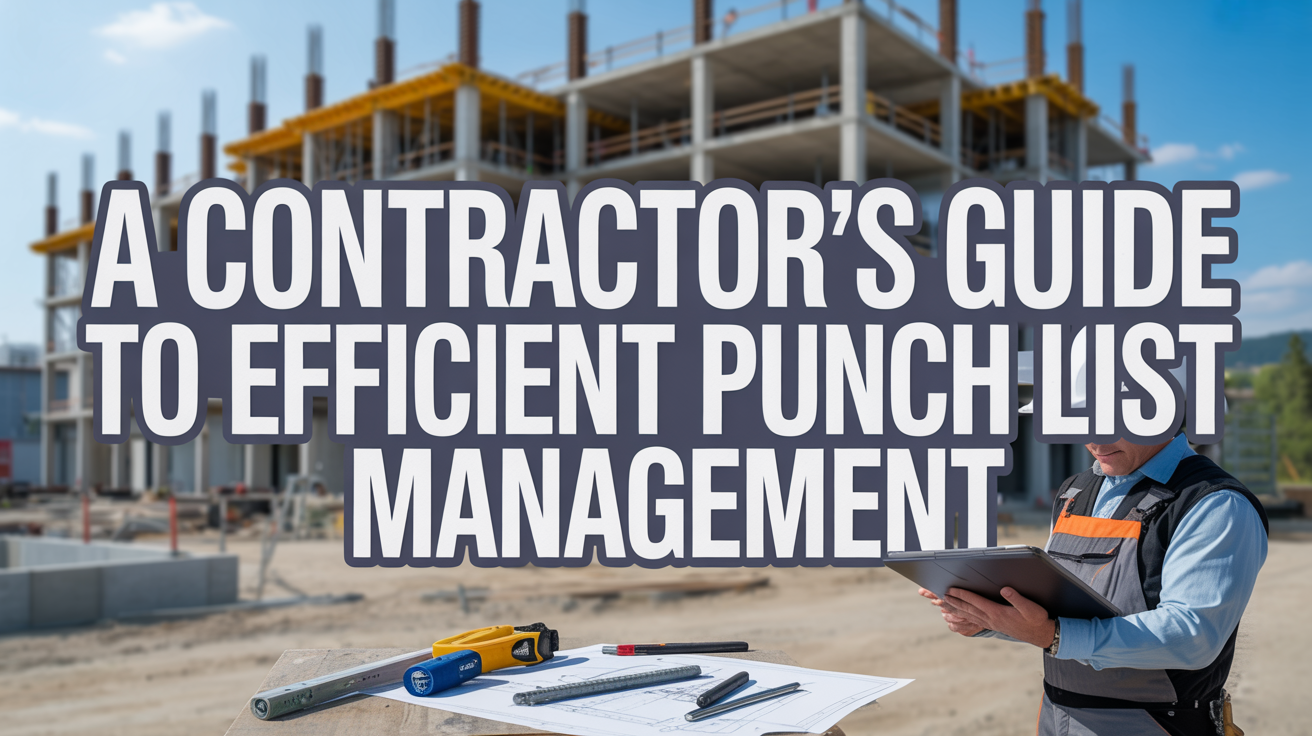
A Contractor’s Guide to Efficient Punch List Management
Introduction
A punch list is a critical document in construction projects that outlines tasks or deficiencies needing resolution before the project can be considered complete. These tasks typically involve work that doesn’t meet the agreed-upon contract specifications, and addressing them ensures the final product aligns with expectations. 🏗️ By documenting these items, contractors create a roadmap for finishing touches that guarantee quality and compliance.
Efficient punch list management plays a vital role in project success, impacting everything from timelines to contractor morale. Poor management can lead to delays, budget overruns, and strained relationships with clients. On the flip side, a well-organized punch list process fosters accountability, reduces disputes, and keeps everyone focused on the end goal. 😊
In this guide, we’ll explore key strategies to streamline punch list management, including rolling inspections, clear contracts, prioritization techniques, digital tools, and communication best practices. Whether you’re a general contractor, subcontractor, or project owner, these tips will help you tackle punch lists like a pro! 🚀
What Is a Punch List and Why Does It Matter?
A punch list serves as the final checklist in construction projects, ensuring all contractual obligations and quality standards are met before final payment is released. This document acts as a safeguard for both contractors and clients, verifying that every detail aligns with the agreed-upon plans. Without a thorough punch list, projects risk ending with unresolved issues that could harm reputations and budgets. 📋
Proper punch list management directly impacts project quality, minimizes disputes, and streamlines project closure. It enhances accountability by clearly identifying who is responsible for each task and ensures nothing falls through the cracks. By addressing deficiencies promptly, contractors can maintain high standards, build trust with clients, and avoid costly rework down the line. 💪
The Rolling Punch List: Getting Ahead of Deficiencies
A rolling punch list involves identifying and addressing deficiencies throughout the project rather than waiting until the end. This proactive approach prevents last-minute scrambles, reduces stress for contractors, and avoids delays or budget overruns. Regular inspections keep teams aligned and ensure small issues don’t snowball into major problems. 🔄
To implement a rolling punch list, establish daily inspections led by a designated quality control manager. Document issues in real-time using photos and detailed notes, and assign tasks immediately to the appropriate parties. This system not only boosts efficiency but also fosters a culture of continuous improvement, where quality becomes a priority at every stage. 📸
Establishing Clear Contracts and Specifications
Clear, detailed contract documents are the foundation of effective punch list management. When specifications are precise and leave little room for interpretation, it minimizes the risk of rework, disputes, and misunderstandings. Contractors and clients alike benefit from having a shared understanding of what needs to be built. ✍️
“A punch list records deficiencies that don’t meet contract specifications and must be resolved before a project is considered complete.” -Fieldwire
To achieve clarity, use visual aids like drawings or diagrams alongside written descriptions. Communicate these specifications early and often with all stakeholders, ensuring everyone is on the same page. Regular check-ins during the project can also help confirm alignment and prevent surprises later. 🤝
Organizing and Categorizing Punch List Items
Organizing punch list items effectively is key to managing them efficiently. Group tasks by location, trade category, priority level, or responsible party to make the list easier to navigate. For example, separating electrical fixes from plumbing repairs helps subcontractors focus on their areas of expertise. 🏠
“The punch list process typically follows these steps: Conducting a walk-through with key stakeholders to identify incomplete or unsatisfactory work. Recording each item on the punch list, including a description, location, and any notes or photos for clarity. Allocating tasks to the appropriate subcontractors or team members. Monitor progress, schedule follow-up inspections, and confirm completion. Once all items are resolved, conduct a final walk-through to verify everything has been addressed.” -Revizto
Prioritization is crucial-start with safety concerns, code violations, and functional issues that could impact usability. Assign realistic deadlines based on complexity and resource availability, ensuring no task is overlooked. A well-prioritized list keeps the team focused on what matters most. ⏳
Digital platforms offer features like color-coding and tagging systems to streamline organization further. These tools make it simple to filter items by status, priority, or location, ensuring all stakeholders have access to up-to-date information. With better organization comes smoother execution. 🌟
“Categorize by urgency and impact: Safety concerns, code violations, and functional issues (e.g., plumbing or electrical problems) should take precedence. Group by trade or location: Organizing items by discipline (e.g., electrical, HVAC) or physical location (e.g., floor or room) helps streamline workflow for subcontractors.” -Revizto
Assigning Responsibilities and Accountability
Assigning punch list items to the right subcontractors or crews is essential for efficient resolution. Each party should receive only the tasks they’re responsible for fixing, reducing confusion and ensuring accountability. This targeted approach minimizes the chance of overlooked items slipping through the cracks. 👷♂️
Track progress regularly by following up with assigned teams and providing clear instructions about deadlines and expectations. Open lines of communication ensure everyone knows what’s required and when. Accountability fosters teamwork and drives projects toward successful completion. 🎯
“Assigning responsibilities is one of the most important aspects of a punch list. Assign subcontractors and track the punch list progress. Stay updated on the progress and make sure they complete their items before the final inspection.” -Outbuild
Conducting Effective Punch List Walkthroughs
Thorough walkthroughs are a cornerstone of effective punch list management. Conduct your own inspection before the owner does to catch potential issues early. Coordinate with stakeholders during the walkthrough to address concerns collaboratively and ensure nothing is missed. 🚶♀️
During inspections, use practical techniques like marking defect locations with tape, testing systems (HVAC, plumbing, electrical), and documenting findings with photos and clear descriptions. These steps provide actionable insights and make it easier for teams to address deficiencies. 📝
“One punch list best practice is the ‘rolling punch list;’ a real-time log of punch list items that develops as deficiencies arise. According to Michael Clippinger, the National Director of Quality at JE Dunn, an ENR Contractor of the Year, ‘a rolling punch list is the most common approach toward achieving the ultimate zero-punch list goal.'” -Fieldwire
Before closing out the project, conduct a final verification walkthrough to confirm all items have been resolved. This step ensures the punch list is truly complete and ready for approval. Attention to detail here pays off in client satisfaction and smooth project handover. ✅
Leveraging Digital Tools and Project Management Software
Digital tools revolutionize punch list management by enabling real-time tracking, centralized communication, and automated updates. Instead of relying on paper lists, contractors can use apps to monitor progress, share files, and collaborate seamlessly with all stakeholders. 📱
“Utilize digital tools for real-time tracking of punch list progress. As items are completed, subcontractors can upload verification and photos, allowing the general contractor to track progress in real time.” -Outbuild
Look for software features like trade-specific reporting, photo uploads, and task assignment capabilities. These tools simplify workflows, reduce errors, and enhance transparency. Investing in the right technology empowers teams to manage punch lists more efficiently than ever before. 💻
Communication Strategies for Punch List Success
Clear, consistent communication is vital for punch list success. Contractors, project managers, clients, architects, and subcontractors must stay aligned throughout the process. Miscommunication can lead to delays, frustration, and unresolved issues. 🗣️
“Hold Regular Coordination Meetings: Schedule weekly check-ins during the final phase to review punch list status and address any roadblocks. Use Centralized Digital Tools: Project management platforms allow real-time updates, file sharing, and task tracking, ensuring all parties have access to the same information.” -Revizto
Holding regular coordination meetings during the final phase keeps everyone informed and engaged. Standardizing terminology and using centralized platforms ensures all parties access the same information. Strong communication builds trust and drives collaboration toward a common goal. 🤝
Common Punch List Mistakes to Avoid
One common mistake is waiting until the end of the project to create a punch list, which leads to a backlog of issues. Poor item descriptions lacking location details or photos cause ambiguity, while unclear responsibility assignments result in overlooked tasks. Avoiding these pitfalls starts with proactive planning. ❌
“Poor Item Descriptions. You should always clearly define each punch list item with location details, photos, and instructions so there’s no ambiguity. Skipping Final Verification. You should always conduct a final walk-through to confirm every item has been resolved and documented accordingly.” -Revizto
Poorly described items often lead to rework, wasting time and resources. Skipping final verification steps can delay project closure and damage client relationships. Taking the time to verify each item thoroughly ensures a smoother handover and higher satisfaction levels. 🔍
Allowing scope creep during the punch list phase is another frequent error. Stick to addressing only contractual deficiencies to maintain focus and prevent unnecessary delays. Staying disciplined about the punch list scope keeps projects on track and within budget. 💼
“All key players in the construction project, as well as clients, should be privy to give their opinions and expertise on what should be on the punch list.” -Revizto
Role-Specific Best Practices
General Contractors
General contractors should establish robust quality control processes, conduct daily inspections, generate rolling punch lists, prioritize items strategically, and track subcontractor progress closely. These efforts ensure timely completion and uphold project standards. 🛠️
Subcontractors
Subcontractors must interpret punch list items accurately, understand their locations, complete assigned work within deadlines, and provide verification through photos and documentation. Their diligence contributes to overall project success. 📸
“The whole aim is to have zero items on the checklist, and these steps will get you there faster.” -Revizto
Project Owners
Owners can actively participate by asking clarifying questions during walkthroughs, tracking progress via project software, and approving completed items before releasing final payment. Their involvement ensures alignment with expectations. 💼
Architects and Engineers
Architects verify that punch list items match final drawings and align with owner expectations. Continuous communication helps ensure the final walkthrough addresses only minor adjustments, reflecting a job well done. 🏗️
Frequently Asked Questions
1. When should a punch list be started on a construction project?
Best practice is to start the punch list at the beginning of a project with rolling inspections rather than waiting until substantial completion. This allows deficiencies to be addressed in real-time and prevents a large backlog at the end.
2. How do I prioritize punch list items?
Prioritize items based on impact and urgency. Safety concerns, code violations, and functional issues should be addressed first. Some items may also need priority if they’re required before other trades can continue their work.
3. What should be included in each punch list item description?
Each item should include clear location details, photos, descriptions of the deficiency, required actions, responsible party, deadline, and priority level. Clear descriptions eliminate ambiguity and reduce rework.
4. How can I track punch list progress efficiently?
Use project management software or punch list apps that allow real-time updates, photo uploads, and task tracking. Digital tools enable all parties to access the same information and track progress simultaneously.
5. What does “zero punch list” mean?
A zero punch list means all deficiencies have been identified, corrected, and verified before project closeout. Achieving this status requires implementing rolling punch list practices and regular follow-up throughout the project.
Conclusion
Efficient punch list management is a cornerstone of successful construction projects, ensuring quality standards, timelines, and budgets are met. It’s not just an administrative task-it’s a strategic tool that impacts profitability, client satisfaction, and industry reputation. Contractors who adopt best practices gain a competitive edge and deliver exceptional results. 🏆
Key takeaways include the value of rolling punch lists, clear communication, proper organization, assigning responsibilities, leveraging digital tools, and conducting regular verifications. Success hinges on collaboration among all stakeholders and a proactive approach to addressing deficiencies. To achieve zero punch list status and deliver projects on time and within budget, contractors should adopt rolling punch list practices, invest in project management software, establish clear communication protocols, and train their teams on consistent procedures. Start implementing these strategies today to elevate your punch list game! 🚀