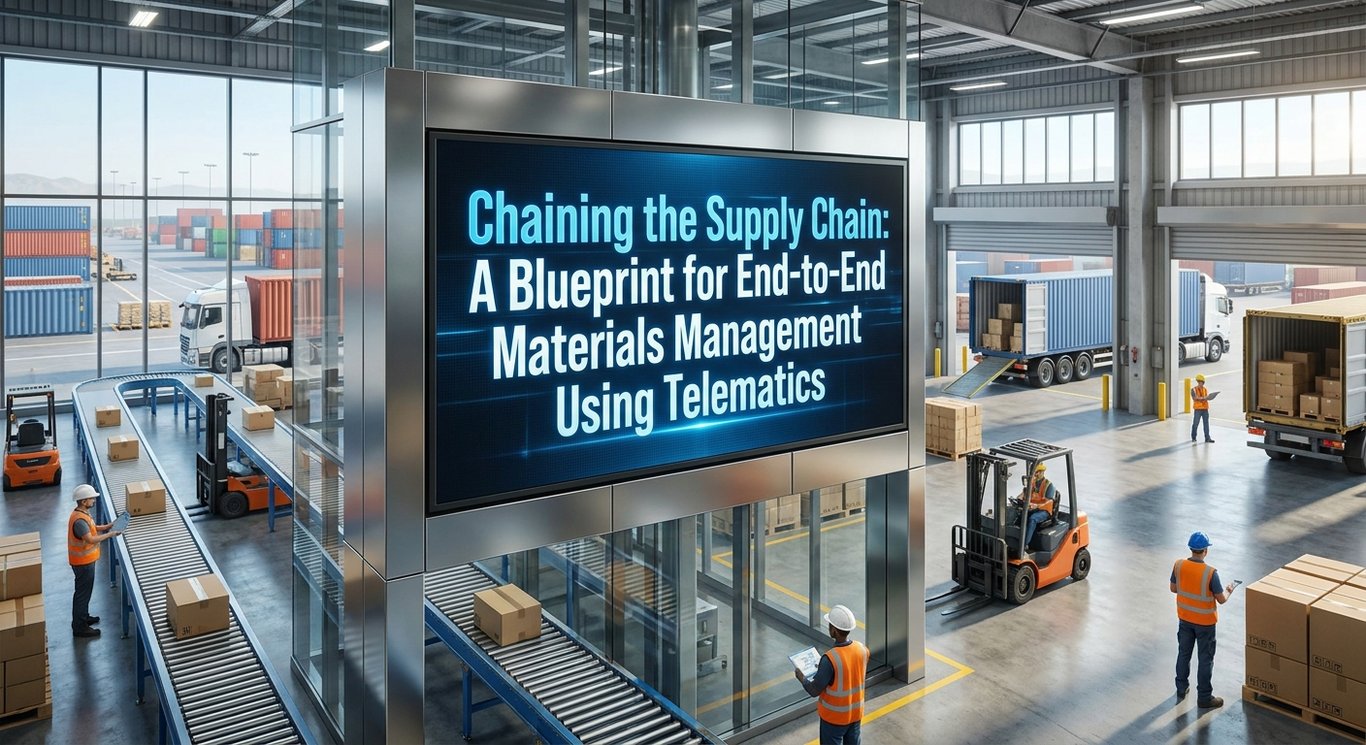
1. What “end-to-end materials management” means in a telematics-enabled supply chain
Define the scope from raw materials to after-sales flow
End-to-end materials management is exactly what it sounds like – managing every physical touchpoint a material or product goes through, from the moment it’s sourced to the moment it reaches a customer (and sometimes back again). 🔄 This full lifecycle includes sourcing raw materials, production planning, manufacturing, warehousing, distribution, returns processing, and even post-sale customer service. Materials management sits at the core of all of this, acting as the connective tissue that keeps goods moving efficiently through each stage. When one link in that chain breaks down – say, a delayed shipment or a miscounted inventory – the ripple effects can be costly and hard to contain. Understanding the full scope is the first step toward building a supply chain that actually works as one unified system rather than a series of disconnected handoffs.
Explain why telematics changes the model
Here’s where things get genuinely exciting. 🚀 Telematics fundamentally changes the materials management model by adding a continuous stream of real-time data – location, vehicle condition, speed, temperature, cargo status – to every movement across the supply chain. Instead of relying on manual check-ins, estimated arrival windows, or batch updates from legacy systems, supply chain teams can now see exactly where materials are at any given moment and in what condition they’re traveling. This visibility makes it far easier to coordinate handoffs between suppliers, carriers, warehouses, and customers because the data speaks for itself. Telematics transforms materials movement from a guessing game into a measurable, manageable process – and that shift alone can dramatically improve both efficiency and customer satisfaction.
2. Why telematics is becoming central to materials visibility
Show the business problem telematics solves
Let’s be honest – traditional supply chains have some serious blind spots. 😬 Without real-time data, logistics teams are often working off delayed updates, manual reports, or gut instinct when something goes wrong. Common pain points include not knowing where a shipment is until it’s already late, struggling to handle exceptions like missed deliveries or damaged goods, watching expensive assets sit idle because no one knew they were available, and giving customers ETAs that turn out to be wildly inaccurate. These aren’t small inconveniences – they translate directly into lost revenue, higher operating costs, and damaged customer relationships. Telematics addresses these problems at their root by replacing information gaps with continuous, reliable data streams that keep everyone in the loop.
Connect telematics to operational outcomes
Once those blind spots are eliminated, the operational improvements start stacking up quickly. Better visibility means dispatchers can make faster, smarter decisions about routing and load assignments. More accurate location data supports more reliable ETAs, which builds trust with customers and downstream partners. When managers can see asset positions and conditions in real time, they can respond to exceptions before they become full-blown crises – rerouting a driver around a traffic delay or flagging a temperature excursion before cargo is compromised. Over time, these improvements compound into lower asset loss rates, stronger service reliability, and a supply chain that’s genuinely resilient rather than just reactive. Telematics isn’t just a tracking tool; it’s an operational upgrade. 📈
3. Core components of a telematics-driven supply chain architecture
Outline the main technologies in the stack
A telematics-driven supply chain doesn’t run on a single technology – it’s a layered stack of complementary tools working in concert. 🛠️ GPS provides the backbone for in-transit tracking, giving teams precise location data for vehicles, trailers, and shipments on the road. RFID handles inventory and gate-level movement, scanning assets as they pass through checkpoints without requiring manual intervention. BLE (Bluetooth Low Energy) fills in the gaps for indoor environments where GPS signals can’t penetrate, such as inside warehouses or large distribution centers. IoT sensors add another dimension by monitoring cargo conditions like temperature, humidity, shock, and tamper status in real time. Finally, AI and machine learning sit on top of all this data to identify patterns, flag anomalies, and generate predictive insights that help teams stay ahead of problems rather than just reacting to them.
Explain how the systems work together
The real power of this architecture emerges when these technologies communicate seamlessly across every stage of the journey. As a pallet moves from a warehouse shelf to a yard trailer to a long-haul truck to a final delivery point, the tracking technology shifts accordingly – BLE in the warehouse, RFID at the gate, GPS on the highway – with each system handing off data to the next without losing continuity. This integrated data flow is what closes the gap between physical movement and digital records. When a shipment is loaded, the system knows. When it crosses a geofence, the system knows. When it arrives at a dock door, the system knows – and so does every stakeholder who needs that information. That kind of seamless handoff is what separates a truly connected supply chain from one that’s just partially digitized. 🔗
4. How telematics supports inventory control and replenishment
Explain inventory visibility and status accuracy
One of the most immediate benefits of telematics in materials management is dramatically improved inventory visibility. 📦 Instead of relying on periodic cycle counts or hoping that manual records are up to date, teams can use live asset tracking to know exactly what’s available, where it’s located, and what state it’s in – whether that’s sitting in a warehouse, in transit on a truck, delayed at a border crossing, or at risk due to a condition issue. This kind of real-time status accuracy changes how operations teams make decisions. They stop guessing and start acting on facts. When you know a shipment of components is three hours away and on schedule, you can prepare the production line accordingly. When you know a batch is delayed, you can trigger a backup plan before the line goes down.
“Integrating IoT, telematics, and fleet insights enables real-time visibility across the entire supply chain, from inventory movement to cargo conditions in transit.” -Binary Semantics
Show the effect on replenishment and stock planning
Beyond just knowing where things are, telematics-informed data has a significant impact on how and when companies replenish their inventory. When in-transit visibility is accurate and reliable, procurement and planning teams can time reorder points more precisely – reducing both the risk of stockouts and the cost of carrying excess safety stock. Instead of padding inventory buffers to compensate for uncertainty, companies can operate leaner because they trust the data. This supports more efficient warehouse operations, lower carrying costs, and better cash flow management. Over time, the combination of real-time visibility and smarter planning creates a replenishment cycle that’s genuinely responsive to actual demand rather than inflated by fear of the unknown. 💡
5. Telematics for transportation, fleet, and route optimization
Cover routing, ETA, and dispatch decisions
Transportation is where telematics has historically made its biggest splash, and for good reason. 🗺️ With access to live traffic conditions, real-time vehicle locations, and delivery constraints like time windows and load priorities, dispatchers can make dynamic routing decisions that were simply impossible with static planning tools. If a driver hits unexpected congestion, the system can suggest an alternate route in real time. If a delivery window is at risk, the dispatcher knows early enough to communicate proactively with the customer. ETA accuracy improves dramatically because it’s based on actual movement data rather than optimistic estimates. Better dispatch coordination means fewer empty miles, more efficient load assignments, and a transportation network that adapts to reality rather than fighting against it.
[cta-call:Call2]
Cover vehicle health and utilization
Beyond routing, telematics gives fleet managers a detailed view into the health and utilization of every vehicle in the network. Diagnostic data reveals engine issues before they become breakdowns. Fuel monitoring identifies inefficiencies in driver behavior or vehicle performance. Idle-time tracking highlights where assets are being underused or where operational habits are burning unnecessary fuel. Predictive maintenance models use all of this data to flag service needs before a vehicle fails in the field – which is a much better outcome than an unplanned breakdown mid-delivery. 🔧 Together, these capabilities reduce fleet downtime, lower maintenance costs, extend vehicle lifespan, and keep the transportation network running at peak performance. A healthy fleet is a reliable supply chain.
“No single tool covers the whole journey, so the stack is the answer.” -GPX
6. Monitoring cargo condition, compliance, and risk in transit
Explain condition monitoring use cases
Not all materials travel well under any conditions, and that’s where cargo condition monitoring becomes absolutely critical. 🌡️ Temperature-sensitive goods like pharmaceuticals, food products, or certain chemicals require consistent cold chain management throughout transit. Fragile items need shock and vibration monitoring to detect rough handling. High-value shipments benefit from tamper detection to flag unauthorized access. Geofencing adds another layer of protection by alerting teams when a vehicle or container strays outside a predefined route or boundary. IoT sensors embedded in trailers or attached directly to pallets and containers can capture all of this data continuously and transmit it in real time, giving operations teams the ability to intervene before a condition issue becomes a product loss or a compliance violation.
Explain compliance and documentation benefits
In regulated industries, documentation isn’t optional – it’s a legal requirement. Telematics and IoT sensors make compliance significantly easier by generating automated logs of temperature ranges, location history, handling events, and delivery confirmations throughout the entire journey. Digital proof of delivery replaces paper-based processes that are slow, error-prone, and hard to audit. Exception reports are generated automatically when conditions fall outside acceptable thresholds, creating a clear record of what happened and when. For cross-border shipments, this kind of audit trail can be the difference between smooth customs clearance and expensive delays. 📋 In short, telematics doesn’t just help companies move materials – it helps them prove they moved them correctly, which matters enormously in industries where compliance failures carry serious consequences.
7. Integrating telematics with ERP, WMS, TMS, and supply chain planning tools
Explain the systems that need integration
Telematics data is only as valuable as what you do with it – and that means getting it into the systems where decisions actually happen. 🖥️ Enterprise Resource Planning (ERP) systems are the financial and operational backbone of most organizations, managing everything from procurement to production to accounting. Warehouse Management Systems (WMS) control inventory positioning, pick-and-pack operations, and dock management. Transportation Management Systems (TMS) handle carrier selection, load planning, and freight cost management. Procurement tools manage supplier relationships and purchase order workflows. Supply chain planning platforms integrate demand forecasts with inventory and capacity data. All of these systems need to be connected to telematics data streams to function at their full potential – otherwise, the real-time visibility that telematics provides stays siloed in a separate dashboard that nobody checks consistently.
“Use GPS for outdoor, in-transit shipments and fleets across roads, oceans, and borders. Use RFID for fast, automated inventory counts inside warehouses. Use BLE for indoor and facility-level visibility where GPS signals weaken…” -GPX
Describe data flow and decision automation
When telematics is properly integrated with these enterprise systems, something powerful happens: decisions start automating themselves. 🤖 A vehicle crossing a geofence near a distribution center can automatically trigger a receiving workflow in the WMS, alerting dock staff to prepare for arrival. A delay alert from the TMS can automatically push a replenishment order in the ERP. A temperature excursion detected by an IoT sensor can trigger an exception alert and route it to the quality team before the shipment even arrives. These automated workflows reduce the burden on human operators, speed up response times, and ensure that the right information reaches the right people at the right moment. The goal is a supply chain where the systems talk to each other so the people can focus on strategy rather than chasing status updates.
8. Building visibility across warehouses, yards, and the last mile
Cover indoor and outdoor tracking handoffs
One of the trickiest challenges in building end-to-end visibility is the transition between outdoor and indoor environments. 📡 GPS is excellent for tracking vehicles on roads and highways, but the signal degrades or disappears entirely inside warehouses, multi-story facilities, or densely packed container yards. That’s where BLE beacons and RFID infrastructure step in, providing location data for assets moving through indoor spaces, dock doors, and staging areas. Inside a trailer or shipping container, GPS may not work reliably either, making sensor-based tracking the better option. The key is designing a tracking architecture that anticipates these transitions and ensures continuous coverage without gaps – because every gap in visibility is a potential gap in accountability, and accountability is what keeps materials moving on schedule.
Show how a unified view improves handoffs
When telemetry is continuous across all these environments, the handoffs between operational zones become dramatically more coordinated. Yard management teams know exactly which trailers are loaded, staged, or waiting for a dock assignment. Dock scheduling becomes proactive rather than reactive because the system knows when a truck is 20 minutes out. Warehouse receiving teams can prepare labor and equipment in advance rather than scrambling when a shipment shows up unannounced. Last-mile delivery becomes more predictable because the entire chain leading up to it has been managed with accurate data. 🏭 A unified visibility layer doesn’t just improve individual operations – it creates a synchronized rhythm across the entire supply chain that reduces waste, cuts dwell time, and improves the experience for everyone involved.
“Vehicle telematics is an integrated system that combines telecommunications, GPS systems, and vehicle data to monitor vehicles and provide real-time updates, including speed, fuel usage, location, and more.” -Archlynk
9. Common implementation questions and best-practice design choices
Address pilot strategy and asset selection
When it comes to implementing telematics in a supply chain context, the most common question is: where do you start? The honest answer is that you should start where the pain is most acute and the ROI is easiest to demonstrate. 🎯 High-value shipments, temperature-sensitive cargo, delay-sensitive materials, or cross-border movements are natural candidates for a pilot program because the stakes are high and the benefits of visibility are immediately tangible. A well-designed pilot lets you test your technology stack, refine your integration approach, and build a compelling business case before committing to a full-scale rollout. It also gives your team time to learn what the data is telling them and how to act on it effectively. Skipping the pilot and going straight to enterprise-wide deployment is a common mistake – and an expensive one.
Address device lifecycle, security, and reporting cadence
Once you move beyond the pilot, there are some practical design decisions that can make or break the program. Battery life matters enormously – a tracking device that dies mid-shipment is worse than no device at all because it creates a false sense of security. Device retrieval and redeployment processes need to be built into the operational workflow, especially for returnable assets. On the security side, all data transmissions should be encrypted, and access controls need to be carefully managed to ensure that sensitive location and condition data doesn’t end up in the wrong hands. 🔐 Alert thresholds should be calibrated thoughtfully – too many alerts and teams start ignoring them, too few and critical exceptions get missed. Finally, regulatory requirements around data retention and privacy need to be factored into the reporting cadence from day one, not bolted on as an afterthought.
10. Measuring ROI and performance in telematics-enabled materials management
Identify the core KPIs to track
You can’t manage what you don’t measure, and telematics programs are no exception. 📊 The core KPIs for a telematics-enabled materials management operation should cover both transportation and inventory dimensions. On the transportation side, track on-time delivery rates, dwell time at facilities, asset utilization percentages, fuel consumption, and maintenance cost per vehicle. On the inventory side, monitor inventory accuracy, exception rates, damage reduction, and stockout frequency. Together, these metrics paint a comprehensive picture of whether the telematics investment is actually moving the needle on operational performance. Establishing baseline measurements before implementation is essential – without a before-and-after comparison, it’s nearly impossible to quantify the value that telematics is delivering.
“Plan for indoor transitions: GPS signals degrade indoors and inside shipping containers; implement handoff strategies using BLE beacons or RFID when pallets move into warehouses or trailers.” -Racklify
Explain how to interpret operational gains
The numbers matter, but so does understanding what’s behind them. Improved visibility doesn’t just show up as a single metric – it cascades through the entire operation in ways that are sometimes surprising. Fewer expedites mean lower freight costs and less operational stress. Reduced waste from damaged or spoiled cargo directly improves margins. Better service levels strengthen customer relationships and reduce churn. Tighter control over in-transit inventory reduces the working capital tied up in safety stock. 💰 When you start connecting these dots, the ROI of telematics becomes much larger than just “we saved money on fuel.” It becomes a strategic advantage that compounds over time as teams get better at using the data and the systems become more deeply integrated into daily operations.
11. Challenges, risks, and limitations of telematics adoption
Cover technical and operational obstacles
Telematics is powerful, but it’s not a plug-and-play solution – and anyone who tells you otherwise is oversimplifying. ⚠️ Integration complexity is one of the biggest technical hurdles, especially in organizations with legacy ERP or WMS systems that weren’t designed to consume real-time data streams. Data silos are another common problem, where telematics data lives in one platform while operational decisions are made in another with no automated connection between them. Signal loss in tunnels, remote areas, or dense urban environments can create gaps in tracking continuity. Inconsistent data standards across carriers, suppliers, and logistics partners make it harder to build a unified visibility layer. And critically, telematics adoption requires process redesign – not just hardware deployment. Installing trackers on trucks doesn’t improve the supply chain; changing how teams use the resulting data does.
Cover organizational and governance issues
Beyond the technical challenges, the organizational side of telematics adoption is often where programs stall or fail. Change management is a real issue – frontline workers, drivers, and warehouse staff may view tracking technology with suspicion, particularly if they feel monitored rather than supported. Training programs need to be thoughtful and ongoing, not just a one-time onboarding session. Questions of data ownership get complicated quickly in multi-party supply chains: who owns the location data for a third-party carrier’s vehicle? Who has access to cargo condition logs? Privacy concerns – particularly around driver monitoring – need to be addressed with clear policies and transparent communication. 🤝 Perhaps most importantly, successful telematics programs require genuine cross-functional alignment between logistics, IT, operations, and finance. Without that alignment, even the best technology investment will underperform.
12. Future trends in telematics-enabled supply chain management
Cover predictive and autonomous capabilities
The telematics landscape is evolving fast, and the next wave of capabilities is genuinely exciting. 🔮 AI-driven forecasting is becoming sophisticated enough to predict ETAs with much higher accuracy by factoring in historical patterns, weather, traffic, and carrier performance data simultaneously. Predictive exception management means that systems can flag potential problems – a vehicle running behind schedule, a temperature reading trending toward a threshold – before they actually become exceptions, giving teams time to intervene proactively. Automated exception response is also emerging, where the system doesn’t just alert a human but takes a predefined action, such as rerouting a driver or triggering a backup supplier order. As these capabilities mature, the role of human operators will shift from managing crises to setting the rules that govern how automated systems respond to them.
Cover broader ecosystem trends
Looking even further ahead, the integration of telematics with broader supply chain ecosystem technologies will open up entirely new possibilities. Digital twins – virtual replicas of physical supply chain networks – will allow companies to simulate disruptions and test responses before they happen in the real world. Satellite connectivity is expanding coverage to remote and oceanic routes where cellular networks can’t reach, making truly global end-to-end visibility feasible for the first time. Sustainability reporting is becoming a major driver of telematics adoption, as companies need accurate emissions data from their transportation networks to meet regulatory requirements and corporate ESG commitments. 🌍 And deeper supplier collaboration platforms will use shared telematics data to create more synchronized, resilient supply chains where partners can see and respond to each other’s operational realities in real time.
FAQ: Common questions about Chaining the Supply Chain: A Blueprint for End-to-End Materials Management Using Telematics
What is telematics in supply chain management?
Telematics in supply chain management refers to the combination of telecommunications technology, GPS tracking, vehicle diagnostics, and connected sensors used to monitor and manage physical assets while they’re in motion or in storage. In practical terms, it means equipping trucks, trailers, containers, and even individual pallets with devices that transmit location, condition, and status data to a central platform in real time. This data gives supply chain teams the visibility they need to make faster, smarter decisions about routing, inventory, maintenance, and exception handling – essentially turning a complex physical network into a manageable, data-driven operation. 📡
How does telematics improve materials management?
Telematics improves materials management in several interconnected ways. First, it provides real-time visibility into where materials are at every stage of the supply chain, eliminating the blind spots that cause delays and miscommunication. Second, it automates status updates that would otherwise require manual data entry or phone calls, reducing errors and freeing up staff time. Third, it supports better planning by giving procurement and logistics teams accurate, timely information about in-transit inventory and expected arrival times. Fourth, it helps reduce delays, loss, and inefficiency by enabling proactive exception management – catching problems early before they escalate into costly disruptions. The cumulative effect is a materials management operation that’s faster, leaner, and more reliable. 💪
What technologies are usually combined with telematics?
A fully realized telematics-driven supply chain typically combines several complementary technologies. GPS provides outdoor location tracking for vehicles and assets on the move. RFID enables automated scanning at gates, dock doors, and inventory checkpoints. BLE (Bluetooth Low Energy) fills in indoor tracking gaps where GPS signals don’t reach. IoT sensors monitor cargo conditions like temperature, humidity, shock, and tamper events throughout transit. AI and machine learning analytics sit on top of all this data to generate predictions, detect anomalies, and surface actionable insights. And on the enterprise side, integration with ERP, WMS, and TMS platforms ensures that telematics data flows into the systems where operational decisions are actually made. 🔧
What types of materials benefit most from telematics?
While virtually any supply chain can benefit from better visibility, certain categories of materials see the most dramatic improvements with telematics. High-value goods – electronics, jewelry, pharmaceuticals – benefit from real-time location tracking and tamper detection that reduce theft and loss. Temperature-sensitive products like food, beverages, and biologics need continuous cold chain monitoring to maintain quality and meet regulatory standards. Fragile items benefit from shock and vibration monitoring that can identify mishandling events. Regulated materials, including hazardous goods and controlled substances, require the detailed audit trails and compliance documentation that telematics systems generate automatically. Cross-border shipments also benefit significantly because accurate documentation and condition records simplify customs clearance and reduce the risk of delays at borders. 🌐
How do companies start implementing telematics successfully?
The most successful telematics implementations share a common approach: start small, prove value, then scale. Begin with a pilot program focused on a specific asset class, route, or business unit where the potential ROI is clear and measurable. Integrate the telematics platform with existing systems – even in a limited way – from the beginning, because isolated data is far less valuable than connected data. Define your KPIs upfront so you have a clear framework for evaluating success. Involve the people who will actually use the system in the design process, because operational buy-in is just as important as technical functionality. Once the pilot demonstrates measurable results, use those findings to build the business case for broader rollout. 🚀 Taking this phased, evidence-based approach dramatically increases the likelihood of long-term success.
Conclusion: Turning telematics into a materials management blueprint
Reinforce the key takeaways
End-to-end materials management becomes a fundamentally different – and far more effective – discipline when telematics connects physical movement with digital decision-making. The core insight of this blueprint is straightforward: when you can see everything, you can manage everything. Real-time location data, cargo condition monitoring, automated system integrations, and AI-driven analytics together create a supply chain that’s visible, coordinated, and resilient from the first mile to the last. Companies that invest in building this kind of connected infrastructure don’t just reduce costs – they build a strategic capability that improves customer service, supports compliance, enables smarter planning, and positions the organization to adapt quickly when disruptions inevitably occur. In a world where supply chain resilience is a competitive differentiator, telematics is no longer optional. 🏆
If you’ve read this far, you’re already thinking about your supply chain differently – and that’s the first step. Use Chaining the Supply Chain: A Blueprint for End-to-End Materials Management Using Telematics as your practical framework for moving forward. Start by identifying the visibility gaps in your current operation: where are the blind spots, the delayed updates, the manual workarounds? Then evaluate which telemetry technologies best fit your asset types and operational environments. Build a phased implementation plan that starts with a high-impact pilot, integrates with your existing ERP, WMS, and TMS platforms, and defines clear KPIs from day one. Bring your operations, logistics, and technology teams to the same table – because the best technology in the world won’t deliver results without cross-functional alignment behind it. The blueprint is here. Now it’s time to build. 🔨