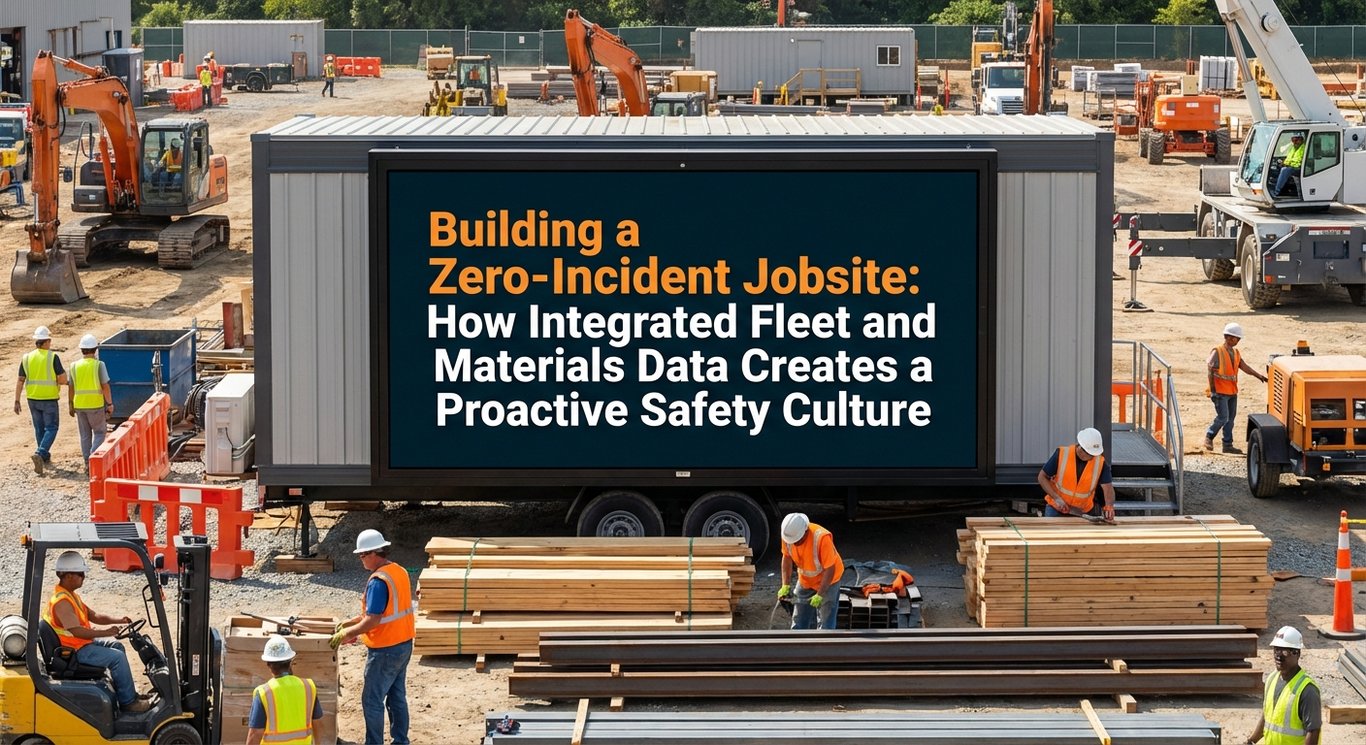
Understanding the Zero-Incident Jobsite Vision
A zero-incident jobsite is exactly what it sounds like: a workplace where accidents, injuries, and near misses are completely eliminated. 👷♂️ Achieving this ambitious goal is the gold standard in construction safety, and it relies heavily on leading indicators like unwavering management commitment and active worker involvement. When leaders and crews work together to prioritize safety every single day, the dream of sending everyone home unharmed becomes a tangible reality.
Moving toward this reality requires a massive shift from reactive to proactive safety cultures. Instead of waiting for an accident to happen before making changes, modern construction teams are using integrated data to spot hazards before they strike. By combining fleet and materials data into one clear picture, safety managers can predict risks and take action long before a worker is ever put in danger.
Fortunately, this proactive approach is already paying off for companies across the industry. Many organizations have successfully achieved extended zero-incident periods by sticking to structured, data-driven safety approaches. These real-world success stories prove that with the right mindset and tools, an accident-free jobsite is completely within reach.
The Role of Management Commitment in Fostering Safety
True safety starts at the very top with strong management commitment. 🏢 When leadership provides top-tier resources, such as modern digital tools and proper safety gear, it sends a clear message that worker well-being is the ultimate priority. By fully supporting their safety teams with the budget and authority they need, executives lay the groundwork for a genuine zero-incident culture.
Furthermore, management can drive safety forward by investing in smart, hazard-reducing strategies. For example, moving complex tasks offsite through prefabrication significantly cuts down on the risks workers face in the field. Coupled with investments in newer, safer equipment, these leadership decisions create a much safer environment for everyone on the ground.
Standardizing Safety Protocols Across Multiple Sites
Managing safety across multiple jobsites often reveals dangerous inconsistencies in daily processes. If one crew handles Job Safety Analyses (JSAs) and near-miss reporting differently than another, critical safety risks can easily slip through the cracks. 📉 These gaps in communication and procedure make it nearly impossible to maintain a zero-incident record across the board.
To fix this problem, companies must implement uniform checklists, workflows, and mobile forms across every single project. When every worker uses the exact same digital form to report a hazard, it creates a standardized playbook that leaves no room for confusion. 📱 This consistency ensures that safety protocols are followed strictly, no matter which site a crew is working on.
“A zero-injury result is composed of content, process, and a culture… Demonstrated management commitment, Staffing for safety, Safety planning, Safety training and education.”[1] -CMAA
The ultimate benefit of this standardization is the ability to sync data in real time for audit-ready safety management. As soon as a checklist is completed in the field, it instantly updates the central system for managers to review. Consequently, safety directors can confidently face any audit, knowing their standardized data is accurate, up-to-date, and completely transparent.
Leveraging Real-Time Incident Reporting with Mobile Tools
Traditional incident reporting methods, like paper forms and clunky spreadsheets, are simply too slow for today’s fast-paced jobsites. When workers have to track down a clipboard to report a hazard, they often skip the process entirely to save time. ⏱️ Therefore, the industry desperately needs quick, field-friendly systems that make reporting as effortless as sending a text message.
Modern mobile platforms solve this issue by putting powerful reporting tools right in the pockets of the crew. With a user-friendly app, a worker can snap a photo and submit a hazard report in under 30 seconds, even if they are working offline in a remote area. 📶 This lightning-fast reporting ensures that dangerous situations are flagged and fixed immediately, keeping the zero-incident goal on track.
Integrating Fleet Data for Equipment Safety and Predictive Insights
Heavy machinery is a major source of jobsite hazards, making fleet data tracking an essential piece of the safety puzzle. By closely monitoring equipment maintenance schedules, daily usage, and operator certifications, companies can prevent devastating mechanical failures. 🚜 Keeping a close eye on this data ensures that only healthy machines and qualified operators are working on the site.
[cta-call:Call2]
“Inconsistent Processes Across Sites Create Safety Chaos… Standardize everything-checklists, workflows, and forms-across every site.”[2] -Field1st
Taking it a step further, integrating this fleet data directly with safety protocols creates an incredibly robust defense against accidents. For instance, smart systems can trigger automated equipment lockouts if an operator’s safety credentials have expired. This seamless integration acts as a digital safety net, physically preventing untrained workers from operating dangerous machinery.
Beyond immediate lockouts, fleet telematics provide powerful predictive analytics that help managers see into the future. By analyzing data trends like harsh braking or engine stress, safety teams can identify high-risk patterns before they result in a crash. Ultimately, these predictive insights allow companies to intervene early and keep their fleet running safely and smoothly.
Materials Data Integration to Minimize Handling Risks
Just like heavy equipment, the way materials are handled can make or break a jobsite’s safety record. Tracking material deliveries, storage locations, and daily usage helps crews avoid the dangerous workarounds that happen when supplies run short. 🧱 When workers aren’t rushing to improvise because of missing materials, the risk of strains, drops, and mishandling injuries drops dramatically.
To maximize this benefit, real-time inventory data must be tied directly into daily pre-task planning and hazard assessments. If a crew knows exactly what heavy materials are arriving and where they need to go, they can plan safe lifting routes before the truck even pulls up. 📋 This proactive alignment of materials and safety planning ensures that every lift and transfer is executed without a hitch.
“Use Predictive Analytics to Spot Risk Early… AI isn’t just hype anymore-it’s your new safety watchdog.”[2] -Field1st
Building Worker Involvement and Training Programs
A zero-incident culture is impossible to build without the active involvement of the workers who face the risks every day. Establishing craft committees, conducting regular safety perception surveys, and running behavior-based safety programs give crews a powerful voice. 🗣️ When workers feel heard and respected, they naturally take greater ownership of their own safety and the safety of their peers.
To support this involvement, companies are utilizing automated training tracking that integrates perfectly with fleet and materials data. If a new type of material or machine arrives on site, the system automatically sends training reminders to the relevant crews. 🎓 This ensures that no one touches unfamiliar equipment or supplies without the exact certifications required to do so safely.
Finally, keeping engagement high requires consistent recognition processes and clear weekly safety communications. Celebrating a crew that properly reported a near miss encourages others to do the same, building a positive feedback loop. By combining regular praise with informative weekly safety talks, managers keep safety top-of-mind and morale incredibly high.
Using Predictive Analytics and KPIs for Proactive Risk Management
The future of construction safety lies in using AI-driven analysis of integrated data to flag risks before they escalate. By feeding fleet, materials, and safety data into predictive algorithms, managers can easily spot high-risk zones or dangerous crew patterns. 🤖 This high-tech approach acts like an early warning system, highlighting invisible hazards that human eyes might easily miss.
“2,566 DAYS ACCIDENT FREE… A near miss notification and mitigation could be turned around in under 24 hours.”[6] -Midwestern Contractors
Of course, predictive AI works best when paired with routine audits of key performance indicators (KPIs). Safety teams must regularly review metrics such as near-miss reports, Corrective and Preventive Action (CAPA) completion times, and mobile app adoption rates. 📊 By constantly measuring these KPIs, companies can proactively adjust their risk management strategies and stay one step ahead of potential accidents.
Case Studies: Achieving Zero Incidents Through Data-Driven Safety
Looking at real-world success stories proves just how effective data-driven safety can be. For example, Midwestern Contractors achieved an astounding 2,566 accident-free days by fully embracing mobile and cloud-based safety tools. ☁️ Their ability to turn around near-miss notifications in under 24 hours shows exactly how rapid communication prevents future injuries.
Similarly, Southland Industries has made massive strides by focusing heavily on providing the right tools, building strong teams, and encouraging active participation. By ensuring every worker has access to top-tier equipment and a voice in safety planning, they cultivated a deeply ingrained safety culture. 🛠️ Their success highlights that technology must always be paired with genuine human engagement to truly work.
These incredible achievements perfectly summarize the lessons learned from utilizing leading indicators on real projects. By prioritizing management commitment and worker involvement, as recommended by industry leaders like CMAA, these companies transformed abstract safety concepts into tangible results. Ultimately, these case studies serve as a powerful blueprint for any organization striving for a zero-incident jobsite.
“By providing the best tools and equipment available, crews can work freely without all of the hassle that comes with using outdated tools and equipment.”[3] -Southland Industries
Overcoming Common Challenges in Data Integration
Despite the clear benefits, many companies struggle to integrate their data because of stubborn information silos. When fleet managers, materials coordinators, and safety directors all use different software that doesn’t communicate, critical safety blind spots are created. 🚧 Breaking down these digital walls is often the biggest hurdle a company faces when trying to modernize their safety program.
Fortunately, the solution to these silos is the adoption of unified platforms designed for seamless, real-time integration. By moving all operations into a single, interconnected system, every department can share data instantly and effortlessly. 💻 This unified approach eliminates dangerous blind spots and ensures everyone is working from the same accurate playbook.
Measuring Success: KPIs and Continuous Improvement
To maintain a zero-incident jobsite, you have to know exactly how to measure your success. This means defining and tracking key metrics like total incident rates, near-miss reporting trends, and overall training compliance. 📈 By keeping a close eye on these specific numbers, safety managers can easily tell if their programs are actually working or if they need a tune-up.
Measuring these metrics is just the first step in an iterative process of continuous improvement. By constantly feeding integrated data back into the system, companies can make ongoing enhancements to their safety protocols year after year. 🔄 This dedication to never settling for “good enough” is what ultimately sustains a zero-incident culture over the long haul.
FAQ
What is a zero-incident jobsite?
A zero-incident jobsite is a construction environment where all accidents, injuries, and near misses have been completely eliminated. It is achieved through proactive safety cultures, strong management commitment, and the use of integrated data to prevent hazards before they occur.
How does integrating fleet data contribute to safety?
Integrating fleet data helps track equipment maintenance, usage patterns, and operator certifications in real time. This allows safety systems to automatically lock out uncertified operators and predict mechanical failures, drastically reducing equipment-related accidents.
Why standardize safety protocols across sites?
Standardizing protocols ensures that every worker uses the exact same checklists and workflows, eliminating dangerous inconsistencies. This uniform approach makes it easier to spot risks, train employees, and maintain audit-ready safety records across multiple locations.
What role does predictive analytics play in proactive safety?
Predictive analytics uses AI to analyze data from fleet, materials, and safety reports to identify high-risk patterns. By flagging these invisible trends early, managers can intervene and correct hazardous situations long before an actual incident happens.
How can worker training be tracked effectively with data integration?
Data integration connects worker training records directly with fleet and materials systems. When new equipment or supplies arrive on site, the system can automatically verify worker credentials and send targeted training reminders to ensure everyone is properly certified.
Conclusion
In summary, integrating fleet and materials data is the ultimate key to transforming a reactive safety program into a proactive, zero-incident culture. By combining standardization, real-time mobile reporting, predictive insights, and deep worker engagement, companies can create an environment where accidents are truly a thing of the past. 🌟 The major takeaways are clear: prioritize unwavering management commitment, leverage mobile tools for field consistency, use data analytics to foresee hidden risks, standardize protocols across every site, and foster a culture of continuous training and audits.
The ultimate payoff for achieving a zero-incident jobsite goes far beyond just compliance; it results in drastically reduced costs, improved daily productivity, and incredibly high team morale. Start building your zero-incident jobsite today by auditing your current fleet and materials data systems to find those hidden gaps. By implementing integrated platforms like those from Field1st or similar tools, and committing to weekly KPI reviews, you can take immediate control of your jobsite’s future. Schedule a safety protocol standardization workshop this week to protect your teams, safeguard your projects, and send everyone home safely every single day. 🚀