What is Just-in-Time Construction?
Just-in-Time (JIT) construction is a smart strategy where materials, equipment, and labor arrive at the job site exactly when they are needed for installation. Instead of dumping piles of lumber or steel on the ground weeks in advance, project managers schedule deliveries to match the daily or weekly work plan. This approach focuses on keeping the workflow smooth and eliminating the need to manage huge stockpiles of inventory that just sit around gathering dust. 🏗️
In contrast to traditional construction methods, JIT changes the way we think about storage and waste. The old way often involves ordering everything at once to secure bulk pricing, which leads to crowded sites and a higher chance of materials getting broken or lost. However, JIT flips this script by prioritizing flow over bulk, ensuring that the site remains open and accessible. By reducing the amount of stuff sitting on the ground, teams can move freely and work more efficiently.
At the heart of this method is the tight coordination of material and fleet deliveries, which acts as the engine for seamless site operations. It isn’t just about ordering supplies; it is about managing the trucks and fleets that bring them. When fleet logistics are perfectly synced with construction schedules, projects run like a well-oiled machine, preventing bottlenecks and keeping the crew busy with the right tasks at the right time. 🚛
Key Principles of JIT Construction Delivery
Successful JIT delivery relies heavily on the synchronization of construction processes, precise timing, and strong supplier relationships. Every piece of the puzzle must fit together perfectly, meaning the project manager, the supplier, and the fleet driver need to be on the same page. If a concrete mixer arrives two hours early, the crew might not be ready; if it arrives two hours late, the whole day is wasted. Therefore, trust and communication between all parties are the glue that holds this system together.
Additionally, JIT is built on “lean” principles, which are all about minimizing waste and creating a continuous flow of value. In construction terms, waste isn’t just trash; it is also wasted time, wasted space, and wasted movement. By adopting these principles, builders aim to strip away any activity that doesn’t add value to the final building. This focus on efficiency ensures that resources are used wisely and that the project moves forward without unnecessary pauses or hiccups. ⏱️
Benefits of Coordinating Material and Fleet Deliveries with JIT
One of the most immediate benefits of JIT is the significant cost savings related to reduced storage and handling. When you don’t have to rent extra land or storage containers to hold months’ worth of supplies, those funds can be used elsewhere. Furthermore, because materials aren’t being moved around the site multiple times just to get them out of the way, labor costs for material handling drop dramatically. 💰
Another major advantage is the reduction of physical waste and improved cash flow for the construction company. Since materials are ordered closer to the time of installation, there is less chance of ordering the wrong amount or having leftovers that end up in a dumpster. Also, because you aren’t paying for materials months before you use them, your company keeps more cash in the bank for payroll and other immediate needs, keeping the business healthy.
Productivity gains are also a huge plus, as JIT helps in significantly reducing downtime for workers. When fleet deliveries are coordinated perfectly, crews never have to stand around waiting for a truck to arrive or searching through a messy pile for the right part. The materials they need are right there, ready to go, which keeps morale high and the project schedule on track. 📈
“Just-in-time construction minimizes waste and enhances efficiency by delivering materials as needed, reducing costs.” -Outbuild
Finally, we cannot overlook the positive impact on sustainability and the environment. By transporting only what is needed, and often consolidating loads more effectively through fleet management, the carbon footprint of the logistics process can be optimized. Less waste on the site means less debris heading to the landfill, making JIT a greener choice for modern construction projects that care about the planet. 🌍
How JIT Reduces Waste and Storage Needs on Construction Sites
JIT helps construction sites avoid the common trap of overstocking, which often leads to material deterioration. When wood, drywall, or steel sits out in the elements for too long, it can warp, rot, or rust before it is ever installed. By bringing these items in right before they are needed, they stay fresh and in perfect condition, ensuring that the building quality remains high and money isn’t thrown away on damaged goods.
Moreover, a site with less inventory is a safer, cleaner, and less cluttered place to work. Without pallets of bricks blocking walkways or pipes stacked precariously in corners, the risk of trips and falls goes down significantly. A tidy site allows workers to move equipment around easily and helps safety officers maintain a secure environment for everyone involved. 👷
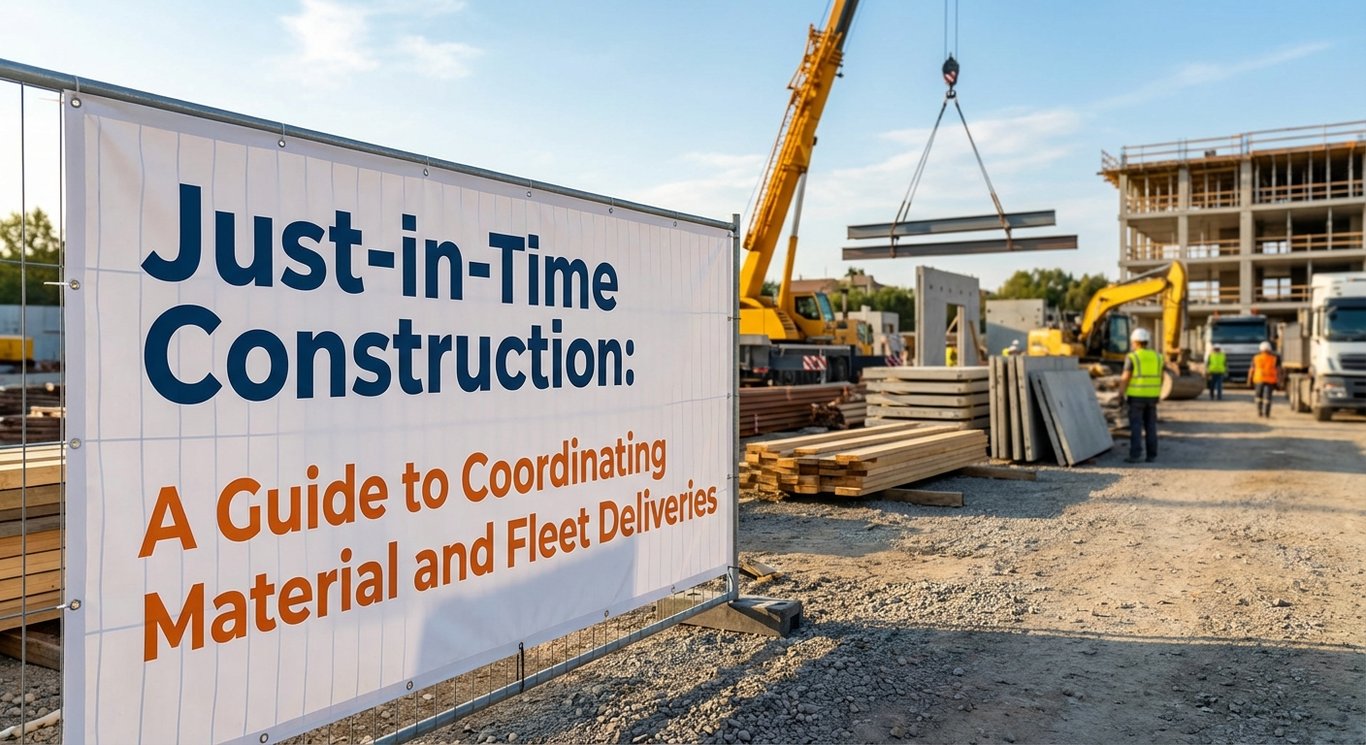
This approach is especially helpful for space optimization on tight urban sites where there is literally no room for storage. Imagine building a high-rise in a busy downtown area; there is no space to store steel beams or pallets of glass. JIT allows these projects to happen by treating the delivery truck as the temporary storage unit, lifting materials directly from the fleet vehicle to the installation floor. 🏙️
Streamlining Fleet Deliveries for Just-in-Time Efficiency
To make JIT work, scheduling fleet arrivals to match installation timelines is absolutely critical. It requires a calendar that is managed down to the hour, ensuring that the crane is free exactly when the flatbed truck pulls up. This level of detail prevents traffic jams at the site gate and ensures that the unloading process is quick and efficient, letting the driver get back on the road and the crew get back to work.
[cta-call:Call2]
“42% reduction in on-site inventory during the panel phase.” -Outbuild
Achieving this requires advanced coordination tools and deep partnerships with suppliers to handle the logistics. Many companies now use software that tracks trucks in real-time, so the site superintendent knows exactly when a load will arrive. By sharing this data, suppliers become partners in the project’s success, adjusting their routes and departure times to fit the changing needs of the construction site. 🚚
Improving Quality Control and Safety in JIT Construction
JIT promotes better quality control because it allows for the immediate inspection and, if necessary, return of damaged goods. When a small batch of windows arrives, the site manager can check them right away as they come off the truck. If there is a crack, it is spotted instantly, and the issue can be resolved quickly, unlike finding a broken window at the bottom of a stack three months later.
Safety is further enhanced because there are simply fewer hazards associated with reduced on-site materials. Large piles of inventory can hide safety risks, block emergency exits, or become unstable and collapse. By keeping the inventory volume low, the site remains open and visible, making it much easier to spot potential dangers and keep the crew safe from harm. 🦺
Lastly, this method leads to better compliance and allows workers to focus purely on their tasks. When the site isn’t chaotic, workers aren’t distracted by having to navigate an obstacle course of supplies. They can focus on their craft, following safety protocols more closely and doing a better job, which ultimately results in a higher quality building.
Steps to Implement JIT for Material and Fleet Coordination
Planning and Scheduling
The first step is to develop detailed look-ahead schedules that integrate both procurement and logistics. Project managers need to look weeks or months into the future to predict exactly when specific phases will begin. This isn’t just a rough guess; it needs to be a precise plan that tells the purchasing department exactly when to trigger an order so it arrives on the specific day it is required. 📅
“Successful JIT requires constant communication between all parties involved-contractors, suppliers, and delivery teams.” -RDash
Once the schedule is set, you must align the project phases with specific delivery windows. This means communicating with the site team to understand their installation speed. If the framers are faster than expected, the lumber delivery needs to be moved up. This dynamic adjustment ensures that the flow of work is never interrupted by a lack of materials.
Supplier and Fleet Partnerships
Building reliable relationships for on-demand deliveries is the secret sauce of JIT. You need suppliers who understand that “Tuesday” means “Tuesday morning,” not “sometime next week.” These partners need to be committed to your schedule and willing to be flexible if things change, acting as an extension of your own team rather than just a vendor.
To support these relationships, use technology for real-time tracking and communication. GPS tracking on fleet vehicles allows the site manager to see exactly where a delivery is, removing the guesswork. This transparency builds trust and allows the site team to prepare for arrival, ensuring the crane or forklift is ready the moment the truck backs in. 📱
Challenges and Risks of JIT Construction Delivery
While JIT is powerful, it does come with risks, primarily regarding supply chain disruptions and delays. If a factory shuts down or a delivery truck breaks down, there is no buffer stock on site to keep the crew working. This can lead to an immediate work stoppage, which is the nightmare scenario for any project manager trying to meet a deadline. ⚠️
This method also creates a heavy dependency on precise coordination between many different people. If the communication chain breaks-for example, if an email is missed or a phone call is forgotten-the whole system can crumble. It requires a high level of discipline and organization that not every construction team is used to maintaining.
“PPC rose from 72% to 86% over six weeks as crews installed what arrived that day.” -Outbuild
To handle these risks, smart managers offer mitigation strategies like contingency planning. This might mean keeping a very small “safety stock” of critical items like fasteners or having backup suppliers ready to go. Having a Plan B ensures that a small hiccup in the supply chain doesn’t turn into a major project disaster.
Case Studies: Successful JIT Implementations
Consider a recent high-rise project in a dense city center that utilized JIT to save both time and inventory costs. By scheduling steel deliveries to arrive only at night, the team avoided rush hour traffic and lifted beams directly from the truck to the structure. This strategy eliminated the need for a storage yard entirely and shaved weeks off the overall construction schedule.
In another example involving fleet coordination, a large hospital project used GPS tracking to manage concrete deliveries. Because concrete has a short shelf life once mixed, timing was everything. The precise coordination ensured that mixers arrived exactly as the previous one finished pouring, preventing cold joints in the concrete and ensuring structural integrity. 🏥
These stories teach us valuable lessons for material delivery best practices. The main takeaway is that communication is just as important as the materials themselves. Successful projects invest time in planning logistics before a shovel ever hits the ground, proving that preparation is the key to JIT success.
Tools and Technology for JIT Coordination
To pull this off, I highly recommend using specialized construction management software for scheduling and tracking. Platforms like Procore or Autodesk Build allow teams to share schedules with suppliers instantly. These tools help everyone visualize the timeline and understand how their specific delivery fits into the bigger picture. 💻
Additionally, mobile apps for real-time fleet management are game-changers for the guys on the ground. Drivers can update their status with a single tap, and site superintendents get push notifications when a load is nearby. This instant flow of information bridges the gap between the road and the job site, making JIT a reality.
FAQ
What is the main goal of Just-in-Time construction?
Minimizing excess inventory and waste by delivering materials exactly when required.
How does JIT improve cash flow in construction projects?
By avoiding early payments for unused materials and reducing storage costs.
What are the risks of JIT delivery in construction?
Potential delays from supply issues, requiring strong supplier coordination.
Can JIT be used for fleet management in construction?
Yes, by scheduling equipment arrivals to match work phases precisely.
Is JIT suitable for all construction project sizes?
Best for projects with predictable schedules; smaller jobs may adapt easily.
Conclusion
In summary, adopting Just-in-Time construction can revolutionize the way you manage your projects. By coordinating material and fleet deliveries, you unlock significant benefits like lower costs, improved efficiency, and a drastic reduction in waste. It transforms a chaotic, cluttered job site into a streamlined operation where safety and productivity thrive. While it requires discipline and strong partnerships, the payoff in project flow and profitability is well worth the effort. 🌟
Here are the key takeaways to remember for your next build:
- Precise scheduling is the engine that drives JIT success.
- Strong ties with reliable suppliers are essential to avoid delays.
- Technology and tracking tools greatly enhance coordination.
- Reducing on-site inventory lowers safety risks and waste.
- Start implementing Just-in-Time Construction today by auditing your current delivery processes and partnering with reliable fleet providers to optimize your next project.