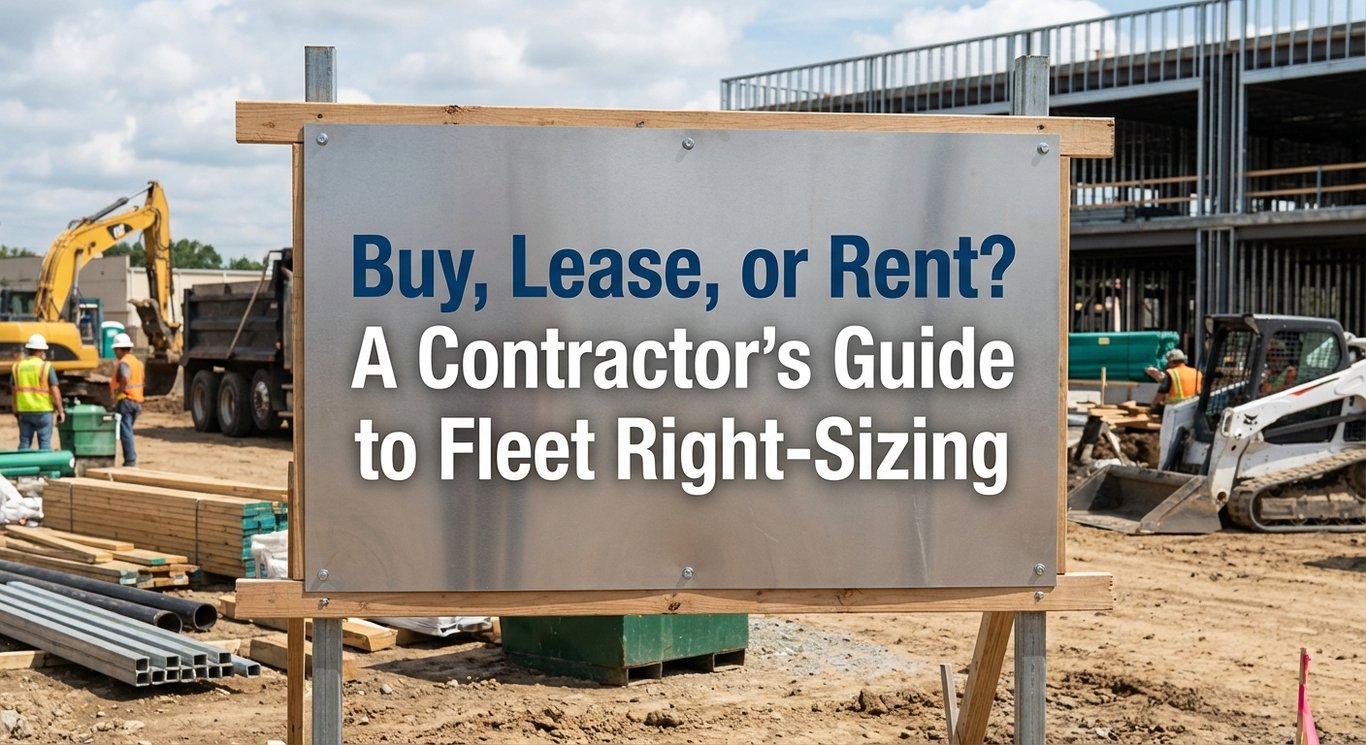
Buy, Lease, or Rent? A Contractor’s Guide to Fleet Right-Sizing
Introduction: Why Fleet Acquisition Strategy Matters for Contractors
For any contractor, fleet right-sizing is about much more than just counting trucks or excavators in the yard. It is the strategic process of matching your asset count, equipment types, and financing methods to your actual workload and available cash flow. 🚛 To get this balance right, you generally have three main paths: buying, leasing, or renting. Each option serves a different purpose, and the “best” choice often changes depending on the specific job or the current economic climate.
Consequently, the way you acquire these assets directly impacts your total cost of ownership (TCO) and your bottom line. 📉 Making the wrong choice can tie up cash that you need for payroll, or it can leave you without the equipment you need to finish a job on time. By understanding how buying, leasing, and renting affect your project bidding and long-term competitiveness, you can build a decision framework that keeps your business profitable and agile.
Understanding Fleet Right-Sizing: More Than Just Vehicle Count
Right-sizing is often confused with downsizing, but they are not the same thing. True right-sizing is about aligning your fleet’s size, age, and capability with your current and forecasted work. This means having enough trucks to handle your busy season without letting them gather dust during the slow months. It also involves looking at project-based variations to ensure you aren’t paying for heavy machinery that only gets used once a year.
To do this effectively, you need to track specific metrics. 📊 Contractors should keep a close eye on utilization hours, idle time, and maintenance spend per unit. It is also helpful to calculate the cost per billable hour or per job. These numbers tell the real story of how efficient your fleet is and help you spot areas where you are bleeding money.
Furthermore, right-sizing interacts directly with how you pay for your equipment. Fleets that are 100% owned often struggle with underutilization because you can’t easily get rid of a paid-off truck just because work slows down. On the other hand, smart use of leases and rentals can act as a buffer. This allows you to handle peak workloads or experimental jobs without being stuck with a permanent payment.
“Renting is typically the best option for seasonal swings in demand, but it can also be a great way to test out new technology to see how it fits into a fleet’s operation before making a bigger investment.” -CDK Global
Option 1 – Buying: When Ownership Makes the Most Sense
Buying is the traditional route for many contractors, involving either a cash purchase or a financed loan. This method is usually best for your “core” assets-the vehicles and equipment you use almost every single day. 🚜 Think of your primary work trucks, excavators, or loaders that are always moving. If a piece of equipment is going to be utilized year-round for many years, ownership is often the default choice.
The primary advantage of buying is that you have full control. You can customize the vehicle with racks, decals, or aftermarket parts exactly how you want them. Additionally, there are no mileage limits or usage restrictions, so you can run the equipment as hard as you need to. From a financial perspective, you may benefit from tax breaks like depreciation, and once the loan is paid off, you own an asset that has equity and resale value. 💰
However, buying comes with significant drawbacks. The biggest hurdle is the high upfront capital requirement, which can drain your cash reserves. You are also exposed to market risks; if the value of used equipment drops, you might lose money when you sell. As the equipment ages, your maintenance costs will inevitably rise, and you are responsible for the administrative headache of disposing of the asset when you are done with it.
For example, buying makes perfect sense for a general contractor who has a five-year contract requiring a specific type of dump truck daily. The utilization is high, and the contract guarantees income to cover the loan. Conversely, buying a specialized trencher for a three-month project is usually a mistake. It ties up capital that could be used for materials or labor, leaving you with a machine that sits idle once the job is done.
[cta-call:Call2]
Option 2 – Leasing: Balancing Cash Flow, Technology, and Risk
Leasing acts as a middle ground between buying and renting. In simple terms, an operating or finance lease allows you to pay for the use of a vehicle over a set period, rather than paying for the whole vehicle upfront. 📝 This shifts your focus from “owning” the metal to simply paying for the productivity it provides. For contractors, this can be a smart way to get premium equipment without the premium price tag of a down payment.
One of the biggest advantages of leasing is better cash flow management. Leases typically require lower upfront costs and offer predictable monthly payments, which makes budgeting much easier. Leasing also allows you to cycle through vehicles faster, meaning your crews are always driving newer, safer, and more reliable equipment. Some full-service leases even include maintenance, taking that worry off your plate entirely. 🛠️
“While the upfront cost to purchase a truck is much higher than leasing, it allows a fleet to build equity in an asset that can continue generating revenue long after they pay off the truck. This can translate into significant cost savings over the long term, especially if the fleet keeps the truck for several years.” -CDK Global Heavy Truck
There are downsides to consider, though. Leases often come with strict mileage or engine-hour limits, and if you go over them, the penalties can be steep. You can also be charged for “wear and tear” at the end of the term if the equipment is banged up. Perhaps most importantly, you do not build equity. At the end of the lease, you usually hand the keys back and walk away with nothing to show for your payments.
Leasing aligns perfectly with right-sizing when you have a steady, growing operation but want to avoid the risks of ownership. It is ideal for contractors who want modern fuel efficiency and technology to attract drivers. By leasing, you can limit your exposure to major repair bills that come with older vehicles, keeping your fleet young and your uptime high.
“Our research found that a full-service lease could save up to 19 percent when compared to ownership in the examined applications for class 8 tractors.” -KPMG
Option 3 – Renting: Flexibility for Peaks, Pilots, and Unknowns
Renting is distinct from leasing because it is designed for short-term needs, ranging from a single day to a few months. Whether it is a short-term rental for a week or a long-term rental for a season, the core features are speed and low commitment. You get the equipment you need immediately, and you can return it the moment the job is done. ⏱️
The key advantage here is flexibility. Renting requires very low upfront costs, allowing you to scale your fleet up instantly during seasonal peaks or when you land a sudden contract. It is also the perfect way to test out new technology or unfamiliar brands. If you aren’t sure if an electric excavator will work for your team, renting it for a month lets you pilot the tech without betting your business on it.
However, renting is generally the most expensive option if you look at the cost per day over a long period. If you rent a bulldozer for 12 months straight, you will likely pay much more than if you had leased or financed it. You also face availability risks; in a tight market, the rental yard might not have what you need. Therefore, contractors should watch their rental bills closely and convert long-term rentals into leases or purchases if the equipment stays on site too long.
“Short-term and long-term rentals offer the ultimate flexibility… renting helps you scale your fleet fast without the long-term commitment.” -AP Fleet Management
 Key Cost Drivers: Total Cost of Ownership Across Buy, Lease, and Rent
To make the best decision, you have to look at the Total Cost of Ownership (TCO). TCO isn’t just the monthly payment; it includes acquisition costs, financing interest, fuel, maintenance, insurance, administrative time, and the final resale or return costs. 🧮 When you add all these up, the “cheapest” monthly payment might actually be the most expensive option in the long run.
“According to CDK data, 51% of fleets are concerned about the impact of inflation and a potential recession. Given the current economic uncertainty, fleets may prefer a set monthly fixed cost for their assets to better manage costs.” -CDK Global Heavy Truck
Each option impacts your cash flow and balance sheet differently. Buying involves a large capital outlay and puts a depreciating asset on your books, which can affect your borrowing power. Leasing often keeps debt off the balance sheet (depending on the lease type) and smooths out cash flow. Renting is purely an operating expense, which is simple to account for but can eat into profit margins if not managed well.
Maintenance and downtime are also huge cost drivers. Newer leased or rented units usually break down less often, saving you money on emergency repairs and keeping your projects on schedule. In contrast, older owned assets might seem “free” because they are paid off, but they often require more shop time and admin resources to keep running, which costs you money in lost productivity.
Contractors should model their TCO per hour or per job over several years. For example, compare the cost of buying a truck and running it for 7 years versus leasing two consecutive trucks for 3.5 years each. You will often find that the “cheapest sticker price” rarely equals the lowest lifecycle cost once fuel economy and repairs are factored in.
Right-Sizing Framework: How Contractors Decide Between Buy, Lease, or Rent
Deciding between these three options requires a step-by-step framework. First, assess your workload and utilization: how often will this asset truly be used? Next, look at your risk tolerance and capital availability. Do you have cash to burn, or do you need to preserve liquidity? Finally, consider your strategic priorities-is it more important to have the newest tech, or to have the lowest possible fixed costs?
A smart strategy is to segment your fleet. Your “core” assets-the ones you use daily-are usually best to buy. Your “mid-term” needs, like a project lasting 18 months, are often perfect candidates for leasing. Finally, your “peak” or seasonal needs should be handled by renting. This layered approach prevents you from paying for equipment that sits idle.
Contract length and backlog visibility also play a huge role. If you have long, predictable contracts with a government entity or a major developer, you can confidently buy or lease. However, if your work is project-based and uncertain, renting offers the safety valve you need. You don’t want to be stuck with a fleet of financed trucks if the market suddenly dries up.
“Renting is typically the best option for seasonal swings in demand, but it can also be a great way to test out new technology to see how it fits into a fleet’s operation before making a bigger investment.” -CDK Global Heavy Truck
Economic uncertainty is another factor. In times of high inflation or economic instability, many fleets shift toward leasing and renting. 📉 This preserves cash and avoids the risk of residual values dropping. It allows contractors to stay agile and react to market changes without being weighed down by heavy debt.
As a rule of thumb, use this simple matrix: If utilization is over 70% and the need is long-term (>3 years), Buy. If utilization is high but the term is medium (2-4 years), Lease. If utilization is low, sporadic, or the need is short-term (<1 year), Rent. This simple logic can save you thousands.
“Leasing maximizes flexibility and cash flow… while keeping fleets newer and more fuel-efficient. Buying builds long-term value and control.” -Fleetio
Financing, Tax, and Accounting Considerations for Contractors
From a tax and accounting standpoint, how you acquire equipment changes your financial picture. Purchases generally allow you to claim depreciation, which can lower your tax bill in profitable years. Lease payments are often treated as a business expense, and rental costs are fully deductible operating expenses. 🧾 However, tax laws change, so it is critical to consult with a CPA to see which method benefits your specific business situation.
Access to credit is another major influence. If interest rates are high, buying becomes more expensive, making leasing potentially more attractive. Additionally, you have to consider the “opportunity cost” of your capital. If you spend $100,000 buying a loader, that is $100,000 you can’t use to hire new staff or market your business. Leasing or renting keeps that liquidity available for other growth opportunities.
Finally, lenders and lessors look at your fleet’s health. They want to see that you are managing your assets well. Having accurate data on the age, condition, and utilization of your fleet can actually help you get better financing terms. Lenders feel safer giving money to a contractor who can prove their equipment is making money, rather than sitting in a yard.
Operational and Strategic Impacts: Uptime, Technology, and Talent
Operational efficiency is often higher with newer equipment. Leased or rented machinery is typically newer, meaning it has better fuel efficiency and modern safety features. This directly impacts your operating margins by lowering fuel bills and reducing the risk of accidents. 🛡️ Reliable equipment also means less downtime, ensuring you meet project deadlines.
“A full-service lease could save up to 19 percent when compared to ownership in the examined applications for class 8 tractors.” -KPMG
There is also a human element to this. In a tight labor market, skilled operators prefer to work with modern, comfortable, and safe equipment. Access to the latest technology can be a powerful recruiting tool. Furthermore, newer vehicles help you stay compliant with increasingly strict emissions and safety regulations without needing expensive retrofits.
On the flip side, ownership allows for deep customization. If your operations require very specific tool bodies or modifications, buying is often the only way to go. Leasing and renting usually restrict heavy modifications. However, if your needs are standard, leasing simplifies the process of cycling to newer platforms every few years.
Ultimately, these decisions tie back to your strategy. A right-sized fleet that is financed appropriately allows you to bid more competitively. You aren’t padding your bids to cover the cost of idle trucks. Instead, you are lean and agile, able to respond faster to market shifts than competitors who are weighed down by heavy, aging fleets.
 Using Data and Telematics to Continuously Right-Size Your Fleet
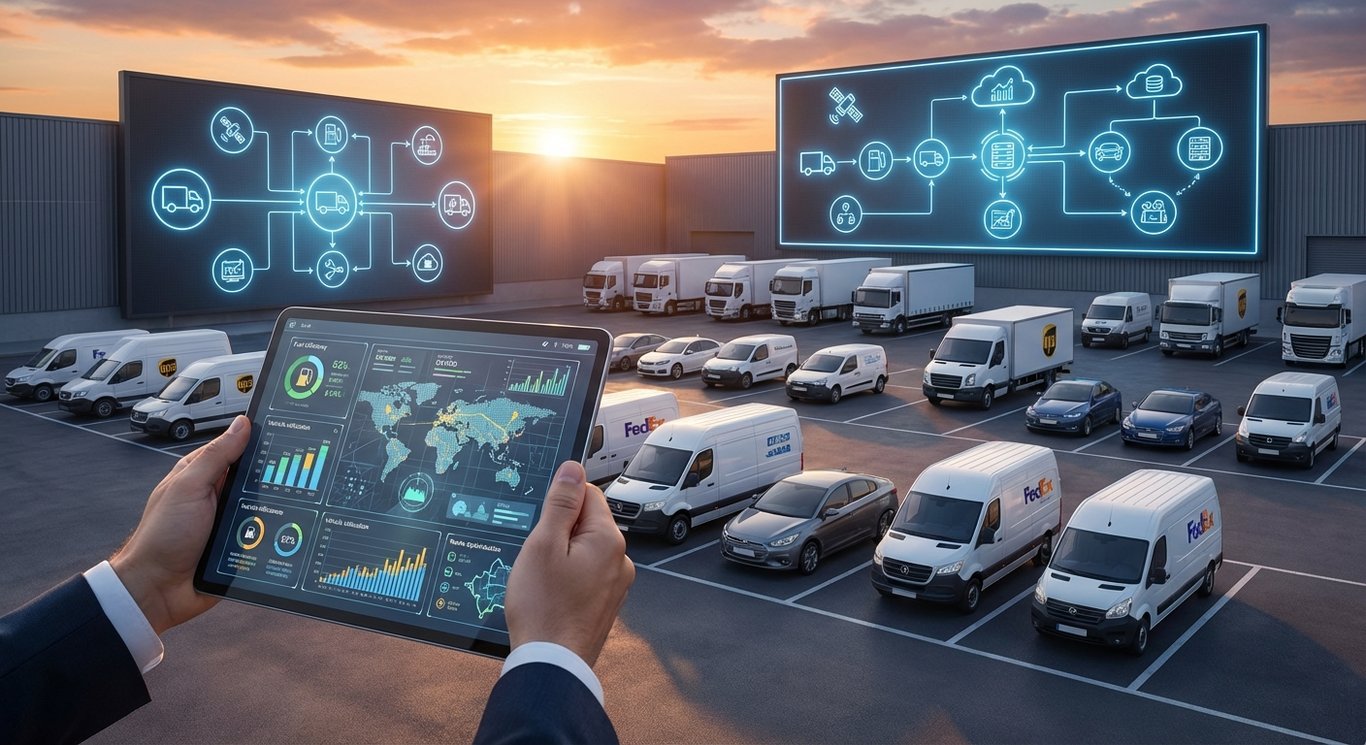
Modern fleet management relies heavily on data. Telematics software can track exactly how much a vehicle is being used, how much it idles, and how much fuel it burns. 💻 This removes the guesswork from right-sizing. Instead of “feeling” like you need another truck, you can look at the data and see if your current trucks are actually fully utilized.
This data can reveal surprising truths. You might find that a piece of equipment you own is only used 10% of the time; this is a clear signal to sell it and rent one when needed. Conversely, if you see that you have been renting a generator for six months straight, the data will show that purchasing or leasing it would have been cheaper. Data helps you spot these imbalances before they cost you too much.
Contractors should establish a review cadence. At least once a quarter or annually, sit down with your reports. Compare your actual usage against your upcoming project pipeline. This regular check-up ensures your buy/lease/rent mix evolves as your business grows, rather than staying stagnant.
“According to CDK data, navigating trucks with new technology ranks as one of the top high-impact challenges for fleets. In these cases, renting can become attractive for a fleet to try before they buy.” -CDK Global Heavy Truck
Case-Based Recommendations by Contractor Type and Size
For small contractors or startups, capital is often tight. The best strategy here is usually to rely heavily on rentals for heavy equipment and use selective leasing for work trucks. You might buy your primary tools, but avoiding heavy debt allows you to survive the cash flow gaps that kill many new businesses. 🏗️
Mid-sized contractors with steady backlogs should use a blended strategy. Your core fleet-the machines that go out every day-should be owned or on long-term leases to lower costs. Then, use rentals to absorb seasonal spikes or to test new markets. This balance gives you stability without sacrificing agility.
Large or multi-regional contractors often have centralized fleet policies. They benefit from strong purchasing power and can negotiate excellent full-service lease deals. These companies often own strategic assets but rely on structured rental partnerships to handle projects in different geographic areas. This keeps their logistics simple and their overhead manageable.
Market conditions can shift these strategies for everyone. For example, if interest rates spike, even large contractors might shift from buying to leasing to keep cash free. If a new environmental regulation passes, small contractors might rent compliant machines until they can afford to upgrade their owned fleet. Being adaptable is key.
Frequently Asked Questions about Buy, Lease, or Rent for Fleet Right-Sizing
1. Is it cheaper to buy or lease construction equipment in the long run?
The long-term cost really depends on how you use the equipment. It isn’t just about the monthly payment. You have to factor in utilization, maintenance costs, resale value, and financing terms. Research has shown that for certain heavy-duty truck applications, full-service leases can actually outperform ownership because they eliminate unpredictable repair costs and improve fuel economy.
Generally speaking, if you have a high-utilization asset that you plan to keep for 7-10 years, buying is often cheaper because you eventually stop making payments. However, if you need to cycle equipment every 3-4 years to keep up with technology or avoid breakdowns, leasing is often the more cost-effective route.
2. When does renting make more sense than buying for contractors?
Renting is the clear winner for short-term needs. If you have a seasonal peak, a one-off project requiring specialized gear, or you are entering a new market where you haven’t won long-term contracts yet, you should rent. It is also a great strategy to bridge the gap while you are waiting for a new vehicle order to be delivered.
However, be careful of the “rental trap.” If you find yourself renting the same excavator for 8 or 9 months of the year, you are likely overpaying. Sustained, year-round rental is a signal that it is time to look at a lease or a purchase.
3. How does fleet right-sizing affect my cash flow and ability to win bids?
When you align your acquisition method with your projects, you reduce your fixed overhead. If you aren’t paying for idle trucks, your operating costs are lower. This improves your cash flow stability and allows you to price your bids more competitively because you don’t have to bloat your numbers to cover the cost of unused equipment.
Flexible access to assets also helps you win work. If you can mobilize quickly by renting or leasing equipment for a new contract without needing months to secure capital for a purchase, you become a more attractive partner to clients. You can say “yes” to jobs that competitors might have to turn down.
4. What fleet metrics should I track before changing my buy/lease/rent mix?
You should prioritize tracking utilization rate, idle time, and maintenance cost per unit. It is also smart to track breakdown frequency and “rental days per year” by equipment type. Finally, try to calculate your cost per job to see which assets are profitable and which are dragging you down.
These metrics act as a diagnostic tool. They will reveal if you have owned units that are sitting around (sell them), rentals that are being used constantly (buy/lease them), or aging assets that are costing more in repairs than they are worth (cycle them out).
5. How often should contractors review their fleet acquisition strategy?
At a minimum, you should conduct a strategic review annually. However, if your company is growing rapidly or if the market is volatile (like during high inflation), you should check quarterly. You need to look at financial data, operational metrics, and your project backlog all at once.
This shouldn’t be a solo task. Involve your finance team, operations manager, and project managers. This ensures that your decisions to buy, lease, or rent reflect the reality of the field as well as the priorities of the bank account.
Conclusion: Turning Fleet Decisions into a Strategic Advantage
To summarize, there is no single “right” way to acquire equipment, but there is a right way for your specific situation. Buying is your strongest option for core, high-utilization assets where you want control and equity. Leasing is a powerful tool to preserve cash, keep your fleet modern, and smooth out your budget. Renting offers the ultimate flexibility for seasonal peaks and uncertain opportunities, even if it comes at a higher daily cost. 🏆
Remember that right-sizing is not a one-time event; it is an ongoing process. Your fleet strategy should evolve as your business grows and as market conditions change. By constantly monitoring your utilization data and remaining open to different financing methods, you can ensure your fleet is always an asset, never a liability.
Now is the time to take action. Start by auditing your current fleet utilization and classifying every asset as “core,” “seasonal,” or “specialty.” Map each category to the best acquisition method: buy the core, lease the medium-term, and rent the specialty items. Build a simple Total Cost of Ownership model for your key equipment types to see the real numbers. Don’t just guess-schedule a fleet strategy review with your team, engage your trusted dealers or rental partners, and start making data-driven decisions today. Contractors who proactively right-size their fleets will gain a serious advantage in cost control and long-term profitability. 🚀