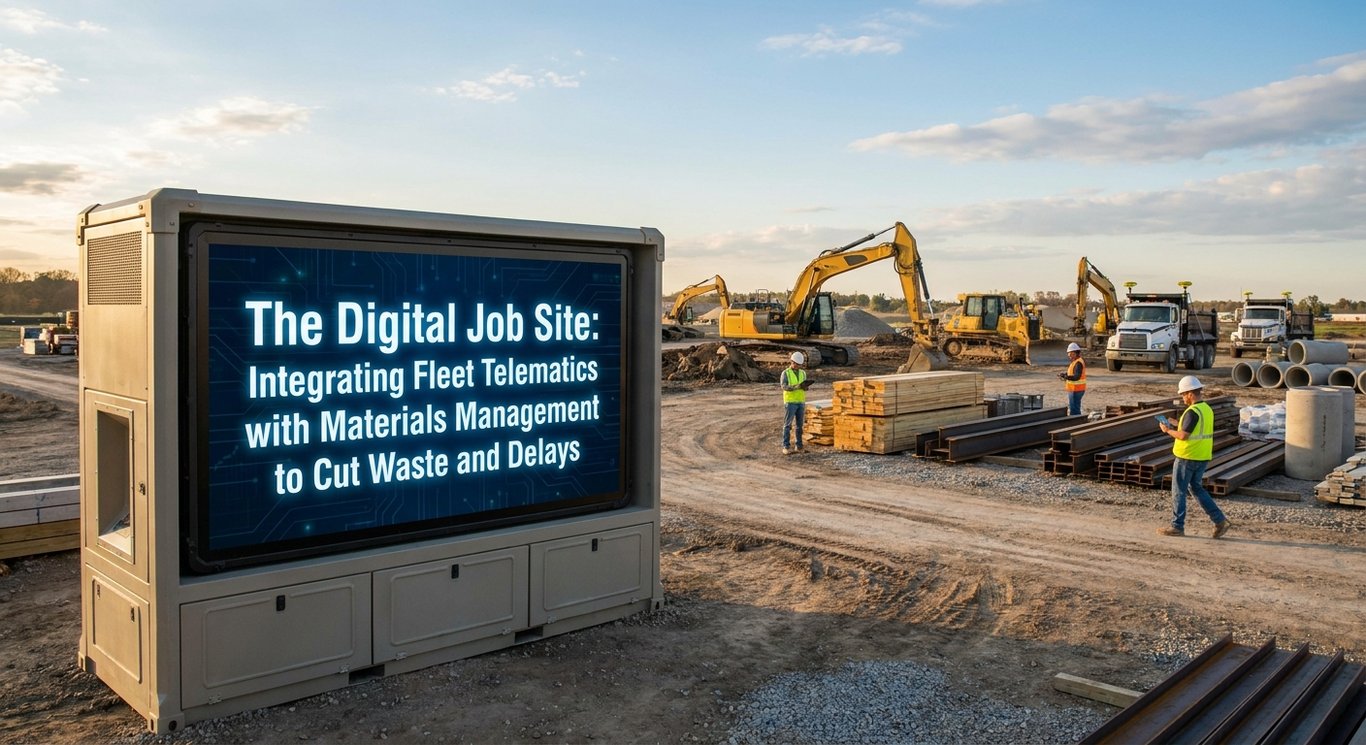
The Digital Job Site: Integrating Fleet Telematics with Materials Management to Cut Waste and Delays
The construction industry is undergoing a major transformation, and at the center of it is the concept of the digital job site. In heavy civil and construction projects, fleet telematics and materials management systems are increasingly being connected to provide real-time visibility into equipment, trucks, and material flows across every phase of a project. Instead of relying on radio calls, paper tickets, and gut instinct, project teams now have the ability to see exactly where their assets are, what materials are moving, and where inefficiencies are hiding. The ultimate goal of this integration is straightforward but powerful: reduce waste, cut idle time, and eliminate schedule delays by turning fragmented data streams into coordinated, actionable insights that the whole team can act on. 🚧
To understand why this integration matters, it helps to define the two core domains involved. Fleet telematics refers to the collection and transmission of real-time vehicle data – including GPS location, engine diagnostics, driver behavior metrics like speed and hard braking, fuel consumption, and equipment utilization. Materials management, on the other hand, covers the full lifecycle of construction materials – from the quarry or batch plant all the way to the job site – including inventory levels, delivery scheduling, and order tracking. Historically, these two functions have operated in completely separate silos. Fleet teams tracked trucks while materials coordinators managed orders, and rarely did these two worlds talk to each other. The result was chronic miscommunication, duplicate effort, and inefficiencies that quietly drained project budgets and timelines.
This article is designed to give construction managers, fleet operators, and operations leaders a comprehensive roadmap for modernizing their job sites through telematics and materials management integration. We’ll cover the core benefits of connecting these systems, the key technologies that make it possible, the most common integration models in use today, and a practical step-by-step implementation guide. We’ll also dig into data governance, security best practices, change management strategies, and real-world use cases that demonstrate measurable reductions in waste and delays. Whether you’re just starting to explore digitization or ready to scale an existing pilot, this guide has something for you. 📋
Understanding Fleet Telematics and Materials Management Basics
Fleet telematics is a broad term that covers a wide range of hardware and data collection technologies installed on vehicles and heavy equipment. At its core, a telematics system includes GPS units for location tracking, onboard diagnostic (OBD) modules that read engine fault codes and performance data, electronic logging devices (ELDs) for hours-of-service compliance, and sensors that monitor fuel consumption, load weight, and engine hours. Driver behavior metrics – such as speeding events, harsh braking, excessive idling, and seatbelt usage – are also captured and transmitted. All of this data is collected continuously and sent wirelessly via cellular or satellite networks to central fleet management platforms where it can be analyzed, visualized, and acted upon. The richness of this data stream is what makes telematics such a powerful tool when it’s properly integrated with other operational systems.
Materials management in a construction context is equally complex. It involves planning material needs based on project schedules, procuring materials from suppliers, coordinating transportation from plants or quarries, receiving and inspecting deliveries at the job site, and tracking inventory levels throughout the project lifecycle. Common materials in heavy civil work include asphalt, aggregate, concrete, steel, and bulk fill. Without real-time visibility into where materials are in the supply chain, project teams frequently face over-ordering – which ties up cash and creates storage headaches – or under-ordering, which brings production to a grinding halt. Bottlenecks at job site entrances, where trucks queue for extended periods waiting to unload, are another costly symptom of poor materials visibility. These problems are not unique to small contractors; they affect large organizations too when systems aren’t connected. 😤
The reason integrating these two domains is so valuable comes down to a simple truth: telematics knows where everything is, and materials management knows what everything should be doing. Telematics can reveal where trucks and equipment are located at any given moment, how efficiently they’re being used, and how material loads are moving through the supply chain. Materials management systems track quantities, purchase orders, delivery plans, and site demand. When these two data sets are connected, they create a single operational view that enables “just-in-time” materials delivery – getting the right material to the right place at the right time, without excess inventory sitting on site. This combination also supports more reliable production rates at pavers, batch plants, and grading operations, which is ultimately what keeps projects on schedule and on budget.
Why Integrating Telematics with Materials Management Reduces Waste and Delays
Construction job sites are naturally complex environments, and that complexity creates plenty of opportunities for waste to creep in. Some of the most common culprits include excess idle time from trucks waiting at plants or job sites, unnecessary return trips caused by poor dispatch coordination, overstocked materials that tie up capital and clutter the site, understocked materials that stop production cold, and rework caused by late or incorrect deliveries. What makes these problems so persistent is that they’re often invisible – they don’t show up clearly in any single system because the data needed to spot them is scattered across spreadsheets, phone calls, and disconnected software tools. Disconnected systems don’t just fail to solve these problems; they actively make them worse by creating information gaps that lead to reactive rather than proactive decision-making.
Integrated telematics and materials data change the game by making these inefficiencies visible in near real-time. When truck locations, load status, and cycle times are tied directly to material orders, batch plant output, and site demand, operations managers can balance material flows and reduce bottlenecks before they spiral into major delays. For example, if telematics data shows three trucks queued at a plant while the job site paver is sitting idle waiting for material, a dispatcher can immediately re-route or reassign loads to fix the imbalance. This kind of real-time coordination cuts fuel waste from unnecessary idling, reduces the number of trucks needed to maintain production, and dramatically improves asset utilization across the fleet. The efficiency gains aren’t marginal – they compound across every truck, every shift, and every project. 📊
The impact on schedule performance is just as significant. Integrated alerts for late trucks, low inventory thresholds, and equipment breakdowns allow project managers to make proactive decisions rather than scrambling to react after the damage is done. If a key haul truck breaks down mid-route, the system can immediately flag the gap in material supply and trigger a replacement dispatch before the paver runs out of material. If inventory at the job site drops below a defined threshold, an automated alert can prompt a new order before a stockout occurs. These kinds of early warning capabilities prevent the cascading delays that so often turn a minor disruption into a full-day production loss. Over the course of a long project, avoiding even a handful of these cascading events can mean the difference between finishing on time and paying liquidated damages.
The financial benefits of integration extend well beyond fuel savings and schedule performance. When telematics data is connected to inventory and parts management systems, fleets gain real-time visibility into stock levels, usage patterns, and reorder requirements – which directly reduces the cost of carrying excess inventory. Fewer unplanned breakdowns mean lower emergency repair costs and less unplanned downtime. Faster procurement cycles, driven by automated reorder triggers based on actual usage data, reduce the risk of running out of critical parts or materials at the worst possible moment. Industry benchmarks consistently show that companies that invest in connected fleet and materials systems achieve meaningful reductions in both operational costs and project delivery timelines, making integration one of the highest-ROI investments available to construction operators today. 💰
“Telematics in construction refers to the use of GPS tracking, onboard diagnostics, and wireless communication technology to monitor construction vehicles and heavy equipment in real time.” -Upperinc
Core Technologies Powering the Digital Job Site
The hardware layer of a modern telematics system is more sophisticated than many people realize. GPS devices provide continuous location tracking for every vehicle and piece of equipment in the fleet. OBD and engine diagnostic modules plug into a vehicle’s data bus to capture fault codes, engine performance metrics, and operating parameters in real time. Electronic logging devices (ELDs) record hours of service for compliance purposes while also providing valuable trip and utilization data. Specialized sensors can monitor fuel tank levels, hydraulic pressures, load weights, and even tire pressure. All of this data is transmitted wirelessly – typically over cellular LTE networks, with satellite backup for remote job sites – to cloud-based platforms where it becomes available for analysis and integration with other systems.
On the software side, the telematics data feeds into a range of platforms that turn raw numbers into actionable intelligence. Fleet management systems (FMS) serve as the primary hub for vehicle tracking, driver management, and compliance reporting. Transportation management systems (TMS) handle route planning, load assignment, and carrier coordination. Maintenance platforms use telematics data to trigger preventive maintenance work orders based on engine hours, mileage, or fault codes rather than fixed calendar intervals. Dispatch tools use real-time location data to optimize truck assignments and communicate with drivers in the field. Together, these software layers present operations teams with dashboards, automated alerts, and detailed reports that support faster, better-informed decisions throughout the workday. 🖥️
On the materials side, purpose-built construction materials management solutions track purchase orders, material quantities, delivery tickets, and load cycles from plant to job site. These platforms provide visibility into how much material has been delivered, how much is still in transit, and how much remains on site – all of which are critical inputs for production planning. Some solutions are specifically designed for trucking operations in paving and aggregate hauling, offering features like automated ticket capture, haul route optimization, and third-party hauler tracking. When these materials management tools are connected to telematics data, the combination creates a comprehensive picture of both the physical movement of materials and the status of the equipment doing the hauling.
The connective tissue that makes all of this possible is API-based integration. Application programming interfaces (APIs) allow different software systems to exchange data automatically without requiring manual exports, spreadsheet transfers, or duplicate data entry. A well-designed integration connects telematics systems with inventory platforms, work order management tools, dispatch software, and even accounting systems, so that data flows seamlessly across the entire operation. Unified platforms that consolidate these connections into a single interface are becoming increasingly common, giving construction organizations a true single source of truth for fleet, materials, and maintenance data. This kind of automated data flow is what transforms a collection of point solutions into a genuine digital job site. 🔗
Key Integration Models: From Standalone Tracking to Unified Digital Job Sites
Not every organization is ready to jump straight to a fully integrated digital job site, and that’s perfectly okay. The most basic integration model is the standalone tracking model, where telematics operates as an independent system providing GPS location data, driver behavior alerts, and basic trip histories. This model is valuable for improving driver accountability and reducing fuel waste, but it doesn’t connect to maintenance workflows, materials systems, or inventory management. Many construction companies start here and find immediate value, but they quickly discover that the real gains come when telematics data is shared with the rest of the operation rather than living in its own isolated silo.
[cta-call:Call2]
The next step up is an integrated fleet management platform that connects telematics with maintenance workflows. In this model, diagnostic trouble codes (DTCs) from the telematics system automatically trigger work orders in the maintenance platform, eliminating the delay between a fault being detected and a technician being assigned to address it. Service history records are linked to specific assets, making it easy to see the full maintenance history of any vehicle. Compliance documentation – inspection records, driver certifications, registration renewals – is managed within the same platform. This level of integration significantly reduces unplanned downtime and improves the reliability of the fleet, which in turn supports more consistent material delivery performance on job sites. 🔧
Deeper operational integration goes further by connecting telematics to parts inventory, materials management, and work orders in a unified workflow. At this level, real-time visibility extends beyond vehicle location to include stock levels of critical spare parts, usage patterns that predict when reorders are needed, and material delivery status tied to specific job site production requirements. When a truck’s engine hours trigger a scheduled service, the system can automatically check whether the required parts are in stock and flag a procurement request if they’re not. This kind of proactive, data-driven operations management is what separates high-performing construction fleets from those that are constantly fighting fires.
“Integrated fuel management and telematics systems represent essential infrastructure for competitive construction operations. Companies implementing connected data platforms consistently achieve 10-15% cost reductions.” -HeavyVehicleInspection.com
At the highest level of maturity is the digital job site ecosystem – a fully integrated environment where fleet, materials, maintenance, and financial systems are all synchronized via APIs, delivering a single source of truth for every aspect of job site operations. In this model, a project manager can see truck cycle times, equipment utilization rates, material delivery status, maintenance schedules, and cost performance all in one place. Decisions that used to require hours of data gathering and phone calls can now be made in minutes based on live information. This is the vision that the construction industry’s leading operators are working toward, and the technology to achieve it is available today for organizations willing to invest in the integration work required. 🌐
Real-Time Control of Trucking, Loads, and Materials Flow
One of the most powerful capabilities that real-time telematics unlocks is load cycle analysis – the ability to track each truck’s complete journey from plant or quarry to job site and back, including loading time, travel time, unloading time, and wait time at each end. By analyzing these cycle times across the entire truck fleet, operations managers can quickly identify where time is being lost. Maybe trucks are consistently waiting 20 minutes at the plant because the loading crew is understaffed during peak demand. Maybe a particular haul route has a bottleneck at a railroad crossing that adds 15 minutes per cycle. Without telematics data tied to load events, these patterns are nearly impossible to detect – with it, they become obvious and actionable. 🚛
A materials management solution that leverages wireless telematics data provides continuous visibility into trucking operations regardless of whether the trucks are company-owned or third-party haulers. This is a critical capability for construction projects that rely heavily on subcontracted hauling, where the project team has less direct control over driver behavior and dispatch decisions. By tracking all haulers – owned and contracted – through the same telematics-integrated platform, project managers can optimize haul routes, balance loads across the available truck fleet, and make real-time dispatch adjustments based on actual conditions rather than assumptions. This level of visibility over third-party haulers is something that was simply not possible before the widespread adoption of telematics and materials management integration.
Integrated dashboards bring all of this information together in a format that’s designed for fast decision-making in the field. A well-designed dashboard allows a superintendent or project manager to see at a glance how many trucks are currently loaded and en route, how many are waiting at the plant, how many loads have been delivered in the last hour, and whether the current delivery rate is sufficient to keep the paver or crusher running at target production. When something is off – a truck hasn’t moved in 30 minutes, deliveries are falling behind schedule, or a particular route is running slow – the dashboard makes it immediately visible so that an intervention can happen right away rather than an hour later when the damage is already done. 📱
These real-time control capabilities translate directly into tangible outcomes that show up on the bottom line. Fewer trucks sitting idle waiting to unload means lower fuel costs and better asset utilization. More consistent material delivery rates mean pavers and plants can run at optimal production speeds without the costly stop-and-start cycles that come from irregular material supply. Better alignment between material supply and site demand reduces the risk of over-ordering and the associated carrying costs. And when projects run on schedule without the need for overtime shifts or penalty payments for late delivery, the financial impact of integration becomes very clear to everyone from the project manager to the CFO. 🏆
Implementation Roadmap: How to Build Your Digital Job Site
Building a digital job site starts long before any software is installed or APIs are configured. The first step is a thorough assessment phase where you take stock of your current state. This means identifying your most pressing business needs – are you losing money to idle time, material waste, unplanned breakdowns, or schedule overruns? It means mapping your current workflows for fleet management, materials procurement, and maintenance to understand how data currently flows (or doesn’t flow) between teams. And it means documenting specific pain points with real examples – the kind of problems that happen every week and that everyone on the team knows about but nobody has been able to solve systematically. This assessment becomes the foundation for every integration decision that follows.
Once you have a clear picture of your current state, the next step is mapping your data sources and defining what you want to automate. This involves determining which events and data points are most valuable to capture automatically – location updates, route histories, driver status changes, load events, material delivery confirmations – and identifying where that data currently lives. GPS trackers, ELD devices, plant ticketing systems, and inventory platforms all hold pieces of the puzzle. You’ll also need to confirm how these systems can connect, whether through direct API integrations, middleware platforms, or secure data exchange protocols. This mapping exercise often reveals gaps – systems that don’t have APIs, data that’s only available on paper tickets, or processes that have never been digitized at all. 🗺️
“Near real-time fleet tracking and AI-driven monitoring help construction firms prevent delays, reduce idle time, and improve on-road safety across multiple locations.” -ABI Research
With your data sources mapped, you can begin defining your specific integration requirements in detail. This means deciding which data fields need to sync between systems – mileage, engine hours, diagnostic trouble codes, driver IDs, material quantities, ticket numbers – and how frequently that data needs to be updated. Some data, like GPS location, needs to flow in near real-time. Other data, like daily utilization summaries, can sync on a scheduled interval. You’ll also need to establish standardized asset identifiers that are consistent across all systems – a truck that has one ID in your telematics platform and a different ID in your maintenance system will cause data matching errors that undermine the entire integration. Define your exception-handling procedures too, so that when data anomalies occur, there’s a clear process for resolving them.
A phased rollout is the most reliable path to a successful integration. Start with a pilot – deploy the integration on a subset of vehicles or a single project, validate that data flows correctly between systems, and surface any gaps or errors before they affect your entire operation. Use the pilot to test your dashboards, alert thresholds, and reporting workflows with real users in real conditions. Then expand the integration to additional vehicles and projects using the standardized configurations developed during the pilot. Finally, optimize by measuring actual KPIs – idle time, on-time delivery rates, material waste, breakdown frequency – against your pre-integration baselines, and adjust thresholds and workflows based on what the data tells you. This three-phase approach dramatically reduces the risk of a disruptive “big bang” rollout. 🚀
Technology is only part of the equation – the human side of implementation is just as important. Dispatchers, drivers, project managers, and maintenance technicians all need practical training that goes beyond a one-time demo. They need to understand not just how to use the new tools, but why the integration matters and how it makes their specific jobs easier. Dashboards should be refined based on feedback from the people who use them daily, not just based on what the software vendor thinks looks good. A thoughtful change management strategy – one that addresses concerns, celebrates early wins, and continuously reinforces the value of the new system – is what separates integrations that stick from those that get abandoned after a few months. The goal is to make the digital job site the default way of working, not an optional extra. 👷
Data Governance, Security, and System Reliability
As more systems become connected and more data flows between them, data governance becomes a critical foundation for the entire digital job site. Without clear governance policies, you quickly end up with conflicting data, unauthorized access, and decisions being made based on inaccurate information. Effective data governance means defining who owns each data set, who has permission to access or modify it, how long data is retained, and what quality standards it must meet. For example, telematics location data might be owned by the fleet manager, while material delivery records are owned by the project manager – and both need to agree on how that data is shared and used when it’s combined in an integrated dashboard. Getting these policies in place before integration goes live prevents a lot of painful disputes later. 📋
Security is a non-negotiable requirement when integrating multiple systems that contain sensitive operational and financial data. All data transmitted between systems should be encrypted in transit using HTTPS/TLS protocols, and data stored in cloud platforms should be encrypted at rest. Role-based access controls ensure that users can only see and modify the data relevant to their role – a driver doesn’t need access to financial cost data, and an accountant doesn’t need to see real-time truck locations. Multi-factor authentication adds an additional layer of protection against unauthorized access. Comprehensive audit trails that log every data access and modification event are essential for both security monitoring and regulatory compliance. When evaluating telematics and materials management vendors, prioritize those that hold recognized security certifications such as SOC 2 Type II or ISO/IEC 27001, as these certifications provide independent verification of their security practices. 🔒
Even the best-designed integration will occasionally encounter technical issues – API timeouts, connectivity loss in remote areas, hardware failures, or data anomalies that produce incorrect readings. Building system reliability into your integration architecture from the start means proactively monitoring integration health, testing failover scenarios before they happen in production, and establishing clear procedures for handling data gaps or errors. If a telematics device goes offline mid-shift, what happens to the load cycle data for that truck? If the materials management system is temporarily unavailable, how does the team continue operating? Answering these questions in advance – and building the appropriate safeguards – ensures that your digital job site remains trustworthy and useful even when individual components experience issues. Reliability builds confidence, and confidence drives adoption. ✅
Change Management and Stakeholder Alignment
One of the most common reasons technology integrations fail in construction has nothing to do with the technology itself – it’s about people. Successful integration requires genuine buy-in from every stakeholder group that will be affected by the new system. Fleet managers, project managers, dispatchers, drivers, maintenance technicians, and finance teams all interact with fleet and materials data in different ways, and all of them need to feel that their needs were considered in the design of the integrated system. Involving these stakeholders early in the process – through workshops, interviews, and pilot feedback sessions – not only produces better system designs but also builds the organizational support needed to sustain the change over time. People support what they help create. 🤝
“Organizations should begin by introducing fleet tracking technologies to a single site or for specific asset classes. This allows construction firms to identify quick wins and apply early lessons to subsequent deployments.” -ABI Research
Practical change management goes beyond a training session and an email announcement. It starts with defining clear, specific goals that are meaningful to each stakeholder group – reducing the time dispatchers spend on the phone chasing truck locations, giving project managers a single dashboard instead of five separate reports, helping drivers avoid unnecessary idling that affects their performance scores. Communicating these benefits in concrete terms – not just abstract efficiency gains – makes the value of integration tangible and personal. Providing ongoing support during the transition, including accessible help resources and a designated point of contact for questions, reduces the frustration that often derails new technology adoption. Aligning performance incentives with data-driven outcomes – for example, recognizing dispatchers who reduce idle time or project managers who improve on-time delivery rates – reinforces the behaviors that make integration successful.
Change management doesn’t end at go-live – it’s an ongoing process of monitoring, learning, and improving. Regularly reviewing dashboard usage, KPI trends, and feedback from field staff helps identify where the system is working well and where it needs refinement. If a particular alert is triggering too frequently and getting ignored, adjust the threshold. If a dashboard metric isn’t being used by anyone, replace it with something more relevant. Building formal feedback loops – monthly check-ins with key users, quarterly KPI reviews with leadership – ensures that the digital job site continues to evolve in response to real-world needs rather than becoming a static system that people work around. Over time, this continuous improvement mindset is what transforms the digital job site from a project into a permanent competitive advantage. 📈
Measuring ROI: KPIs for Waste Reduction and Delay Prevention
You can’t manage what you don’t measure, and a successful integration needs a clear set of KPIs that connect system performance to business outcomes. For fleet telematics and materials management integration, the most important metrics include idle time per truck (measured in hours per shift or per day), on-time delivery percentage for material loads, load cycle duration from plant to site and back, material waste rates (measured as the difference between materials ordered and materials productively used), breakdown frequency per asset, and inventory carrying costs. Establishing baseline values for each of these KPIs before integration goes live is essential – without a baseline, you can’t demonstrate improvement, and without demonstrated improvement, it’s hard to justify continued investment. 📊
Maintenance-related metrics deserve special attention because equipment reliability has a direct and often underappreciated impact on materials flow and schedule performance. Key maintenance KPIs include preventive maintenance compliance rates (what percentage of scheduled services are completed on time), breakdown frequency and mean time between failures, work order completion times, and the ratio of planned to unplanned maintenance events. When telematics data is integrated with maintenance and parts management systems, these metrics typically improve significantly – because the system is catching problems earlier and triggering maintenance actions based on actual equipment condition rather than fixed time intervals. Tracking these improvements over time builds a compelling case for the value of integration. 🔧
Inventory and procurement metrics round out the ROI picture. Inventory accuracy – how closely physical stock counts match system records – is a fundamental indicator of materials management health. Stock-out frequency measures how often production is disrupted because a required material or part isn’t available. Procurement cycle time tracks how quickly new orders can be placed and fulfilled when inventory drops below threshold levels. Real-time visibility into parts and material usage, enabled by telematics integration, consistently drives improvements in all three of these metrics by replacing reactive, manual inventory management with proactive, data-driven replenishment. The cost savings from reducing stock-outs and carrying excess inventory can be substantial on large projects. 💡
Building a compelling ROI case for integration requires connecting these KPI improvements to dollar values that resonate with decision-makers. Calculate the cost of idle time by multiplying idle hours by the fully loaded hourly cost of each asset. Quantify the value of on-time delivery improvements by estimating the cost of production delays and overtime. Measure fuel savings from reduced idling and more efficient routing. Add up the cost avoidance from fewer unplanned breakdowns and emergency parts orders. Then compare these post-integration results to your pre-integration baselines to calculate the net benefit. This kind of rigorous, data-driven ROI analysis not only justifies the initial investment but also provides the evidence needed to guide decisions about scaling the integration to additional projects, fleets, or business units. 💰
Common Pitfalls and Best Practices for Integration
Even well-intentioned integration projects can go sideways if common pitfalls aren’t anticipated and avoided. One of the most frequent problems is starting the project without clearly defined objectives – integrating telematics and materials systems “because it sounds like a good idea” without specifying what problems you’re trying to solve or what outcomes you expect to achieve. Without clear objectives, it’s impossible to design the right integration, choose the right metrics, or evaluate whether the project was successful. Closely related is the problem of poorly mapped workflows – if you don’t fully understand how data currently flows (or fails to flow) between your fleet, materials, and maintenance teams, you’ll build an integration that solves the wrong problems. Inadequate data cleaning and standardization, and over-complicated dashboards that overwhelm users with information they don’t need, are two more pitfalls that can undermine even technically sound integrations. 🚫
Ignoring security and governance during integration creates risks that can be far more costly than the inefficiencies the integration was meant to fix. Inconsistent asset identifiers – where the same truck has different IDs in different systems – cause data matching failures that corrupt reports and dashboards. Uncontrolled data access, where users can see or modify data they shouldn’t have access to, creates both security vulnerabilities and data integrity problems. Insufficient audit trails make it impossible to investigate data discrepancies or demonstrate compliance with regulatory requirements. These governance and security failures erode trust in the integrated system, and once users stop trusting the data, they stop using the system – and all the investment in integration is wasted.
The best practices that consistently lead to successful integrations share a few common themes. Start with clearly defined business outcomes and work backward to the technical requirements. Use a phased implementation approach – pilot, expand, optimize – to reduce risk and build organizational confidence. Standardize asset identifiers across all systems before integration begins, not after. Validate sync frequencies and data quality through rigorous testing before go-live. Establish robust exception-handling procedures and monitoring processes so that data anomalies are caught and corrected quickly rather than silently corrupting your reports. And document everything – integration configurations, data dictionaries, governance policies, and exception procedures – so that the knowledge isn’t locked in the heads of the few people who built the system. ✅
Perhaps the most underrated best practice is maintaining close, ongoing collaboration with your integration partners and vendors throughout the life of the system – not just during the initial implementation. Technology evolves, job site conditions change, and business requirements shift over time. Vendors who are engaged as long-term partners rather than one-time vendors will proactively alert you to new capabilities, help you troubleshoot issues, and support your team’s ongoing training needs. Building formal feedback loops from field teams – drivers, dispatchers, superintendents – to the people responsible for managing the integrated system ensures that the system stays aligned with real-world needs and continues to deliver value as your operations grow and evolve. The digital job site is not a destination; it’s a continuous journey of improvement. 🚀
FAQ
What is fleet telematics and how does it apply to construction job sites?
Fleet telematics is a technology that uses GPS devices, onboard sensors, and wireless communication networks to collect and transmit real-time data about vehicles and equipment – including location, speed, fuel consumption, engine diagnostics, and driver behavior metrics like idling and hard braking. On construction job sites, telematics provides operations teams with continuous visibility into where every truck and piece of equipment is, how it’s being used, and whether it’s performing efficiently. This visibility enables better scheduling decisions, more proactive safety management, improved driver accountability, and more efficient resource utilization – all of which contribute to faster project completion and lower operating costs. 🚧
How does integrating telematics with materials management reduce delays?
When telematics and materials management systems are integrated, truck location and load status data are tied directly to material orders, delivery schedules, and job site demand in real time. This means a project manager or dispatcher can see at any moment which loads are en route, which trucks are delayed, where bottlenecks are forming in the haul cycle, and whether the current delivery rate is sufficient to keep production running on schedule. Instead of waiting until a production stoppage occurs to realize that material supply has fallen behind, integrated systems provide early warning signals that allow proactive interventions – re-routing trucks, adjusting plant output, reassigning haulers – before a delay becomes a crisis. 📱
What kinds of data need to be synchronized between telematics and materials systems?
The data fields that typically need to sync between telematics and materials management systems include vehicle and asset IDs (which must be standardized across both platforms), GPS location coordinates and timestamps, engine hours and odometer mileage, driver IDs and shift assignments, load quantities and material types, ticket or purchase order numbers that link physical loads to procurement records, timestamps for loading and unloading events, and site location identifiers that confirm where deliveries were made. On the maintenance side, diagnostic trouble codes (DTCs) from the telematics system need to sync with the maintenance platform to trigger work orders and parts procurement. The specific fields required will vary by organization, but getting the data mapping right from the start is critical to integration success. 🔗
Is a phased rollout necessary, or can we integrate everything at once?
Most experienced integration practitioners and authoritative industry sources strongly recommend a phased rollout – typically structured as a pilot phase, an expansion phase, and an optimization phase – rather than attempting to integrate everything at once in a “big bang” approach. A phased approach allows you to validate data flows and integration configurations on a small subset of vehicles or projects before committing the entire fleet, which significantly reduces the risk of widespread disruptions if issues are discovered. It also gives your team time to learn the new system, refine dashboards and alert thresholds based on real-world feedback, and build organizational confidence in the integrated platform before it becomes mission-critical across all operations. The time invested in a careful phased rollout almost always pays off in a smoother, more successful deployment. ✅
How do we ensure data security and compliance when integrating multiple systems?
Ensuring data security in a multi-system integration environment requires a layered approach that addresses both technical controls and organizational policies. On the technical side, all data transmitted between systems should be encrypted in transit using HTTPS/TLS protocols, and data stored in cloud platforms should be encrypted at rest. Role-based access controls should limit each user’s access to only the data relevant to their role, and multi-factor authentication should be required for all system logins. Comprehensive audit trails that log every data access and modification event are essential for both security monitoring and compliance documentation. On the policy side, clear data ownership and retention policies should be documented and enforced. When selecting vendors, prioritize those that hold recognized security certifications such as SOC 2 Type II or ISO/IEC 27001, as these provide independent assurance that the vendor’s security practices meet established standards. 🔒
Conclusion: Turning Fleets and Materials into a Connected Digital Job Site
The core message of this article is both simple and transformative: integrating fleet telematics with materials management turns fragmented, siloed data into a unified operational view that enables construction teams to reduce idle time, cut material waste, and prevent schedule delays with a level of precision that was simply not possible before. The core technologies that make this possible – GPS devices, engine diagnostics, ELDs, API-based integrations, fleet management platforms, and materials management solutions – are all available and proven today. When these technologies are implemented together with strong data governance, robust security practices, and a thoughtful change management strategy, the digital job site stops being a futuristic concept and becomes a practical, daily reality that consistently improves productivity, profitability, and project performance. 🏆
If you’re ready to start building your digital job site, the best first step is to map your current fleet and materials workflows in detail, identify the most pressing sources of waste and delay in your operations, and have honest conversations with your telematics and materials management providers about what integration options are available to you. From there, design a focused pilot that targets your highest-priority pain points, standardize your asset data, and establish clear KPI baselines so you can measure the impact of your changes. The evidence you gather from a successful pilot will give you everything you need to make the case for scaling the integration across your entire operation. The construction industry is moving toward the digital job site – and the organizations that get there first will have a significant and lasting competitive advantage. Start your integration journey today, track your results rigorously, and let the data guide you to a smarter, leaner, more connected operation. 🚀